Handle = 把手 [bǎ shǒu]

Handle: 把手 (bǎ shǒu)

Handle = 把手 [bǎ shǒu]

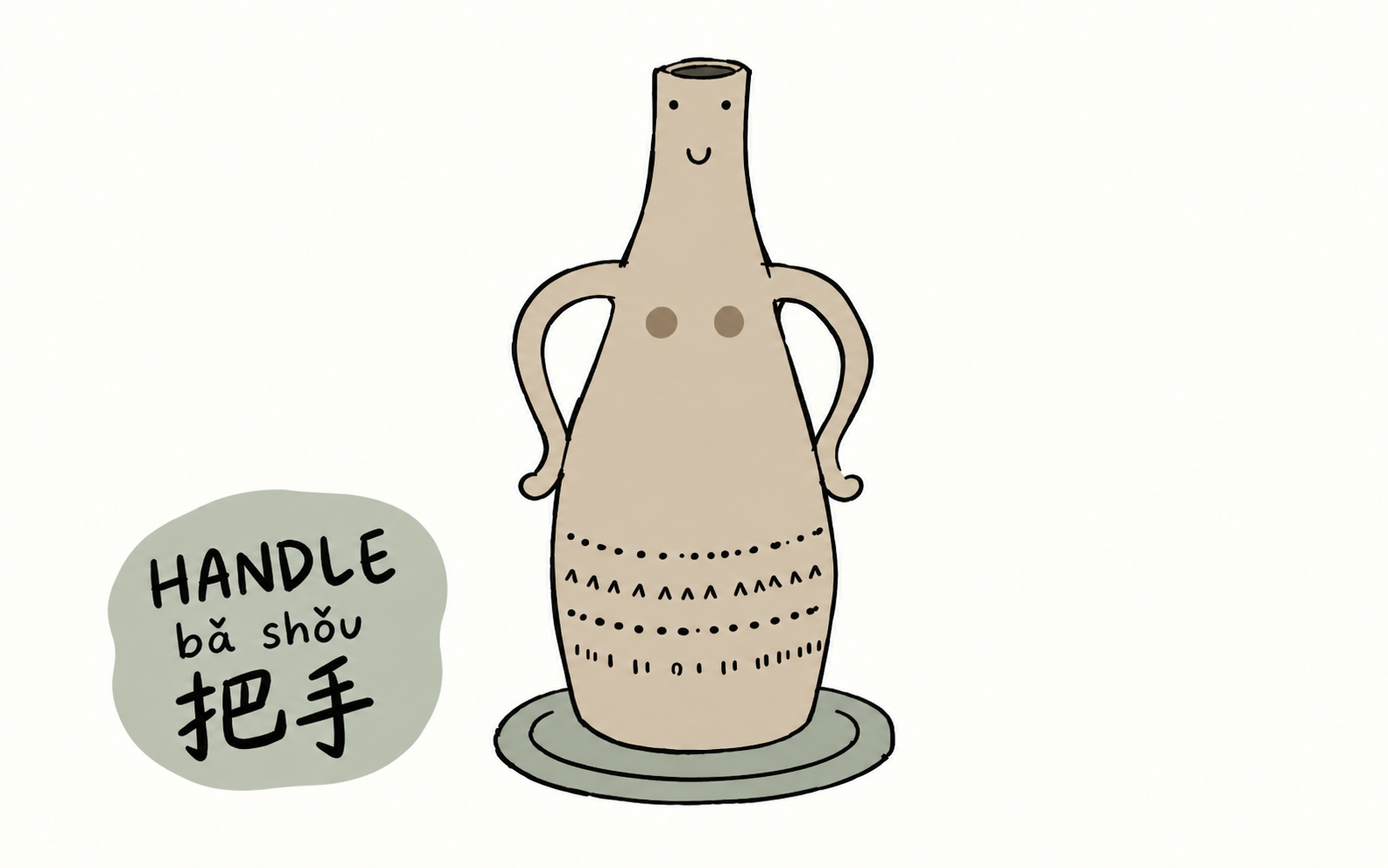
This smiling clay bottle stands with its hands on its hips. Those two loops are what you grab to lift it: its 把手.

把手 (bǎ shǒu) means “handle” or “knob,” the part of something your hand holds. 把 means to hold or grip, and 手 is hand. In everyday speech the 手 is often said lightly: bǎshou.

A door handle is 门把手 (mén bǎshou). The 把 also shows up as the measure word for things held by a handle, like 一把雨伞, one umbrella.

这个瓶子有两个把手。 — Zhège píngzi yǒu liǎng gè bǎshou. — This bottle has two handles.

门把手坏了。 — Mén bǎshou huài le. — The door handle is broken.
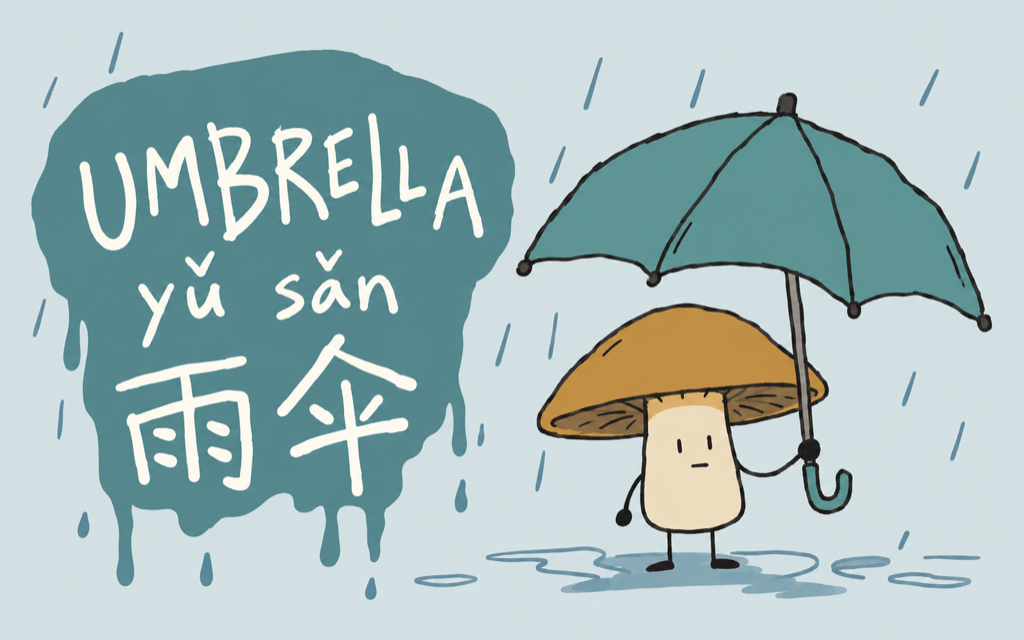
Image text versions

  1. Image 1 text version for "Handle". English: Handle. Chinese: 把手. Pinyin: bǎ shǒu. Audio keys: ba3, shou3. Categories: objects. Tags: handle, ceramic, hand-drawn.

Umbrella = 雨伞 [yǔ sǎn]

Umbrella: 雨伞 (yǔ sǎn)

Umbrella = 雨伞 [yǔ sǎn]

This mushroom’s cap is already shaped like an umbrella, yet in the rain it still holds up a real one over its own head. Rain plus umbrella: 雨伞.

雨伞 (yǔ sǎn) means “umbrella.” 雨 is rain and 伞 is umbrella, so it is literally a “rain umbrella.” In everyday speech people often just say 伞.

Count umbrellas with 把 (bǎ), the measure word for things you hold by a handle: 一把雨伞 (yì bǎ yǔsǎn), one umbrella. To put up an umbrella is 打伞 (dǎ sǎn).

外面下雨了,带一把雨伞吧。 — Wàimiàn xià yǔ le, dài yì bǎ yǔsǎn ba. — It’s raining outside, take an umbrella.

我忘了带雨伞。 — Wǒ wàng le dài yǔsǎn. — I forgot to bring my umbrella.

Image text versions

  1. Image 1 text version for "Umbrella". English: Umbrella. Chinese: 雨伞. Pinyin: yǔ sǎn. Audio keys: yu3, san3. Categories: objects. Tags: umbrella, rain, mushroom, hand-drawn.

Couples = 对象 [duì xiàng]

Couples: 对象 (duì xiàng)

Couples = 对象 [duì xiàng]

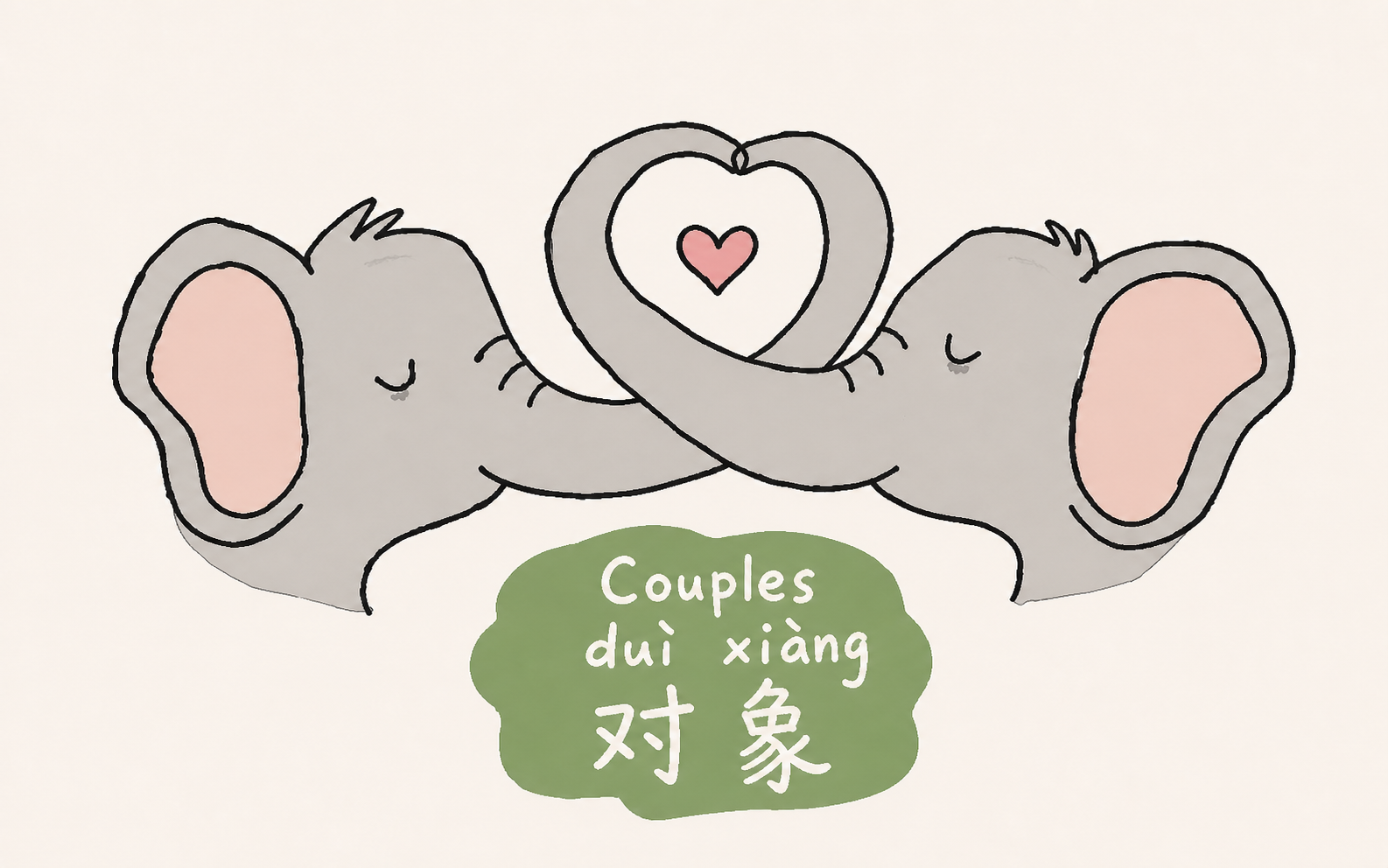
Two elephants face one another and lift their trunks into a small heart: the pair helps learners remember 对象.

Image text versions

  1. Image 1 text version for "Couples". English: Couples. Chinese: 对象. Pinyin: duì xiàng. Audio keys: dui4, xiang4. Categories: relationships. Tags: couples, love.

Split = 裂开 [liè kāi]

Split: 裂开 (liè kāi)

Split = 裂开 [liè kāi]

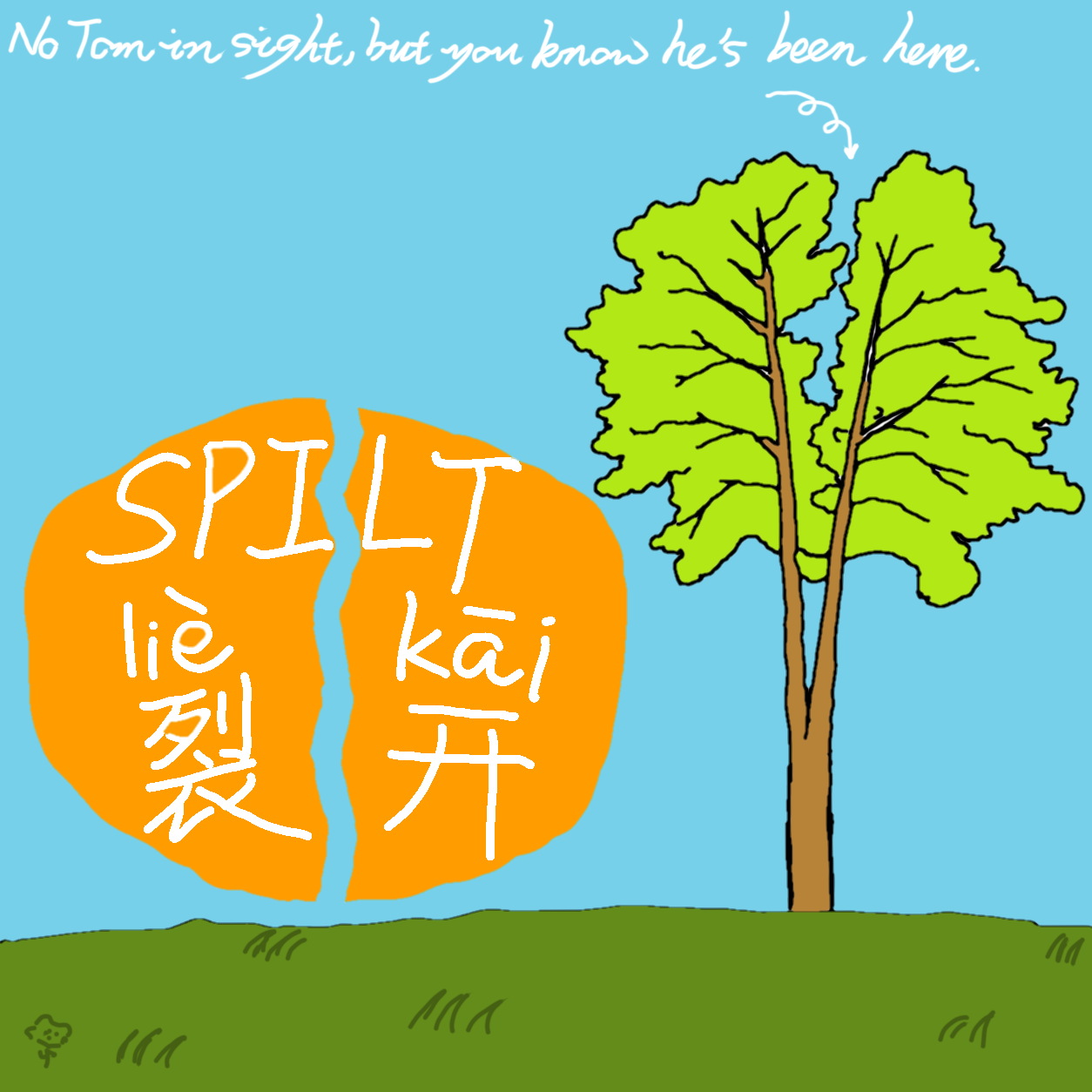
No Tom in sight, but you know he has been here: the rock is split open beside the tree.

Image text versions

  1. Image 1 text version for "Split". English: Split. Chinese: 裂开. Pinyin: liè kāi. Audio keys: lie4, kai1. Categories: tree. Tags: Tom and Jerry, tree, spilt a tree in two.

Follow Hua Zhong Wen

New Chinese drawings, tiny stories, and memory hooks.

RSS feed

Neat / Uniform = 整齐 [zhěng qí]

Neat / Uniform: 整齐 (zhěng qí)

Neat / Uniform = 整齐 [zhěng qí]

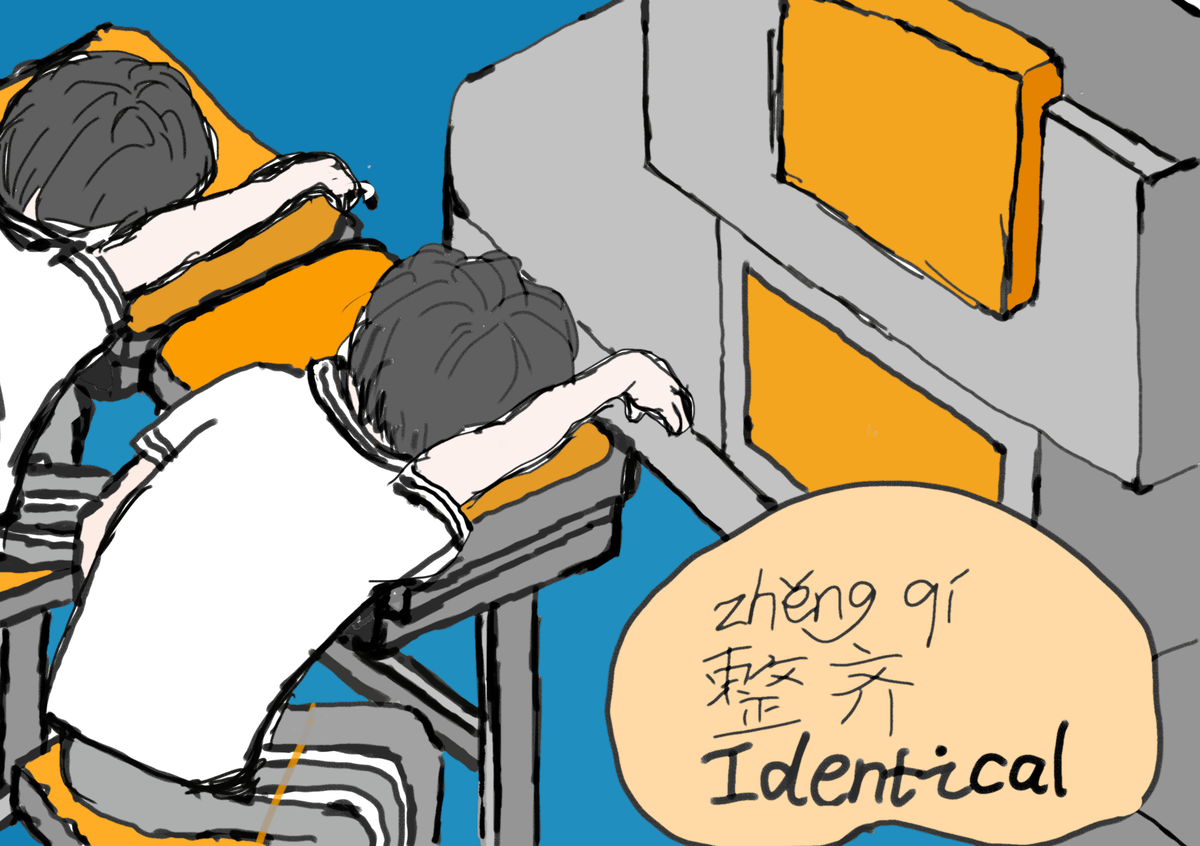
Same uniform, same desk, same pose. Even their napping is 整齐: neat and uniform.

整齐 (zhěng qí) means neat, tidy or uniform: things lined up evenly, or people doing the same thing in the same way. The drawing says “Identical,” which is close to the idea but not the usual translation. For “identical,” say 一模一样 (yì mú yí yàng).

房间很整齐。 — Fángjiān hěn zhěngqí. — The room is neat.

他们的动作很整齐。 — Tāmen de dòngzuò hěn zhěngqí. — Their movements are perfectly in sync.

Image text versions

  1. Image 1 text version for "Neat / Uniform". English: Neat / Uniform. Chinese: 整齐. Pinyin: zhěng qí. Audio keys: zheng3, qi2. Tags: people.

Chinese Valentine’s day = 七夕 [qī xī]

Chinese Valentine’s day: 七夕 (qī xī)

Chinese Valentine’s day = 七夕 [qī xī]

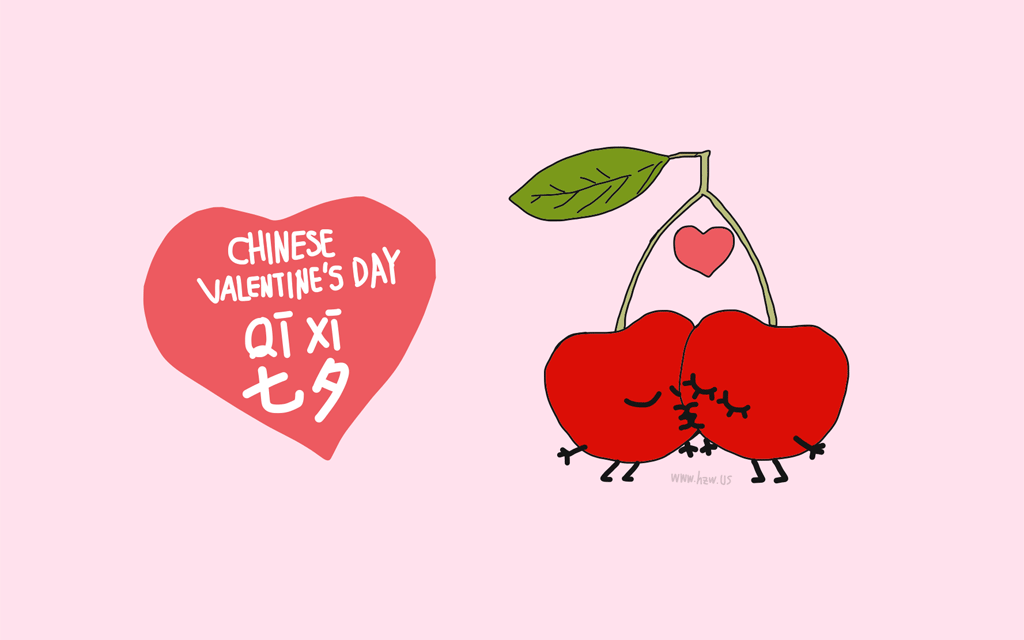
Two cherries on one stem lean in for a kiss. 七夕 is the day for couples.

七夕 (qī xī) is the Qixi Festival, often called Chinese Valentine’s Day. 七 is seven and 夕 is evening: it falls on the evening of the seventh day of the seventh lunar month.

The festival comes from the story of the cowherd and the weaver girl, 牛郎织女 (Niúláng Zhīnǚ), two lovers who can meet only once a year, on this night.

七夕快乐! — Qīxī kuàilè! — Happy Qixi!

今年七夕是哪一天? — Jīnnián Qīxī shì nǎ yì tiān? — What day is Qixi this year?

Image text versions

  1. Image 1 text version for "Chinese Valentine’s day". English: Chinese Valentine’s day. Chinese: 七夕. Pinyin: qī xī. Audio keys: qi1, xi1. Categories: countries, culture, food, life. Tags: cherry, kiss, qixi.

Swing = 摇摆 [Yáo bǎi]

Swing: 摇摆 (Yáo bǎi)

Swing = 摇摆 [Yáo bǎi]

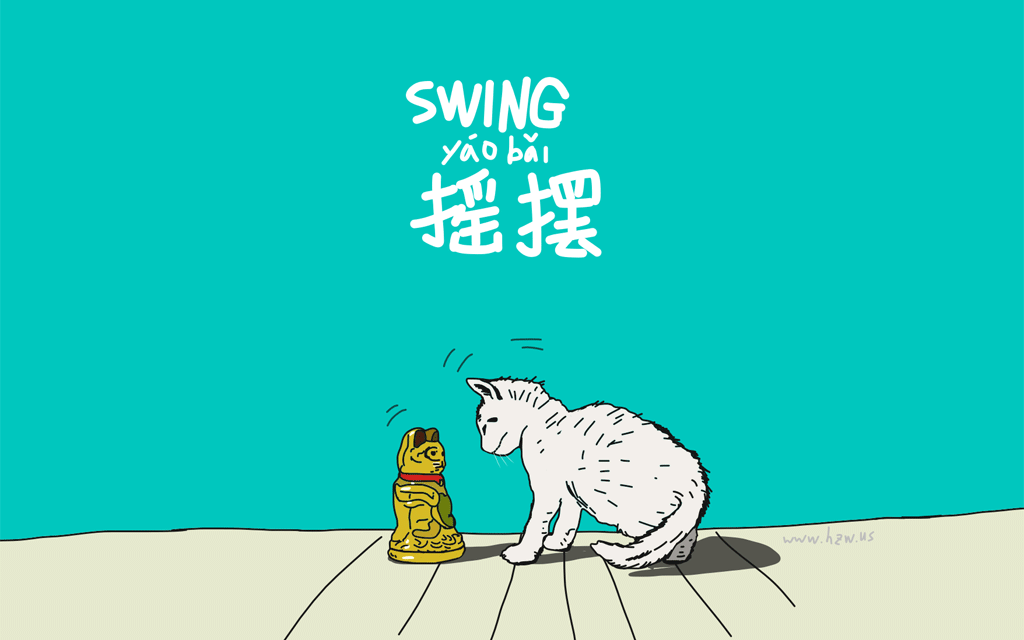
A white cat tilts its head at a golden lucky cat whose paw swings back and forth, and starts to sway along. Back and forth: 摇摆.

摇摆 (yáo bǎi) means “to sway” or “to swing from side to side.” It can also mean to waver, as when someone cannot make up their mind.

It is a verb. A playground swing is a different word: 秋千 (qiūqiān).

树枝在风中摇摆。 — Shùzhī zài fēng zhōng yáobǎi. — The branches sway in the wind.

他的态度摇摆不定。 — Tā de tàidu yáobǎi bú dìng. — His attitude keeps wavering.

Image text versions

  1. Image 1 text version for "Swing". English: Swing. Chinese: 摇摆. Pinyin: Yáo bǎi. Audio keys: yao2, bai3. Categories: fun, animal, culture, life. Tags: swing, lucky, cat.

Lying = 躺 [Tǎng]

Lying: 躺 (Tǎng)

Lying = 躺 [Tǎng]

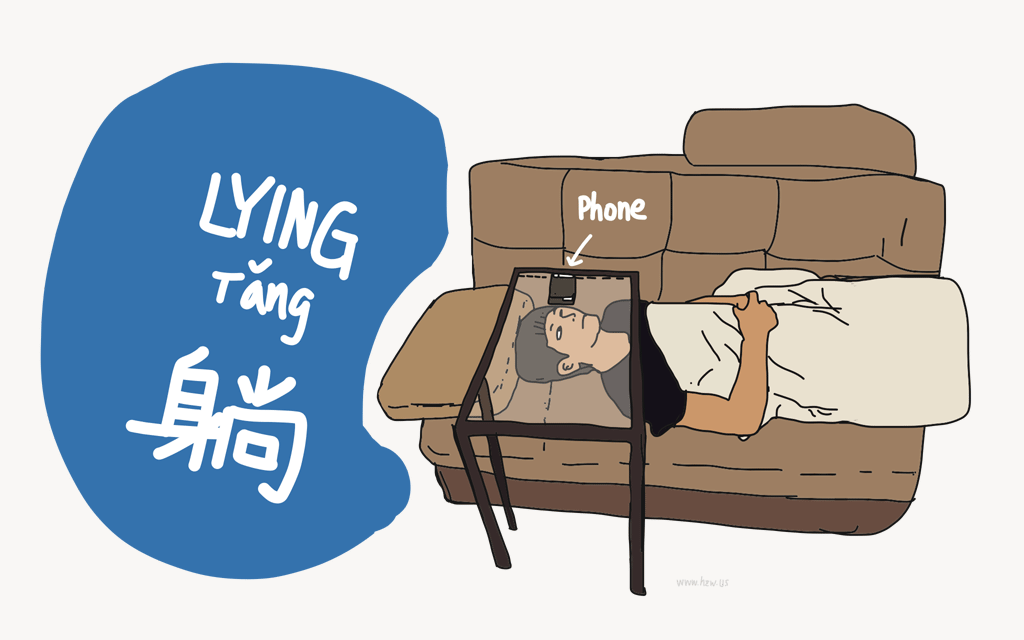
Someone is lying flat on the sofa with their head under a glass table, watching the phone that rests on the glass above their face. That flat-out position is 躺.

躺 (tǎng) means to lie, as in lying on your back or your side. It is about body position and has nothing to do with telling a lie. 躺下 (tǎng xià) means to lie down.

我想躺一会儿。 — Wǒ xiǎng tǎng yíhuìr. — I want to lie down for a while.

他躺在沙发上。 — Tā tǎng zài shāfā shang. — He is lying on the sofa.

Image text versions

  1. Image 1 text version for "Lying". English: Lying. Chinese: 躺. Pinyin: Tǎng. Audio keys: tang3. Categories: fun, life. Tags: phone, watch, sofa.

Dinosaur = 恐龙 [kǒng lóng]

Dinosaur: 恐龙 (kǒng lóng)

Dinosaur = 恐龙 [kǒng lóng]

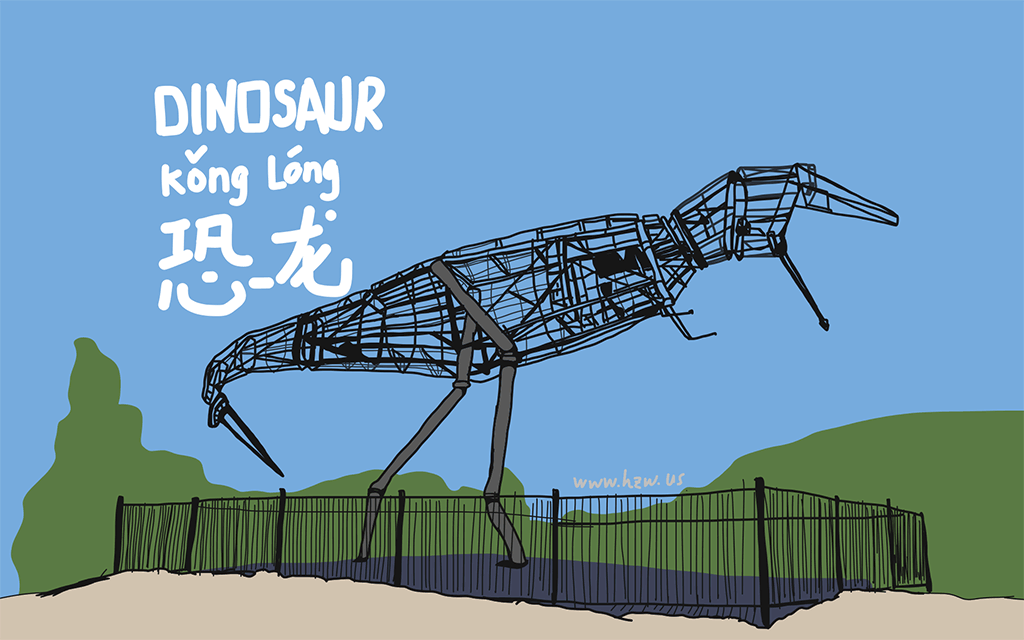
A dinosaur built from steel bars stands behind a fence, as tall as a building. Even made of metal, it is a 恐龙.

恐龙 (kǒng lóng) means “dinosaur.” 恐 is fear and 龙 is dragon: a fearsome dragon. Count dinosaurs with 只 (zhī): 一只恐龙 (yì zhī kǒnglóng).

孩子们喜欢恐龙。 — Háizimen xǐhuan kǒnglóng. — Kids love dinosaurs.

恐龙已经灭绝了。 — Kǒnglóng yǐjīng mièjué le. — Dinosaurs are extinct.

Image text versions

  1. Image 1 text version for "Dinosaur". English: Dinosaur. Chinese: 恐龙. Pinyin: kǒng lóng. Audio keys: kong3, long2. Categories: animal, countries, tech. Tags: dinosaur, steel.

Hat = 帽子 [Mào zi]

Hat: 帽子 (Mào zi)

Hat = 帽子 [Mào zi]

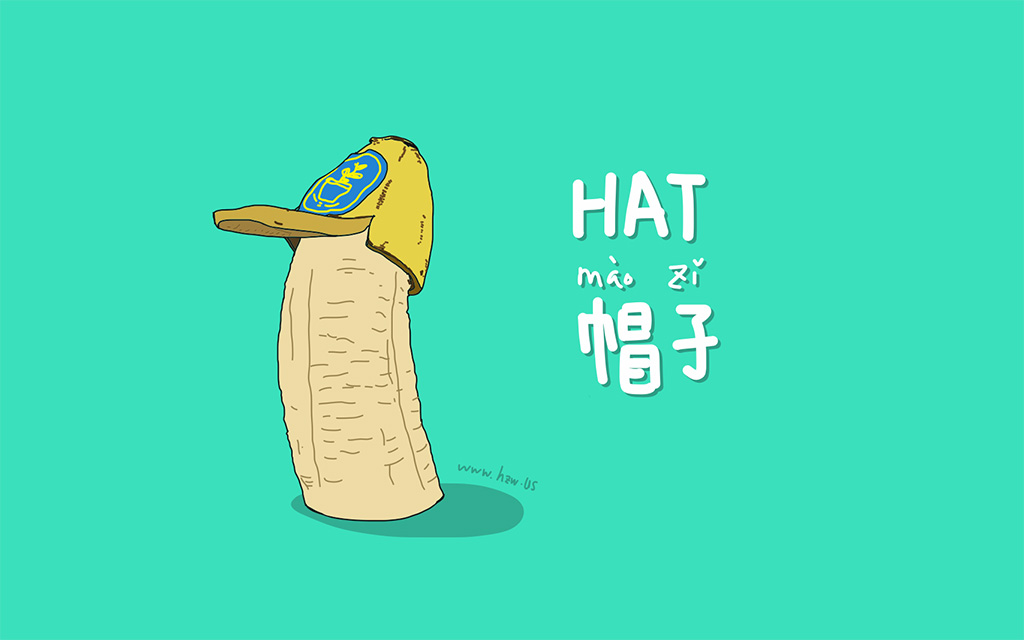
A peeled banana wears its own peel as a baseball cap, sticker and all. That is one fresh 帽子.

帽子 (màozi) means “hat” or “cap.” The 子 is a neutral tone. Count hats with 顶 (dǐng): 一顶帽子 (yì dǐng màozi).

To wear a hat, use 戴 (dài), not 穿 (chuān). 穿 is for clothes you put your body into; 戴 is for things you put on, like hats, glasses and watches.

他戴着一顶帽子。 — Tā dàizhe yì dǐng màozi. — He is wearing a hat.

你的帽子很好看。 — Nǐ de màozi hěn hǎokàn. — Your hat looks nice.

Image text versions

  1. Image 1 text version for "Hat". English: Hat. Chinese: 帽子. Pinyin: Mào zi. Audio keys: mao4, zi3. Categories: fun, clothes, food. Tags: hat, cute, banana.

Pants = 裤子 [Kùzi]

Pants: 裤子 (Kùzi)

Pants = 裤子 [Kùzi]

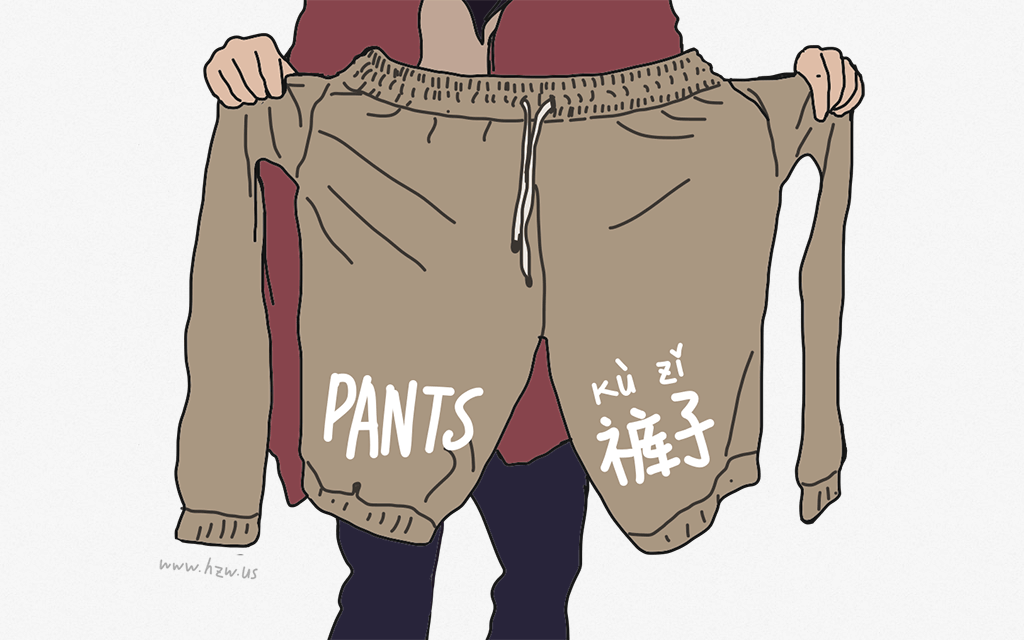
Someone holds up something that cannot decide what it is: it has a drawstring waist and two legs, but also sleeves with cuffs. Whatever went wrong here, the part with two legs is 裤子.

裤子 (kùzi) means “pants” or “trousers.” The 子 is a neutral tone, short and light, even though the drawing writes it with a tone mark.

Count pants with the measure word 条 (tiáo): 一条裤子 (yì tiáo kùzi), one pair of pants.

这条裤子太长了。 — Zhè tiáo kùzi tài cháng le. — These pants are too long.

我想买一条裤子。 — Wǒ xiǎng mǎi yì tiáo kùzi. — I want to buy a pair of pants.

Image text versions

  1. Image 1 text version for "Pants". English: Pants. Chinese: 裤子. Pinyin: Kùzi. Audio keys: ku4, zi3. Categories: fun, clothes, life. Tags: pants, clothes, mistake.

Cry = 哭 [Kū]

Cry: 哭 (Kū)

Cry = 哭 [Kū]

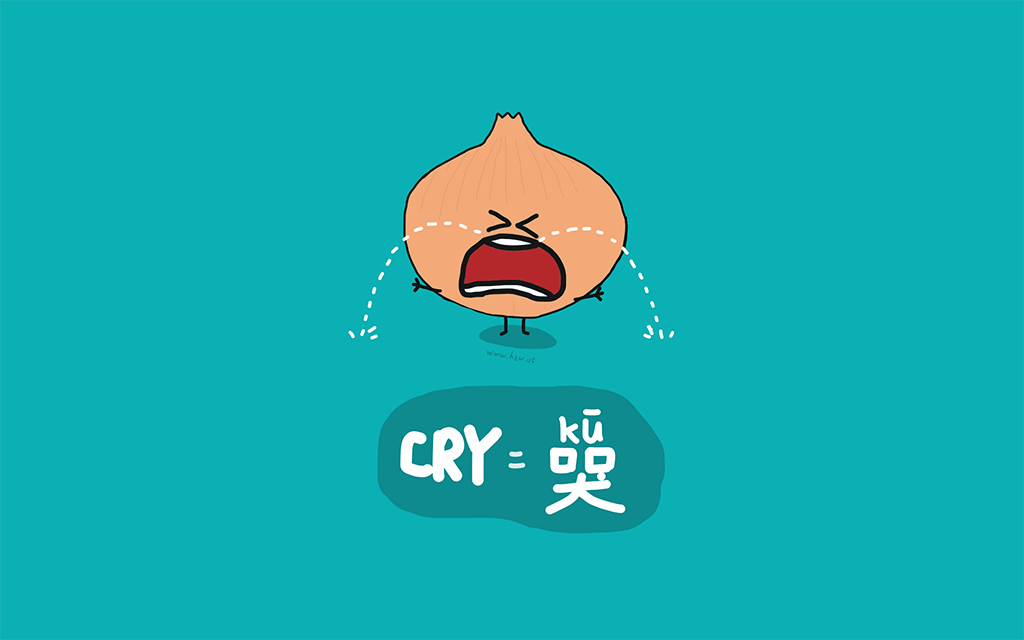
Onions usually make people cry, but this one is bawling itself, mouth wide open, tears pouring down both sides. That is 哭.

哭 (kū) means “to cry.” The two 口 on top can look like two crying eyes. The opposite is 笑 (xiào), to laugh.

To cry hard is 大哭 (dà kū).

别哭了。 — Bié kū le. — Stop crying.

切洋葱的时候,我总是哭。 — Qiē yángcōng de shíhou, wǒ zǒngshì kū. — I always cry when I cut onions.

Image text versions

  1. Image 1 text version for "Cry". English: Cry. Chinese: 哭. Pinyin: Kū. Audio keys: ku1. Categories: fun, food, life. Tags: cry, Onion.

Broke / Bankrupt = 破产 [Pò chǎn]

Broke / Bankrupt: 破产 (Pò chǎn)

Broke / Bankrupt = 破产 [Pò chǎn]

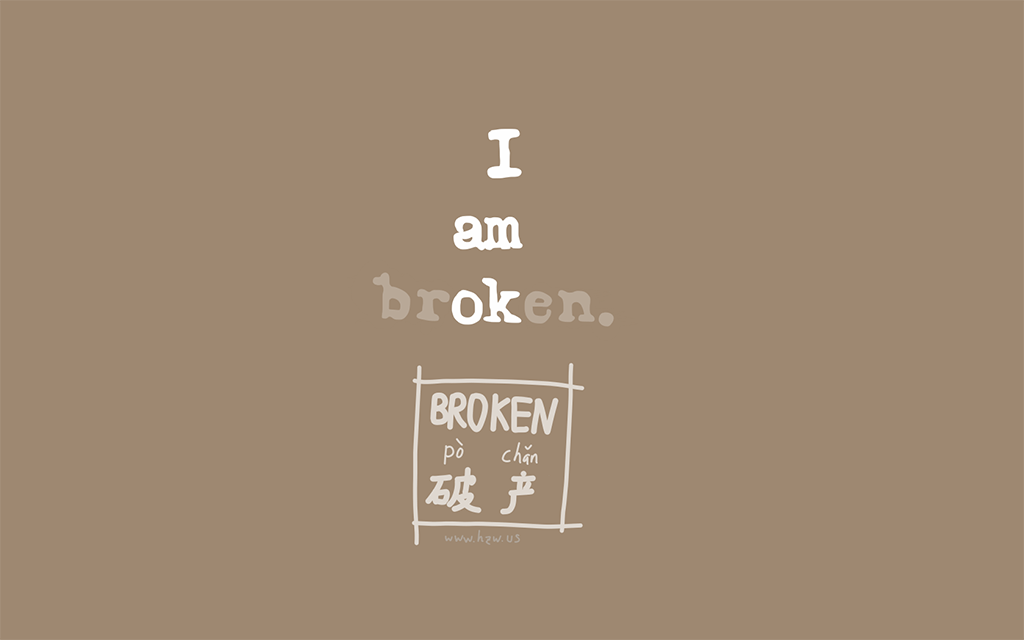
The poster says “I am broken,” but the bright letters in the middle spell “ok.” Out of money and still fine: that is being 破产.

破产 (pò chǎn) means “to go bankrupt” or, more casually, “to be broke.” 破 is to break and 产 is property, so it is about money, not about things that are damaged.

For something that is broken and no longer works, say 坏了 (huài le) instead.

公司破产了。 — Gōngsī pòchǎn le. — The company went bankrupt.

我快破产了。 — Wǒ kuài pòchǎn le. — I am about to go broke.

Image text versions

  1. Image 1 text version for "Broke / Bankrupt". English: Broke / Bankrupt. Chinese: 破产. Pinyin: Pò chǎn. Audio keys: po4, chan3. Categories: countries, culture, life. Tags: broken, ok.

Spit = 吐 [tǔ]

Spit: 吐 (tǔ)

Image text versions

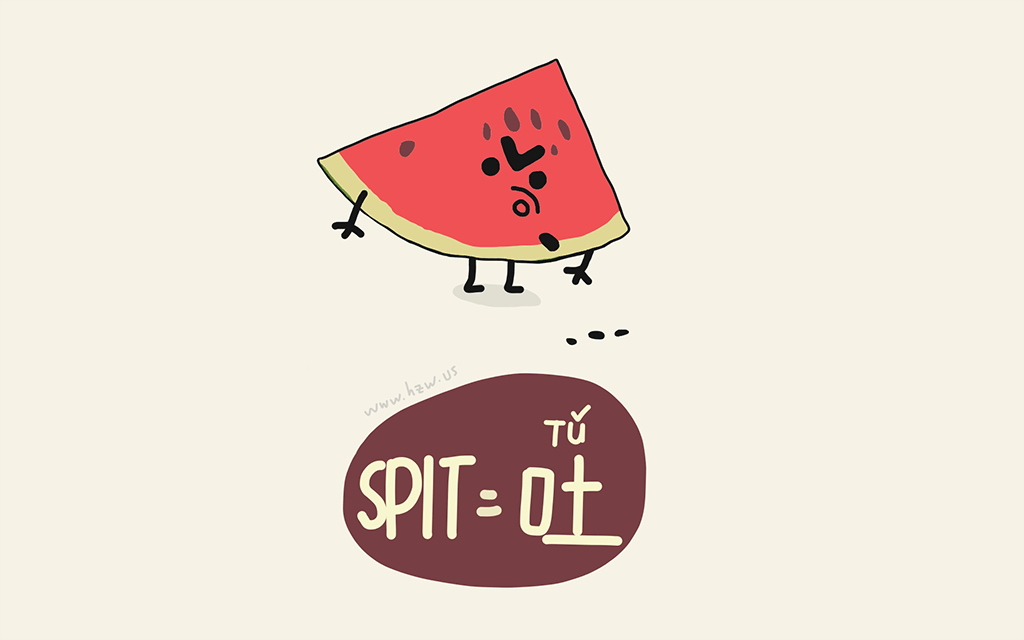
  1. Image 1 text version for "Spit". English: Spit. Chinese: 吐. Pinyin: tǔ. Audio keys: tu3. Categories: fun, food, sports. Tags: spit, watermelon, food.

Spit = 吐 [tǔ]

Lazy = 偷懒 [Tōu lǎn]

Lazy: 偷懒 (Tōu lǎn)

Lazy = 偷懒 [Tōu lǎn]

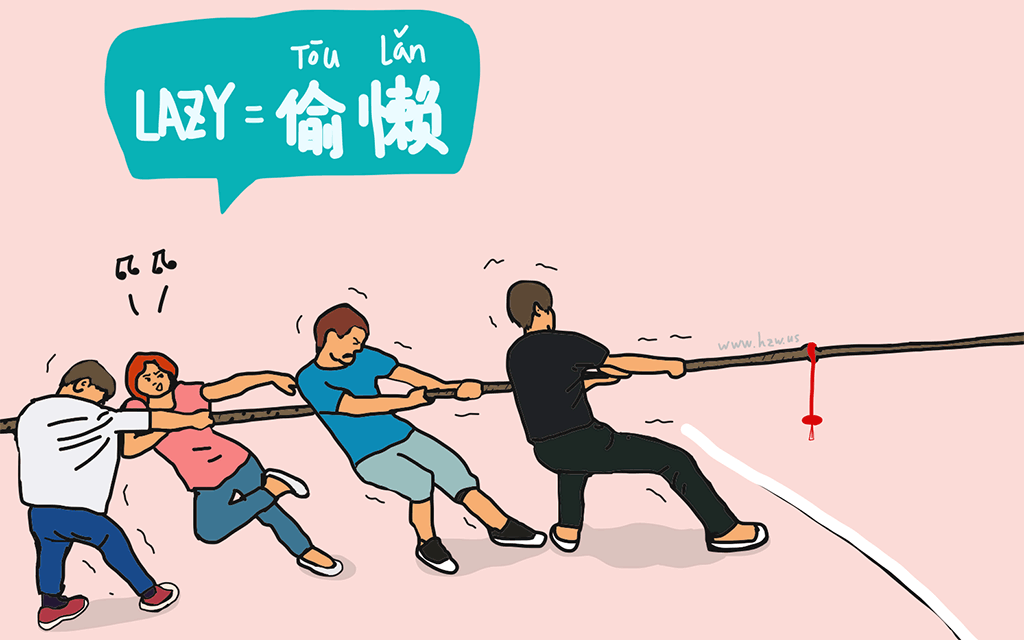
Everyone is straining on the rope except the one humming a tune with her eyes closed. She is 偷懒: slacking off while the others do the work.

偷懒 (tōu lǎn) means to slack off: to be lazy about a job you are supposed to be doing. Literally, 偷 is “on the sly” and 懒 is “lazy.” 懒 (lǎn) on its own describes a lazy person; 偷懒 describes the act.

别偷懒! — Bié tōulǎn! — Don’t slack off!

他又在偷懒。 — Tā yòu zài tōulǎn. — He is slacking off again.

Image text versions

  1. Image 1 text version for "Lazy". English: Lazy. Chinese: 偷懒. Pinyin: Tōu lǎn. Audio keys: tou1, lan3. Categories: fun, life, sports. Tags: Lazy, Tug_of_War, pose, contest.

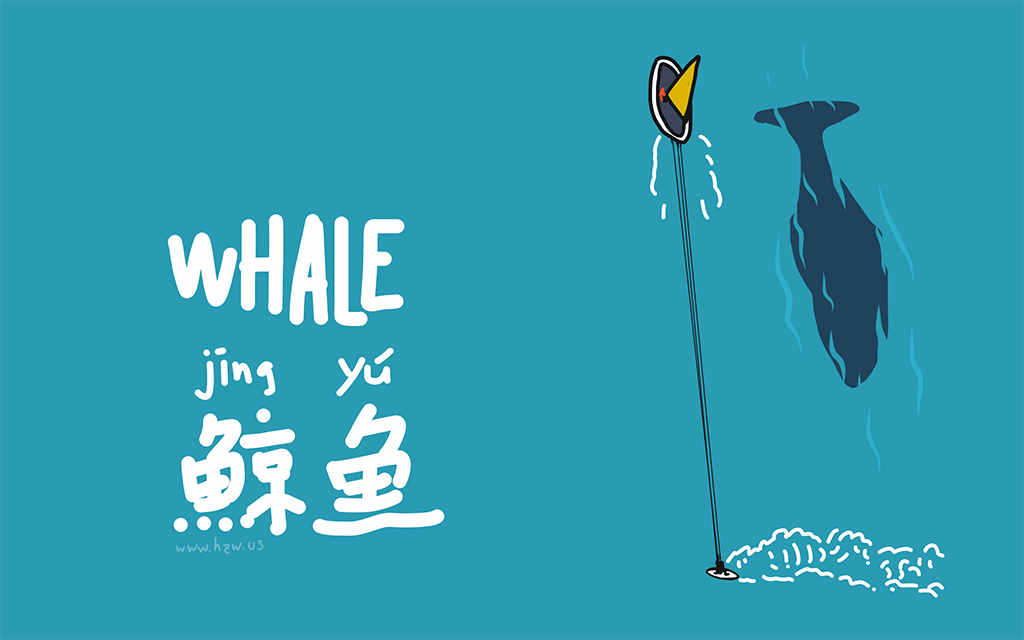
Whale = 鲸鱼 [Jīng yú]

Whale: 鲸鱼 (Jīng yú)

Whale = 鲸鱼 [Jīng yú]

Seen from above, a huge dark shape glides just under the surface beside a tiny sail. That shadow, far bigger than the boat, is a 鲸鱼.

鲸鱼 (jīng yú) means “whale.” 鲸 is the character for whale, and 鱼 means fish. A whale is not a fish, but the everyday word keeps 鱼 anyway.

Count whales with the measure word 头 (tóu): 一头鲸鱼 (yì tóu jīngyú), one whale.

鲸鱼不是鱼。 — Jīngyú bú shì yú. — A whale is not a fish.

我们看到了一头鲸鱼。 — Wǒmen kàndào le yì tóu jīngyú. — We saw a whale.

Image text versions

  1. Image 1 text version for "Whale". English: Whale. Chinese: 鲸鱼. Pinyin: Jīng yú. Audio keys: jing1, yu2. Categories: fun, animal, life, sports. Tags: whale #surf, boat, dangerous, sea.

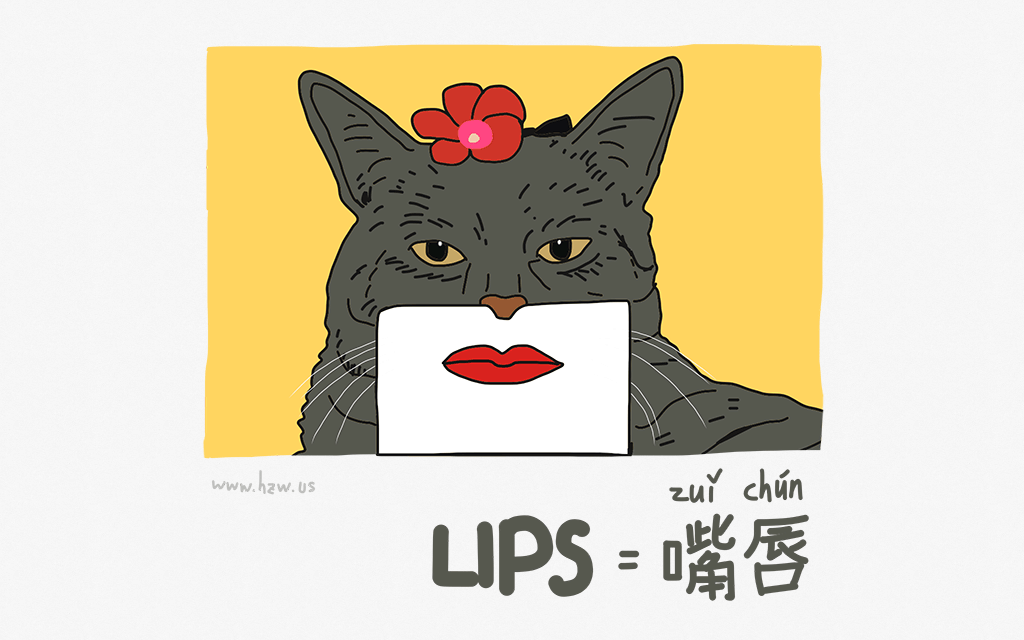
Lips = 嘴唇 [zuǐ chún]

Lips: 嘴唇 (zuǐ chún)

Lips = 嘴唇 [zuǐ chún]

A grumpy grey cat with a red flower on its head holds up a card with bright red lips. Now the cat has 嘴唇.

嘴唇 (zuǐ chún) means “lips.” 嘴 is mouth and 唇 is lip. Lipstick is 口红 (kǒuhóng), literally “mouth red.”

她的嘴唇很红。 — Tā de zuǐchún hěn hóng. — Her lips are very red.

我的嘴唇很干。 — Wǒ de zuǐchún hěn gān. — My lips are dry.

Image text versions

  1. Image 1 text version for "Lips". English: Lips. Chinese: 嘴唇. Pinyin: zuǐ chún. Audio keys: zui3, chun2. Categories: fun, animal, life. Tags: red, lips, cat, flower.

Alien = 外星人 [wài xīng rén]

Alien: 外星人 (wài xīng rén)

Alien = 外星人 [wài xīng rén]

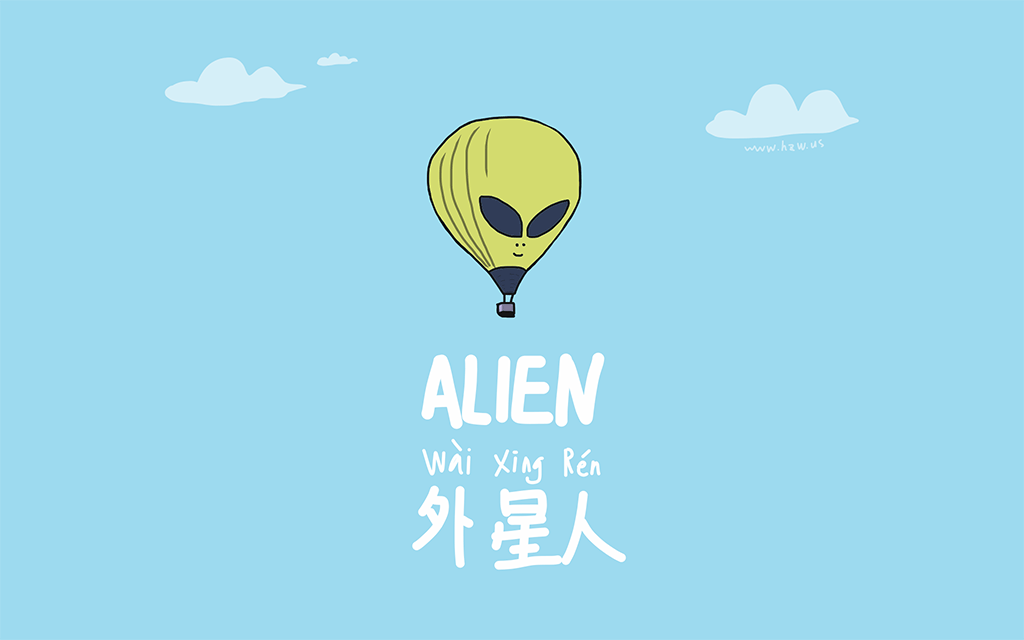
A hot-air balloon with two big dark eyes drifts across the sky. It is a 外星人, arriving the slow way.

外星人 (wài xīng rén) means “alien” or “extraterrestrial.” 外 is outside, 星 is star, and 人 is person: a person from an outside star.

你相信有外星人吗? — Nǐ xiāngxìn yǒu wàixīngrén ma? — Do you believe aliens exist?

他说他见过外星人。 — Tā shuō tā jiànguo wàixīngrén. — He says he has seen an alien.

Image text versions

  1. Image 1 text version for "Alien". English: Alien. Chinese: 外星人. Pinyin: wài xīng rén. Audio keys: wai4, xing1, ren2. Categories: life, movie, sports, tech. Tags: Alien, hotair, Balloon.

Dedication = 敬业 [Jìng yè]

Dedication: 敬业 (Jìng yè)

Dedication = 敬业 [Jìng yè]

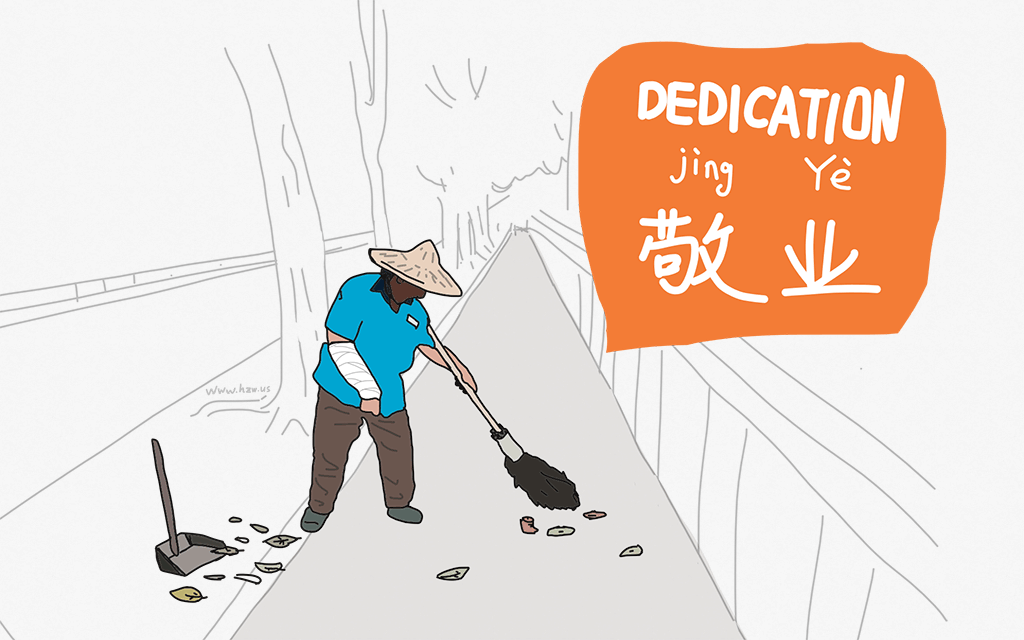
One arm is wrapped in a cast, and the street sweeper is still out sweeping leaves. That is 敬业.

敬业 (jìng yè) means being dedicated to your work. 敬 is to respect and 业 is one’s work or profession: to respect your job.

It is used like an adjective, usually after 很. The noun phrase 敬业精神 (jìngyè jīngshén) means professional dedication.

他很敬业。 — Tā hěn jìngyè. — He is very dedicated to his work.

她的敬业精神让人佩服。 — Tā de jìngyè jīngshén ràng rén pèifú. — Her dedication is admirable.

Image text versions

  1. Image 1 text version for "Dedication". English: Dedication. Chinese: 敬业. Pinyin: Jìng yè. Audio keys: jing4, ye4. Categories: countries, life, sports. Tags: dedication, sanitationman, injured.