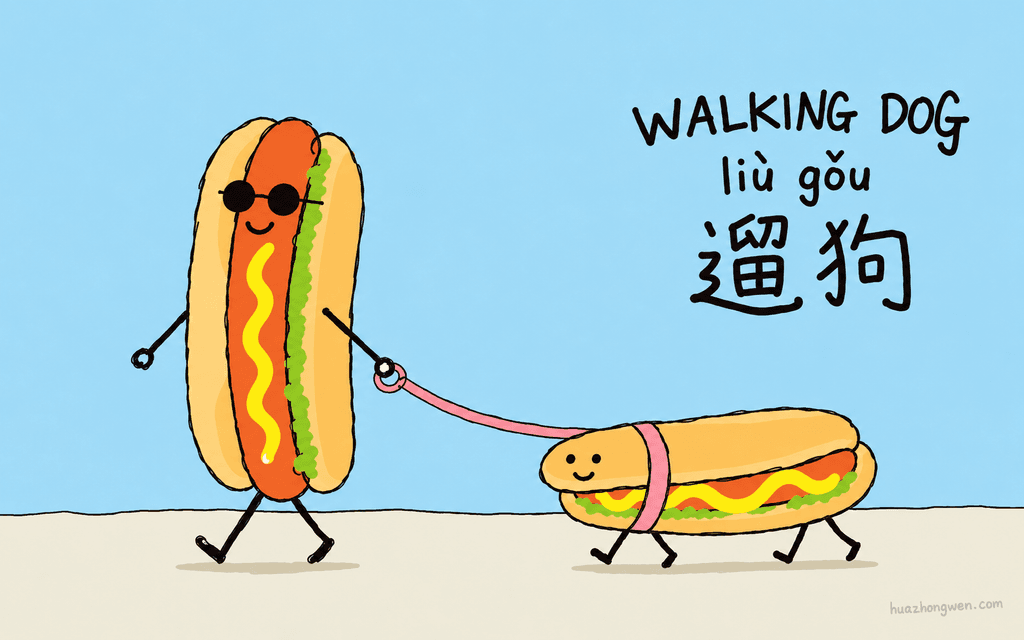
One hot dog is taking another hot dog for a walk! The round sunglasses, little legs and pink leash turn a familiar outing into a food joke. 遛狗 (liù gǒu) means to walk a dog: 遛 (liù) is taking an animal out for a walk, and 狗 (gǒu) means dog.
Image text versions
Image 1 text version for "WALKING DOG". English: WALKING DOG. Chinese: 遛狗. Pinyin: liù gǒu. Audio keys: liu4, gou3. Categories: verbs, animals. Tags: daily-life, dogs.
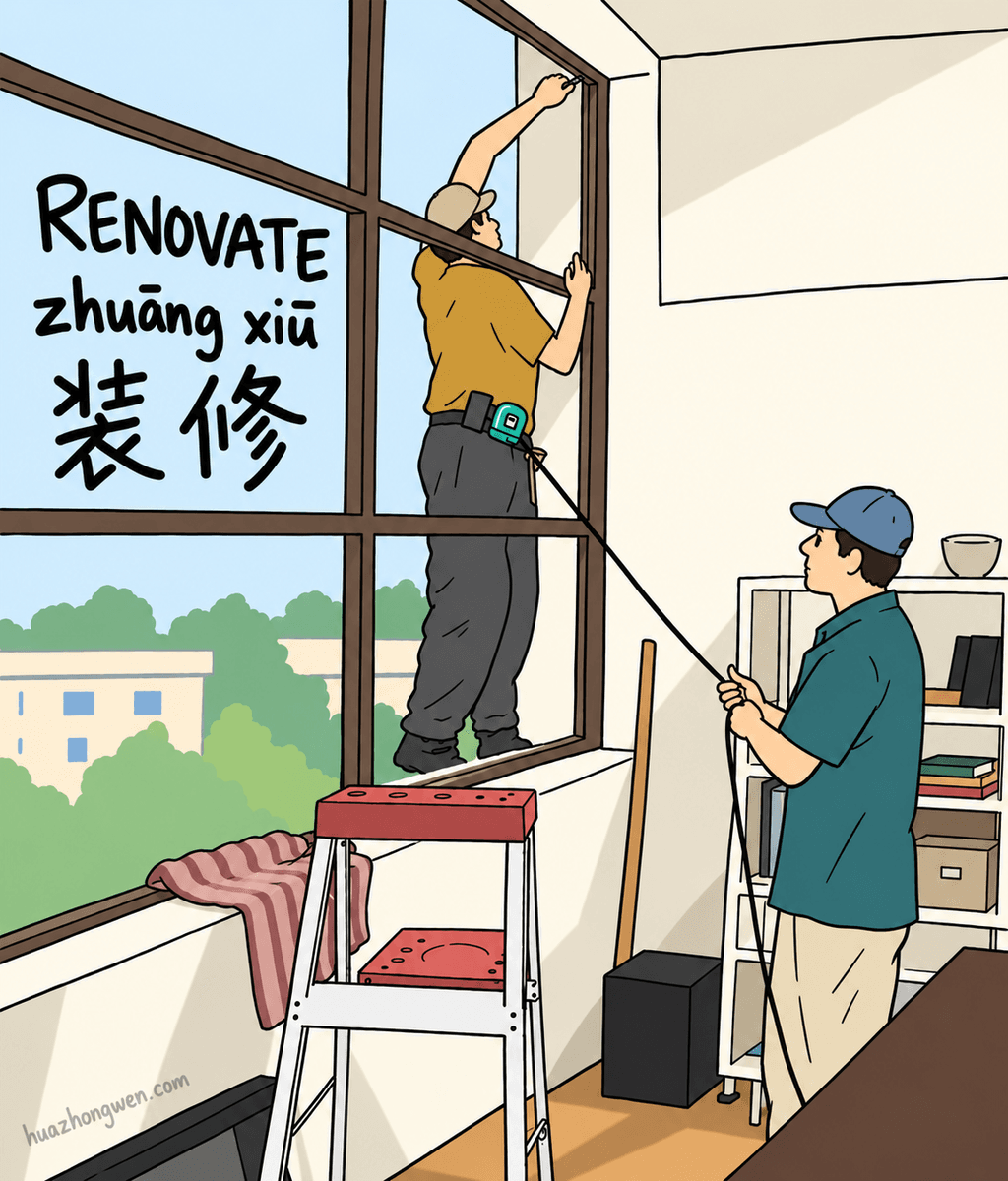
One worker renovates the window from outside, with both feet balanced on the narrow window ledge. Inside, his coworker holds a rope tied around his waist, trying to keep him from falling. That tense bit of teamwork is the visual hook for 装修 (zhuāng xiū) — to renovate or decorate an interior.
Image text versions
Image 1 text version for "RENOVATE". English: RENOVATE. Chinese: 装修. Pinyin: zhuāng xiū. Audio keys: zhuang1, xiu1. Categories: verbs. Tags: home, renovation.
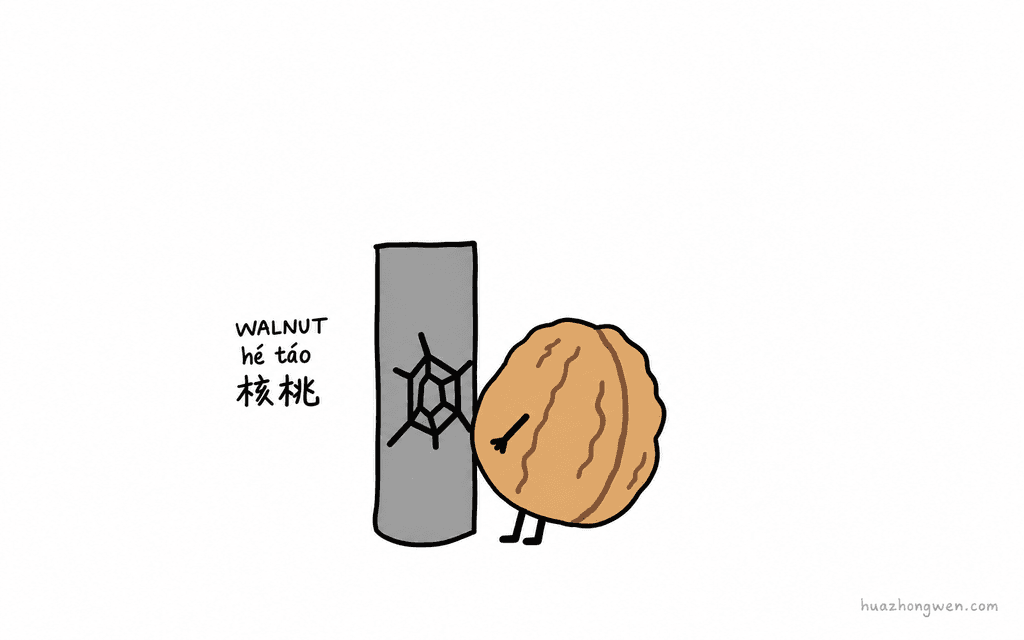
A walnut with a tiny arm and two feet stands beside a grey column. Its ridged shell makes this little character easy to remember: 核桃 (hé táo), the Chinese word for walnut.
Image text versions
Image 1 text version for "WALNUT". English: WALNUT. Chinese: 核桃. Pinyin: hé táo. Audio keys: he2, tao2. Categories: nouns, food. Tags: nuts.
Follow Hua Zhong Wen
New Chinese drawings, tiny stories, and memory hooks.
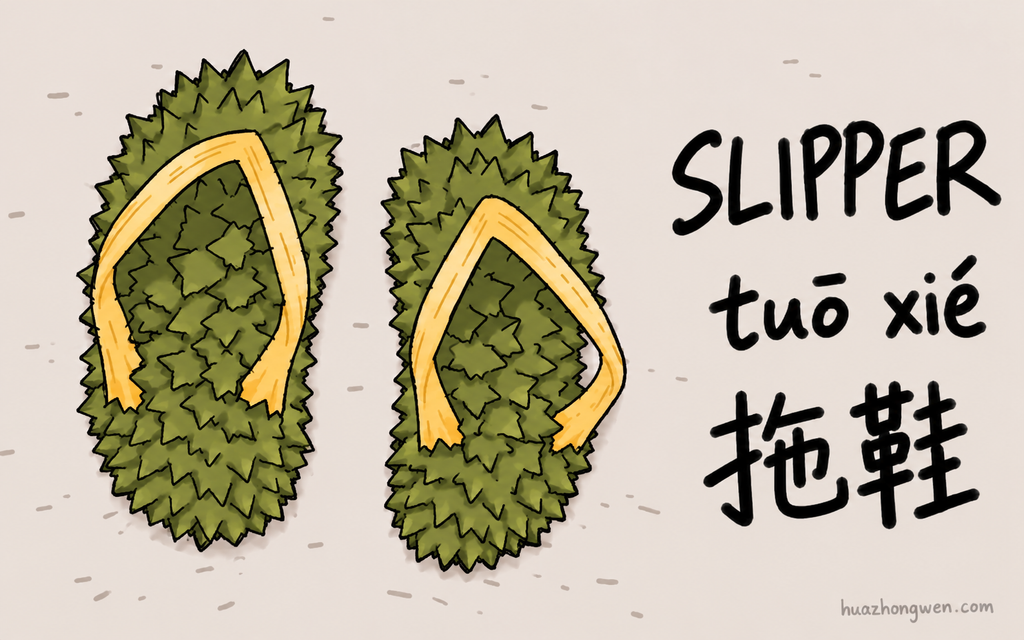
Two thorny durian husks are arranged as an empty pair of slippers. Imagine how uncomfortable they would be to wear. This strange pairing helps you remember 拖鞋 (tuō xié): slipper.
Image text versions
Image 1 text version for "SLIPPER". English: SLIPPER. Chinese: 拖鞋. Pinyin: tuō xié. Audio keys: tuo1, xie2. Categories: nouns. Tags: durian, footwear.
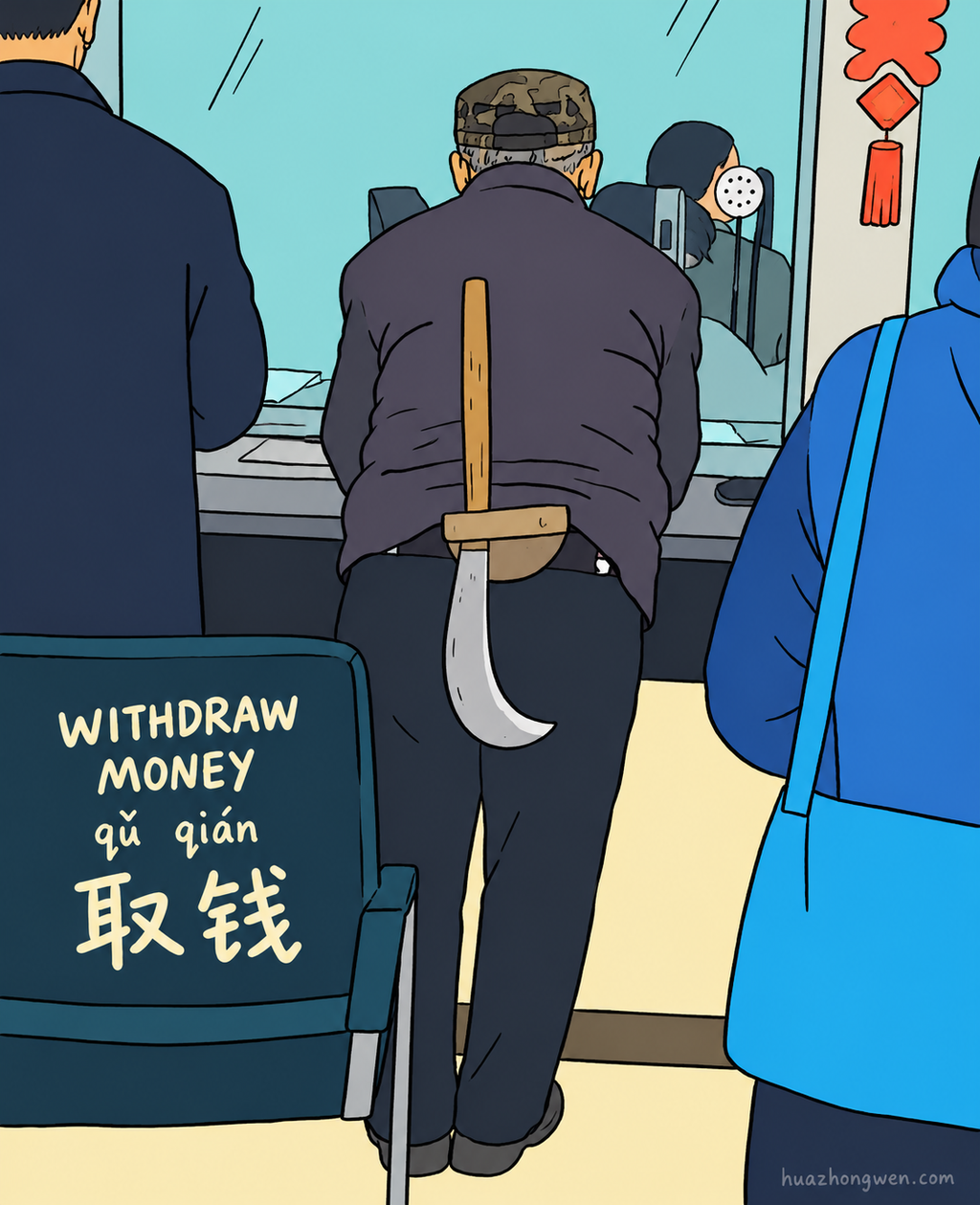
In this drawing, a customer visits a bank counter with a wood-chopping knife tucked into the back of his waistband. To him it is an everyday working tool; at a bank, its unexpected appearance makes the scene startling. That contrast helps you remember 取钱 (qǔ qián): to withdraw money.
Image text versions
Image 1 text version for "WITHDRAW MONEY". English: WITHDRAW MONEY. Chinese: 取钱. Pinyin: qǔ qián. Audio keys: qu3, qian2. Categories: verbs. Tags: money, bank, everyday-life.
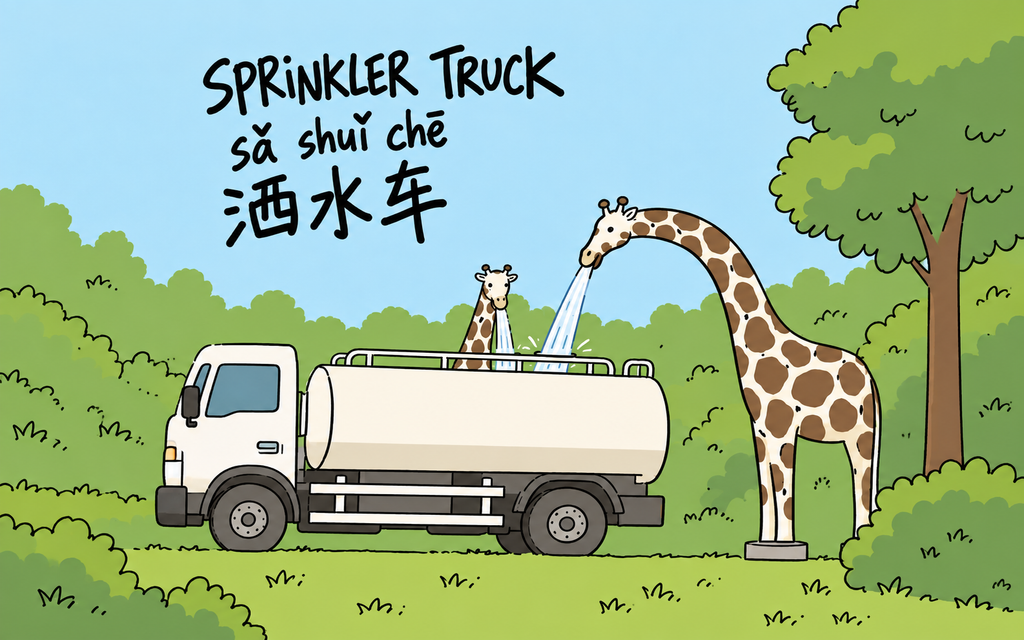
Two cheerful giraffe-shaped water fixtures pour water into the tank of a white sprinkler truck. Their long necks and two streams make 洒水车 (sǎ shuǐ chē) easy to remember.
Image text versions
Image 1 text version for "SPRINKLER TRUCK". English: SPRINKLER TRUCK. Chinese: 洒水车. Pinyin: sǎ shuǐ chē. Audio keys: sa3, shui3, che1. Categories: objects. Tags: giraffe, water-truck.
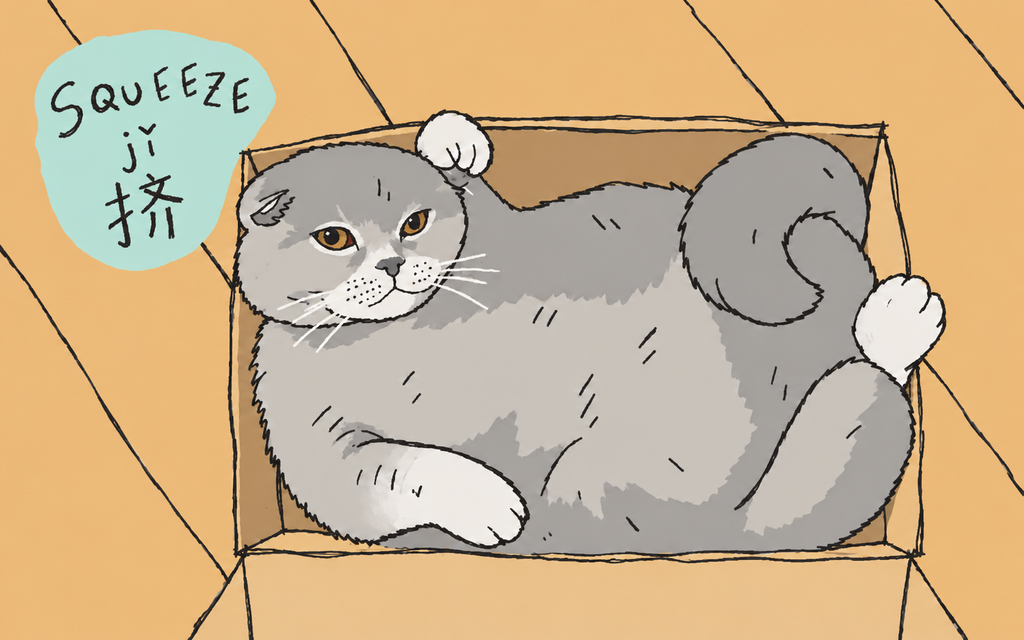
挤 (jǐ) means to squeeze into a tight space. This grey cat fills its cardboard box, with one paw hanging over the edge. The snug fit helps you remember 挤.
Image text versions
Image 1 text version for "SQUEEZE". English: SQUEEZE. Chinese: 挤. Pinyin: jǐ. Audio keys: ji3. Categories: verbs. Tags: cat, box.
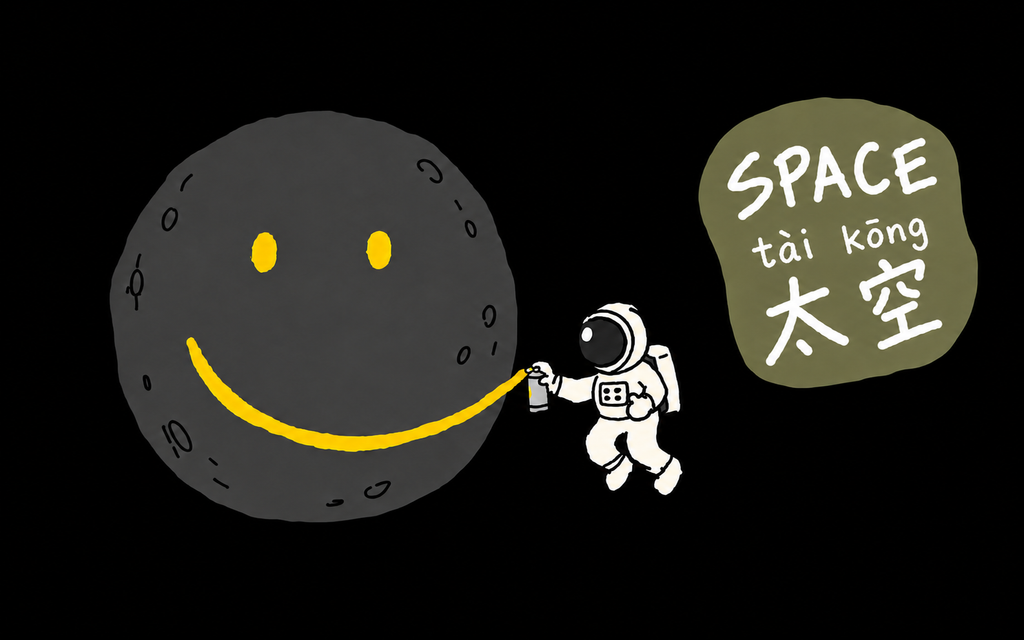
An astronaut floats beside the moon with a can of yellow spray paint and gives it a big smiley face. All that wide, empty dark around them is 太空.
太空 (tài kōng) means “outer space,” the space beyond Earth’s air. 空 means “empty” or “sky,” and 太 adds the sense of “great, extreme,” so you can read it as “the great emptiness.”
For space in the sense of room or a gap, Chinese uses other words, such as 空间 (kōngjiān).
他想去太空。 — Tā xiǎng qù tàikōng. — He wants to go to space.
宇航员在太空里工作。 — Yǔhángyuán zài tàikōng lǐ gōngzuò. — Astronauts work in space.
Image text versions
Image 1 text version for "SPACE". English: SPACE. Chinese: 太空. Pinyin: tài kōng. Audio keys: tai4, kong1. Categories: fun. Tags: astronaut, moon, space.
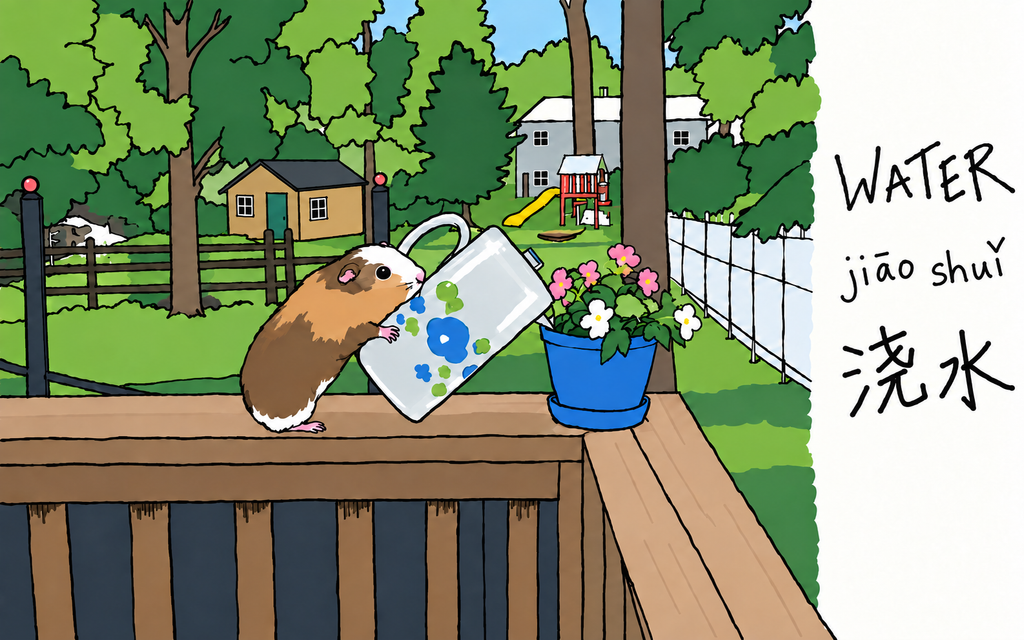
On a deck railing, a hamster hugs a flowered watering can almost as big as itself and tips it toward a pot of pink flowers. That careful pour is 浇水.
浇水 (jiāo shuǐ) means “to water” plants. 浇 means to pour liquid over something, and 水 is water, so the word is literally “pour water.” The WATER in the drawing is the verb, not the noun.
Say what gets the water with 给 (gěi): 给花浇水 (gěi huā jiāo shuǐ), water the flowers.
我每天给花浇水。 — Wǒ měitiān gěi huā jiāo shuǐ. — I water the flowers every day.
今天下雨,不用浇水。 — Jīntiān xià yǔ, bú yòng jiāo shuǐ. — It’s raining today, so there’s no need to water.
Image text versions
Image 1 text version for "WATER". English: WATER. Chinese: 浇水. Pinyin: jiāo shuǐ. Audio keys: jiao1, shui3. Categories: verbs. Tags: hamster, watering.
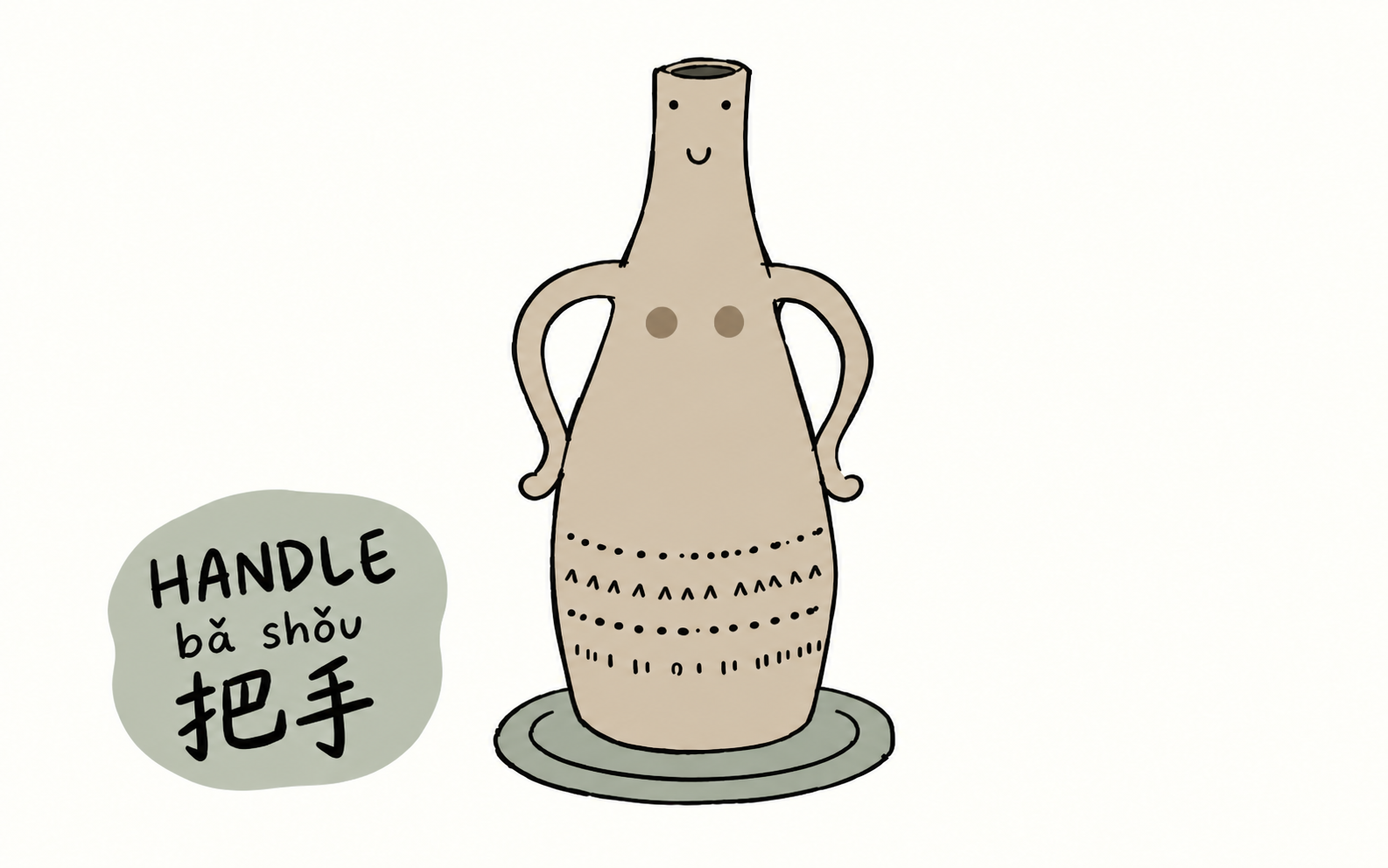
This smiling clay bottle stands with its hands on its hips. Those two loops are what you grab to lift it: its 把手.
把手 (bǎ shǒu) means “handle” or “knob,” the part of something your hand holds. 把 means to hold or grip, and 手 is hand. In everyday speech the 手 is often said lightly: bǎshou.
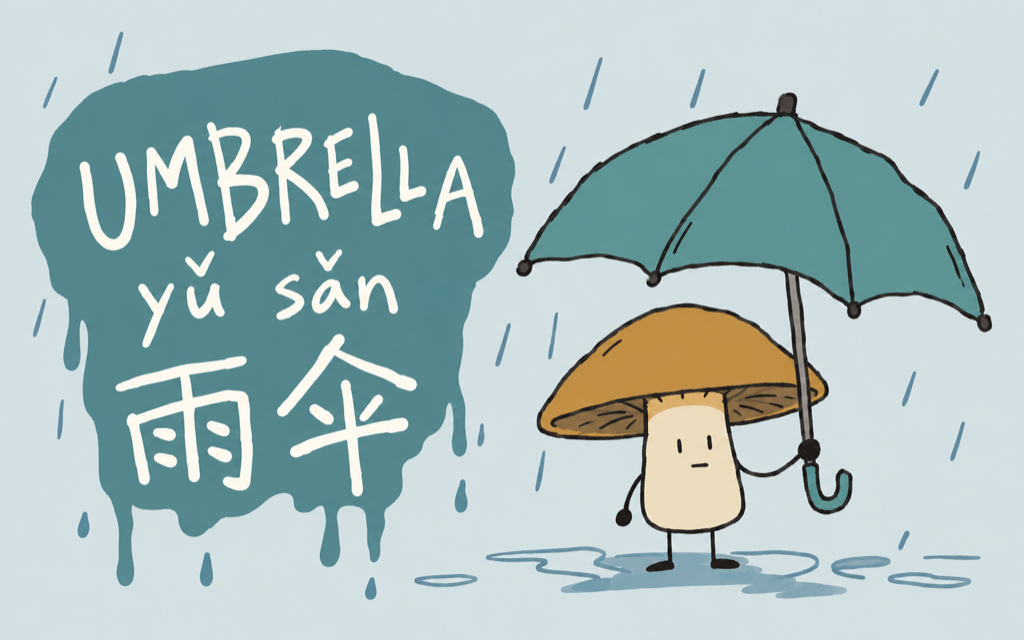
A door handle is 门把手 (mén bǎshou). The 把 also shows up as the measure word for things held by a handle, like 一把雨伞, one umbrella.
这个瓶子有两个把手。 — Zhège píngzi yǒu liǎng gè bǎshou. — This bottle has two handles.
门把手坏了。 — Mén bǎshou huài le. — The door handle is broken.
Image text versions
Image 1 text version for "Handle". English: Handle. Chinese: 把手. Pinyin: bǎ shǒu. Audio keys: ba3, shou3. Categories: objects. Tags: handle, ceramic, memory-hook, hand-drawn.
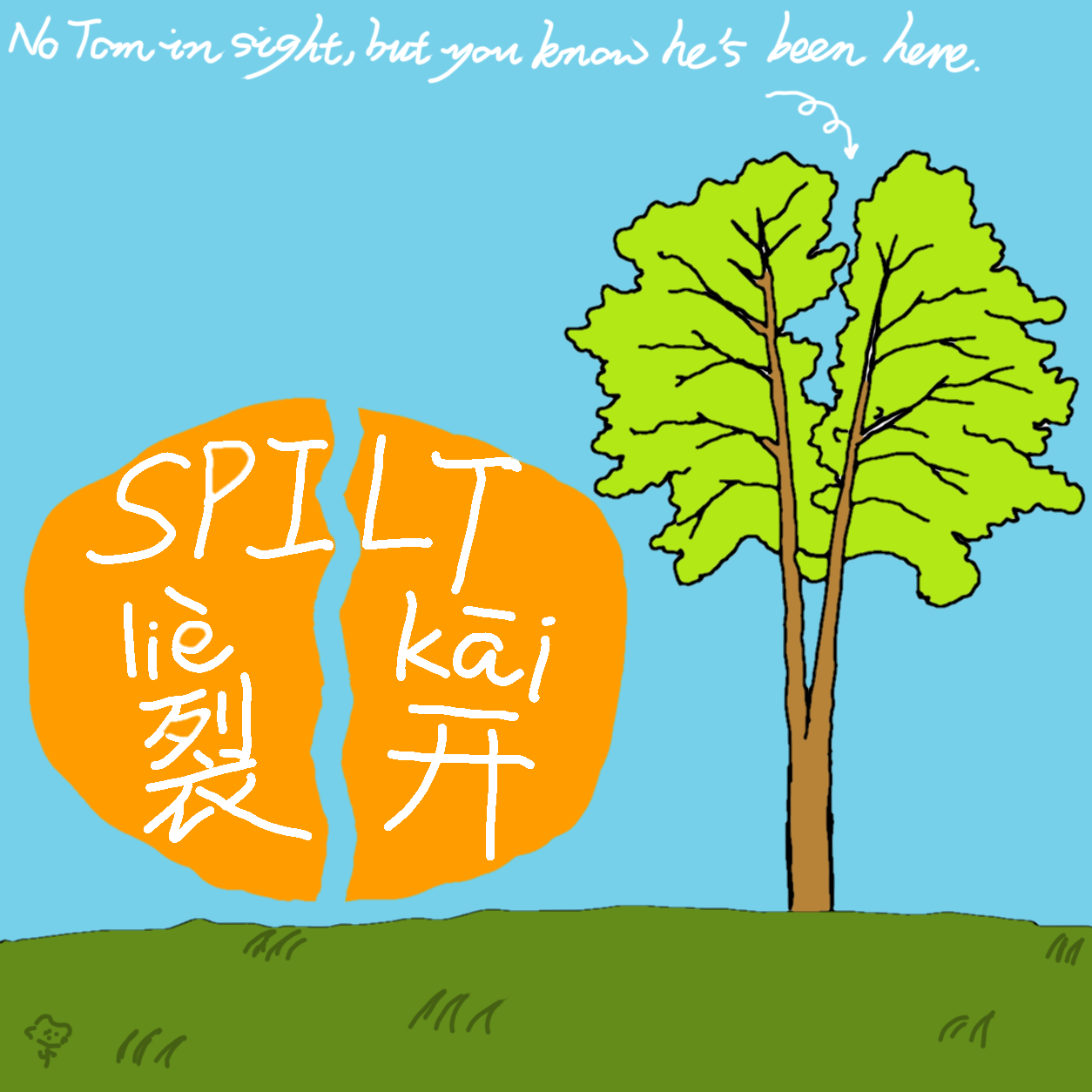
No Tom in sight, but you know he has been here: the rock is split open beside the tree.
Image text versions
Image 1 text version for "Split". English: Split. Chinese: 裂开. Pinyin: liè kāi. Audio keys: lie4, kai1. Categories: tree. Tags: Tom and Jerry, tree, spilt a tree in two.
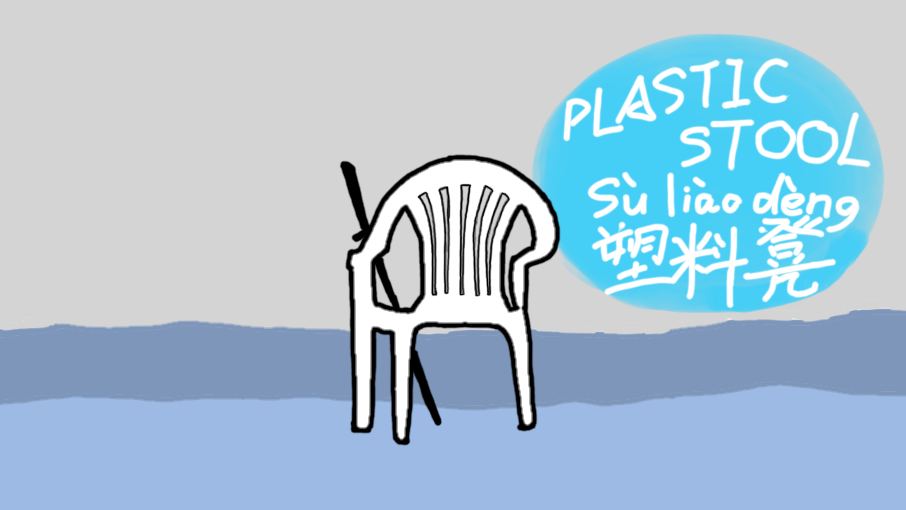
Image 1 text version for "Plastic Stool". English: Plastic Stool. Chinese: 塑料凳. Pinyin: sù liào dèng. Audio keys: su4, liao4, deng4. Tags: plastic stool, give me the yamato, devil may cry 5.
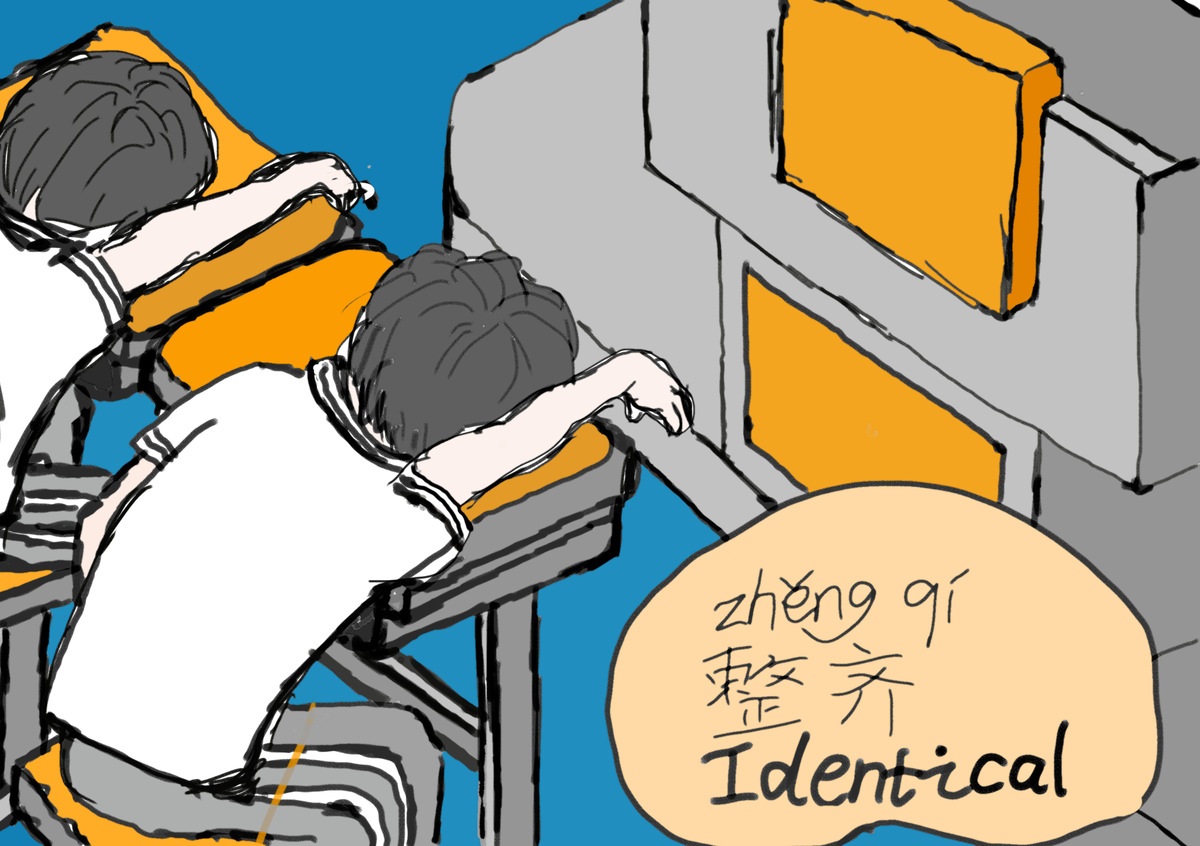
Same uniform, same desk, same pose. Even their napping is 整齐: neat and uniform.
整齐 (zhěng qí) means neat, tidy or uniform: things lined up evenly, or people doing the same thing in the same way. The drawing says “Identical,” which is close to the idea but not the usual translation. For “identical,” say 一模一样 (yì mú yí yàng).
房间很整齐。 — Fángjiān hěn zhěngqí. — The room is neat.
他们的动作很整齐。 — Tāmen de dòngzuò hěn zhěngqí. — Their movements are perfectly in sync.
Image text versions
Image 1 text version for "Neat / Uniform". English: Neat / Uniform. Chinese: 整齐. Pinyin: zhěng qí. Audio keys: zheng3, qi2. Tags: people.
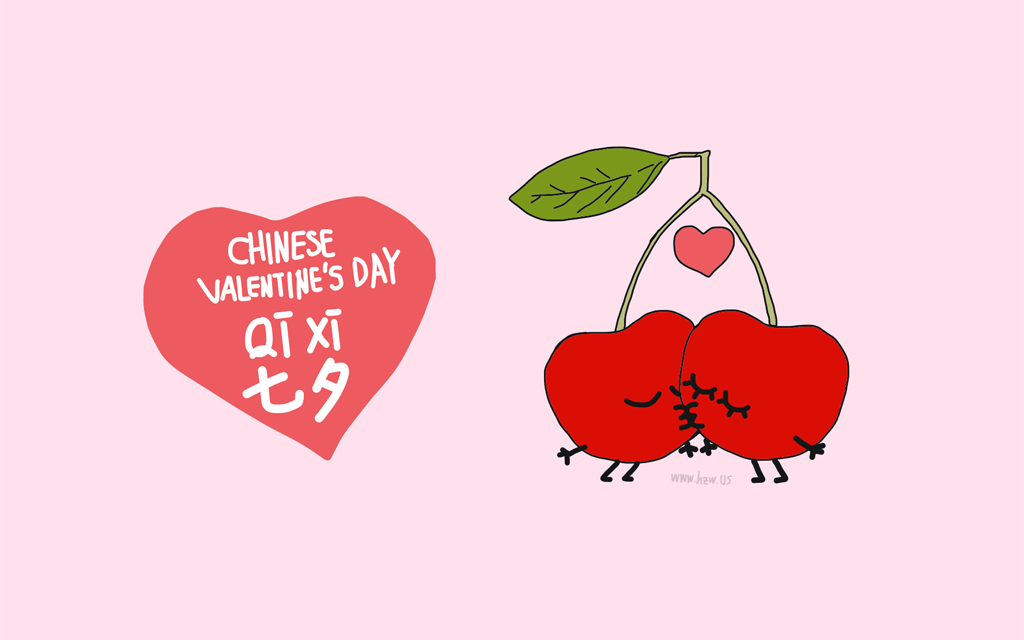
Two cherries on one stem lean in for a kiss. 七夕 is the day for couples.
七夕 (qī xī) is the Qixi Festival, often called Chinese Valentine’s Day. 七 is seven and 夕 is evening: it falls on the evening of the seventh day of the seventh lunar month.
The festival comes from the story of the cowherd and the weaver girl, 牛郎织女 (Niúláng Zhīnǚ), two lovers who can meet only once a year, on this night.
七夕快乐! — Qīxī kuàilè! — Happy Qixi!
今年七夕是哪一天? — Jīnnián Qīxī shì nǎ yì tiān? — What day is Qixi this year?
Image text versions
Image 1 text version for "Chinese Valentine’s day". English: Chinese Valentine’s day. Chinese: 七夕. Pinyin: qī xī. Audio keys: qi1, xi1. Categories: countries, culture, food, life. Tags: cherry, kiss, qixi.