Category: fun (111)

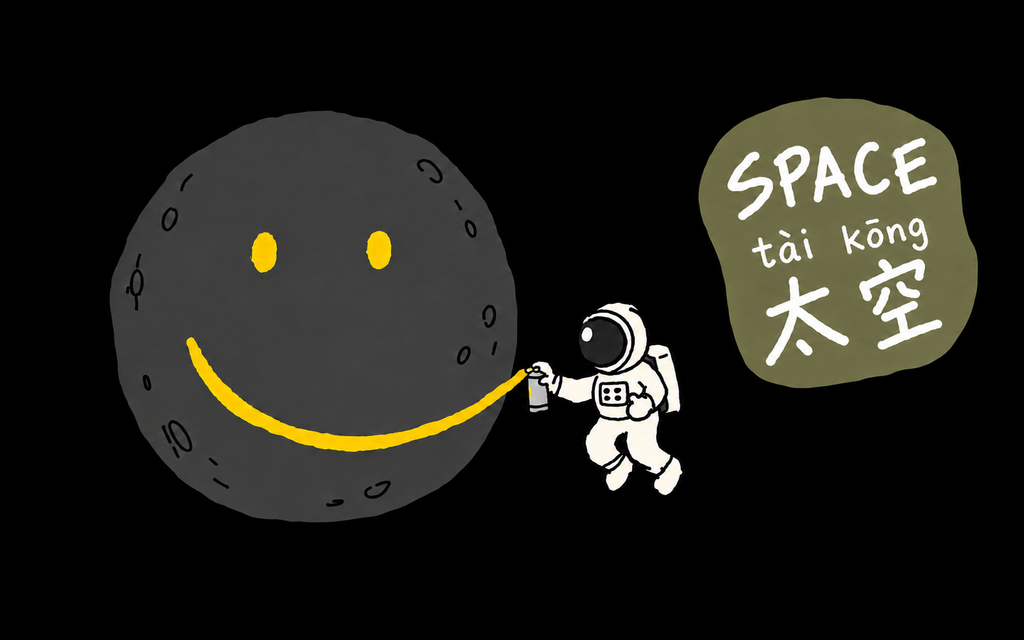
SPACE = 太空 [tài kōng]

SPACE: 太空 (tài kōng)

SPACE = 太空 [tài kōng]

An astronaut floats beside the moon with a can of yellow spray paint and gives it a big smiley face. All that wide, empty dark around them is 太空.

太空 (tài kōng) means “outer space,” the space beyond Earth’s air. 空 means “empty” or “sky,” and 太 adds the sense of “great, extreme,” so you can read it as “the great emptiness.”

For space in the sense of room or a gap, Chinese uses other words, such as 空间 (kōngjiān).

他想去太空。 — Tā xiǎng qù tàikōng. — He wants to go to space.

宇航员在太空里工作。 — Yǔhángyuán zài tàikōng lǐ gōngzuò. — Astronauts work in space.
Image text versions

  1. Image 1 text version for "SPACE". English: SPACE. Chinese: 太空. Pinyin: tài kōng. Audio keys: tai4, kong1. Categories: fun. Tags: astronaut, moon, space.

Swing = 摇摆 [Yáo bǎi]

Swing: 摇摆 (Yáo bǎi)

Swing = 摇摆 [Yáo bǎi]

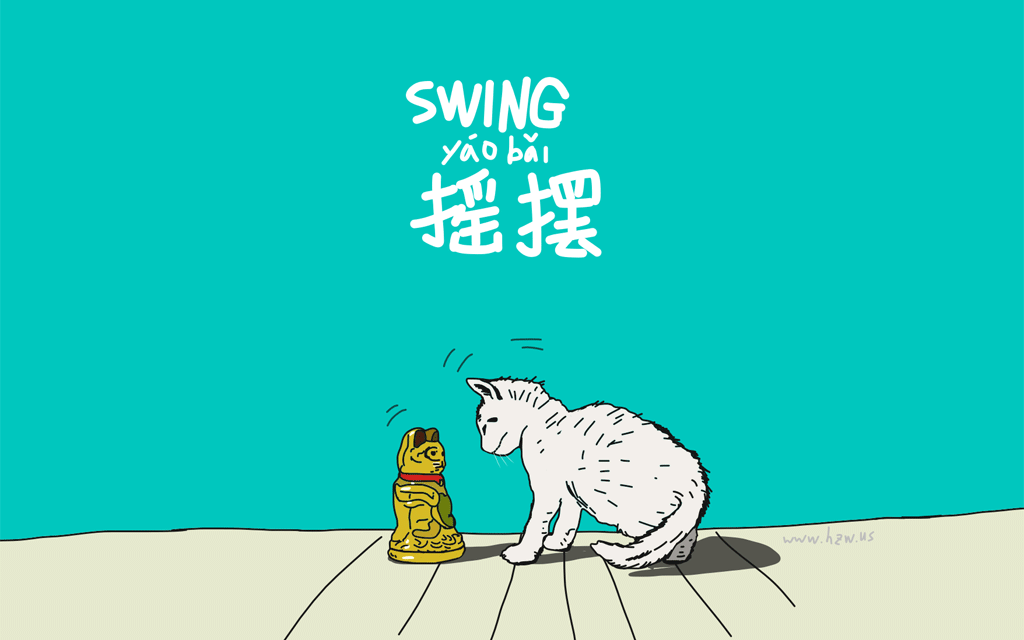
A white cat tilts its head at a golden lucky cat whose paw swings back and forth, and starts to sway along. Back and forth: 摇摆.

摇摆 (yáo bǎi) means “to sway” or “to swing from side to side.” It can also mean to waver, as when someone cannot make up their mind.

It is a verb. A playground swing is a different word: 秋千 (qiūqiān).

树枝在风中摇摆。 — Shùzhī zài fēng zhōng yáobǎi. — The branches sway in the wind.

他的态度摇摆不定。 — Tā de tàidu yáobǎi bú dìng. — His attitude keeps wavering.

Image text versions

  1. Image 1 text version for "Swing". English: Swing. Chinese: 摇摆. Pinyin: Yáo bǎi. Audio keys: yao2, bai3. Categories: fun, animal, culture, life. Tags: swing, lucky, cat.

Follow the drawing archive

Get future illustrated words without hunting through the archive.

RSS feed

Lying = 躺 [Tǎng]

Lying: 躺 (Tǎng)

Lying = 躺 [Tǎng]

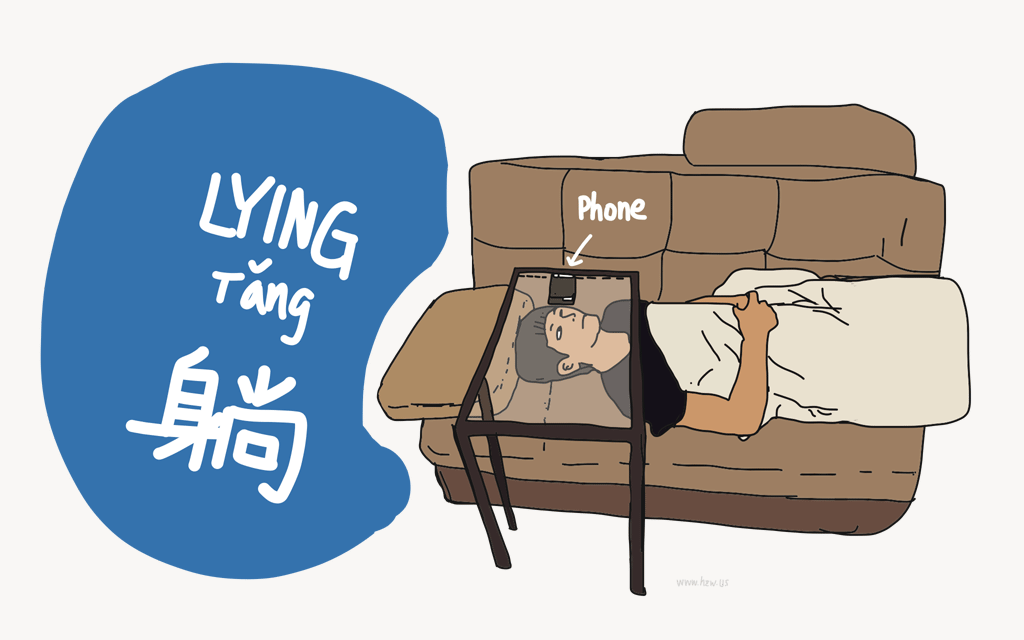
Someone is lying flat on the sofa with their head under a glass table, watching the phone that rests on the glass above their face. That flat-out position is 躺.

躺 (tǎng) means to lie, as in lying on your back or your side. It is about body position and has nothing to do with telling a lie. 躺下 (tǎng xià) means to lie down.

我想躺一会儿。 — Wǒ xiǎng tǎng yíhuìr. — I want to lie down for a while.

他躺在沙发上。 — Tā tǎng zài shāfā shang. — He is lying on the sofa.

Image text versions

  1. Image 1 text version for "Lying". English: Lying. Chinese: 躺. Pinyin: Tǎng. Audio keys: tang3. Categories: fun, life. Tags: phone, watch, sofa.

Hat = 帽子 [Mào zi]

Hat: 帽子 (Mào zi)

Hat = 帽子 [Mào zi]

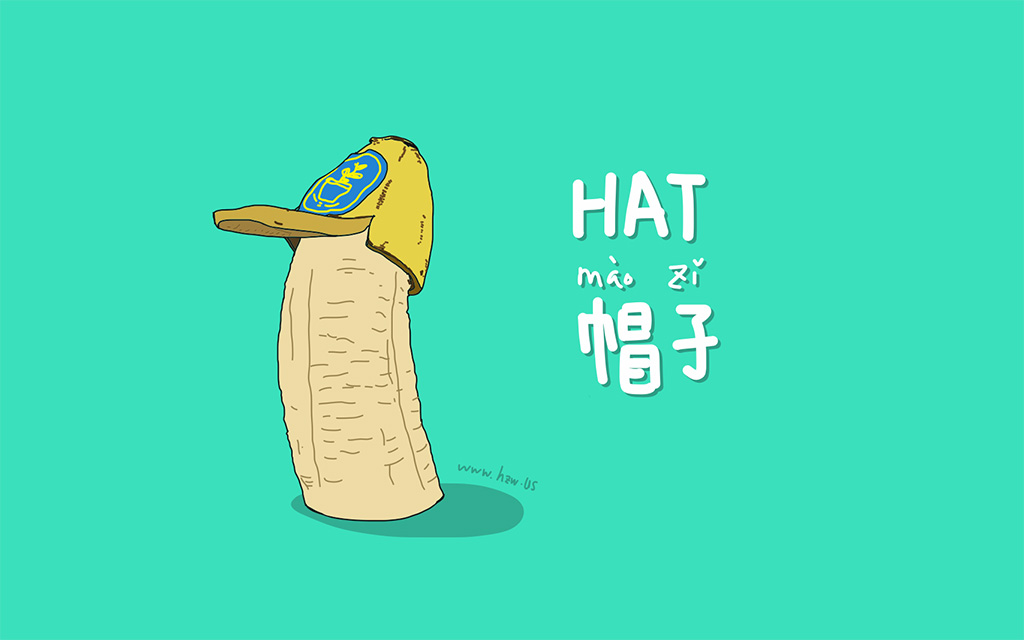
A peeled banana wears its own peel as a baseball cap, sticker and all. That is one fresh 帽子.

帽子 (màozi) means “hat” or “cap.” The 子 is a neutral tone. Count hats with 顶 (dǐng): 一顶帽子 (yì dǐng màozi).

To wear a hat, use 戴 (dài), not 穿 (chuān). 穿 is for clothes you put your body into; 戴 is for things you put on, like hats, glasses and watches.

他戴着一顶帽子。 — Tā dàizhe yì dǐng màozi. — He is wearing a hat.

你的帽子很好看。 — Nǐ de màozi hěn hǎokàn. — Your hat looks nice.

Image text versions

  1. Image 1 text version for "Hat". English: Hat. Chinese: 帽子. Pinyin: Mào zi. Audio keys: mao4, zi3. Categories: fun, clothes, food. Tags: hat, cute, banana.

Pants = 裤子 [Kùzi]

Pants: 裤子 (Kùzi)

Pants = 裤子 [Kùzi]

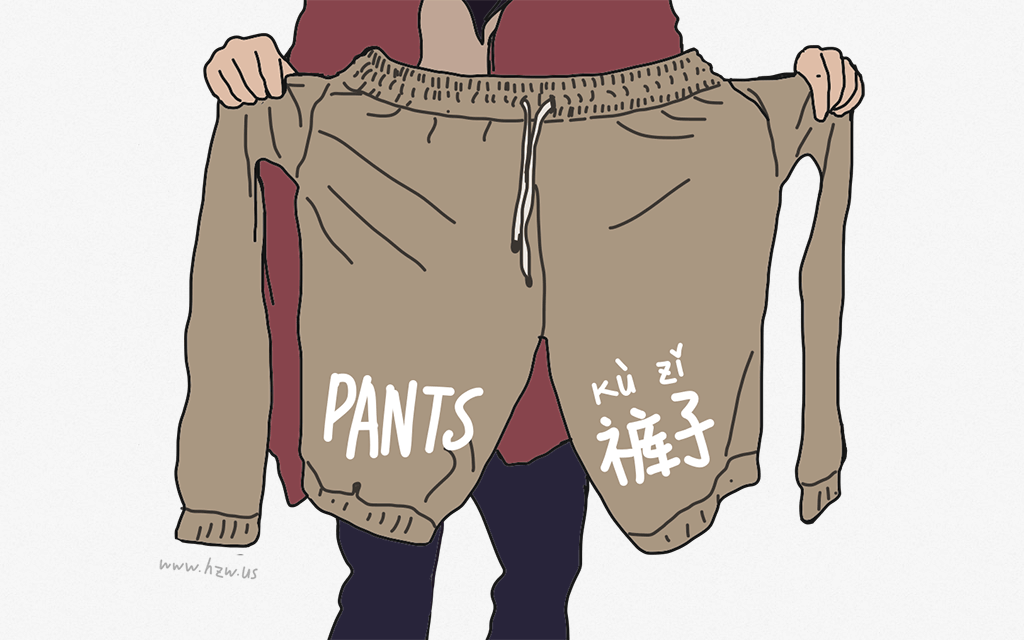
Someone holds up something that cannot decide what it is: it has a drawstring waist and two legs, but also sleeves with cuffs. Whatever went wrong here, the part with two legs is 裤子.

裤子 (kùzi) means “pants” or “trousers.” The 子 is a neutral tone, short and light, even though the drawing writes it with a tone mark.

Count pants with the measure word 条 (tiáo): 一条裤子 (yì tiáo kùzi), one pair of pants.

这条裤子太长了。 — Zhè tiáo kùzi tài cháng le. — These pants are too long.

我想买一条裤子。 — Wǒ xiǎng mǎi yì tiáo kùzi. — I want to buy a pair of pants.

Image text versions

  1. Image 1 text version for "Pants". English: Pants. Chinese: 裤子. Pinyin: Kùzi. Audio keys: ku4, zi3. Categories: fun, clothes, life. Tags: pants, clothes, mistake.

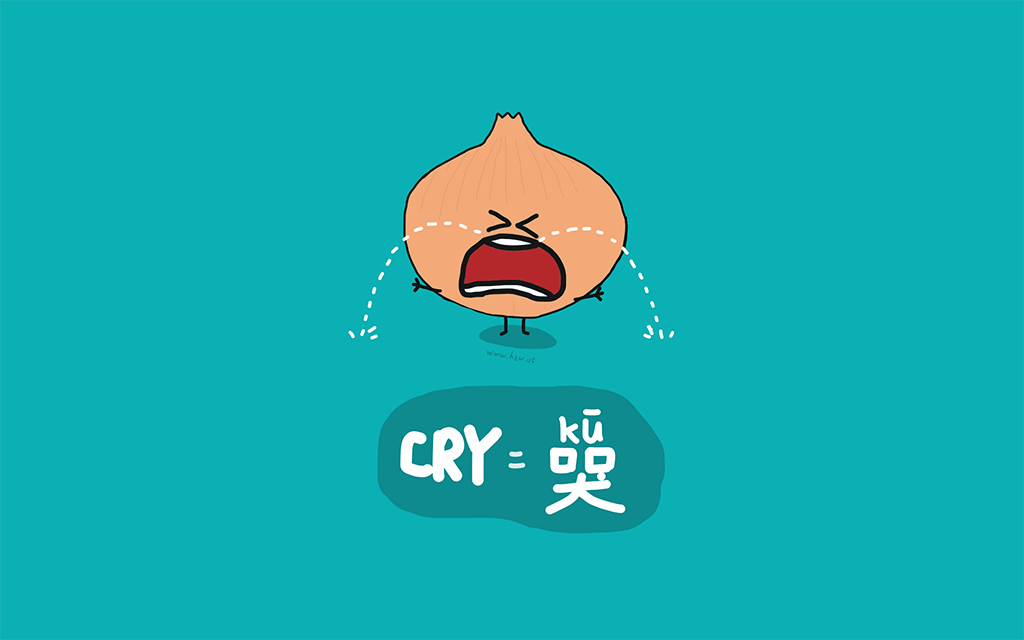
Cry = 哭 [Kū]

Cry: 哭 (Kū)

Cry = 哭 [Kū]

Onions usually make people cry, but this one is bawling itself, mouth wide open, tears pouring down both sides. That is 哭.

哭 (kū) means “to cry.” The two 口 on top can look like two crying eyes. The opposite is 笑 (xiào), to laugh.

To cry hard is 大哭 (dà kū).

别哭了。 — Bié kū le. — Stop crying.

切洋葱的时候,我总是哭。 — Qiē yángcōng de shíhou, wǒ zǒngshì kū. — I always cry when I cut onions.

Image text versions

  1. Image 1 text version for "Cry". English: Cry. Chinese: 哭. Pinyin: Kū. Audio keys: ku1. Categories: fun, food, life. Tags: cry, Onion.

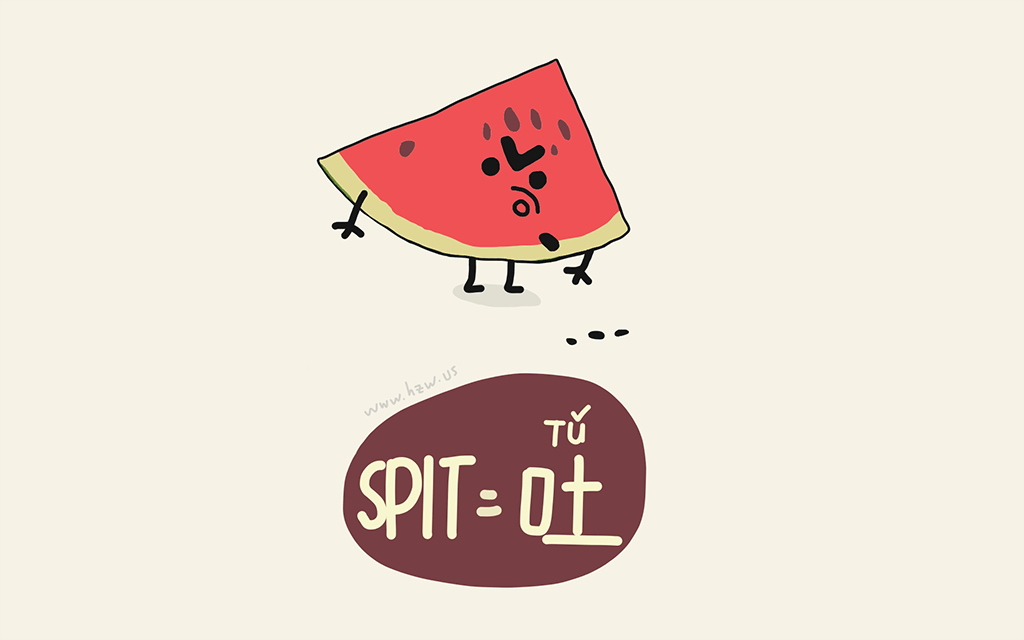
Spit = 吐 [tǔ]

Spit: 吐 (tǔ)

Image text versions

  1. Image 1 text version for "Spit". English: Spit. Chinese: 吐. Pinyin: tǔ. Audio keys: tu3. Categories: fun, food, sports. Tags: spit, watermelon, food.

Spit = 吐 [tǔ]

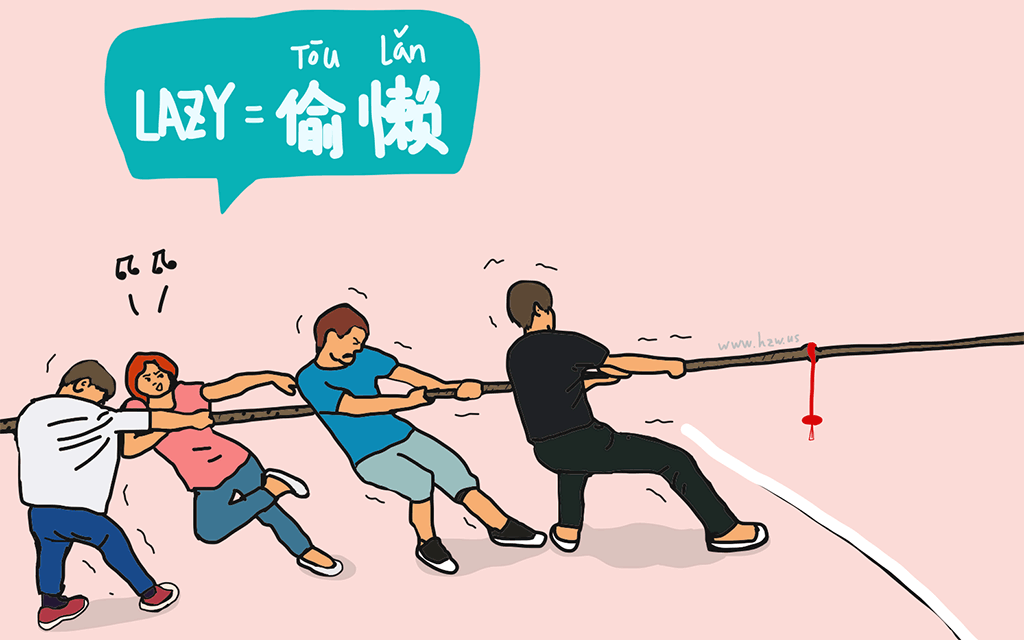
Lazy = 偷懒 [Tōu lǎn]

Lazy: 偷懒 (Tōu lǎn)

Lazy = 偷懒 [Tōu lǎn]

Everyone is straining on the rope except the one humming a tune with her eyes closed. She is 偷懒: slacking off while the others do the work.

偷懒 (tōu lǎn) means to slack off: to be lazy about a job you are supposed to be doing. Literally, 偷 is “on the sly” and 懒 is “lazy.” 懒 (lǎn) on its own describes a lazy person; 偷懒 describes the act.

别偷懒! — Bié tōulǎn! — Don’t slack off!

他又在偷懒。 — Tā yòu zài tōulǎn. — He is slacking off again.

Image text versions

  1. Image 1 text version for "Lazy". English: Lazy. Chinese: 偷懒. Pinyin: Tōu lǎn. Audio keys: tou1, lan3. Categories: fun, life, sports. Tags: Lazy, Tug_of_War, pose, contest.

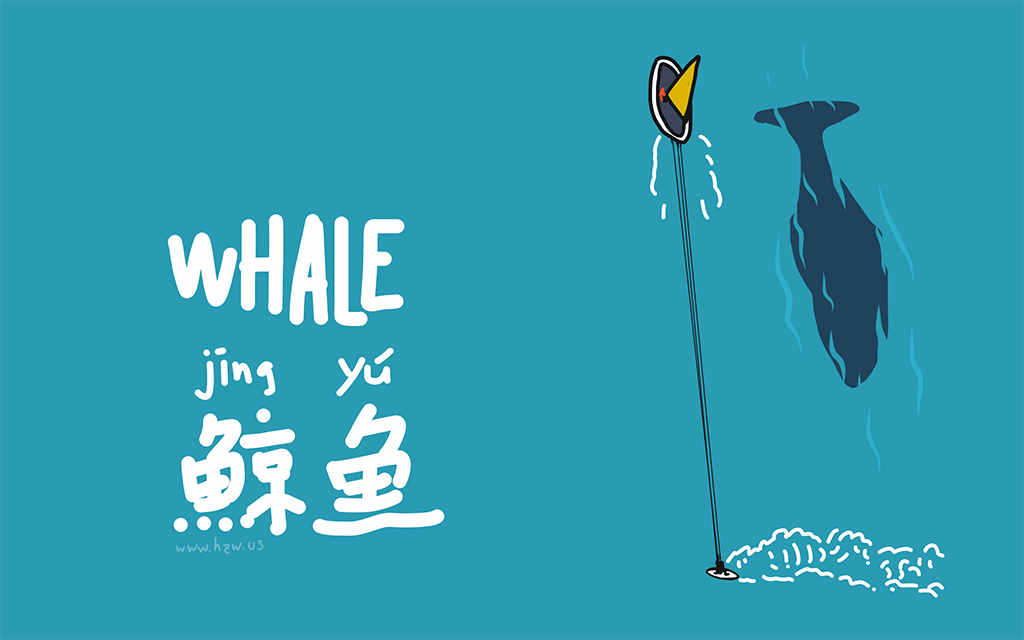
Whale = 鲸鱼 [Jīng yú]

Whale: 鲸鱼 (Jīng yú)

Whale = 鲸鱼 [Jīng yú]

Seen from above, a huge dark shape glides just under the surface beside a tiny sail. That shadow, far bigger than the boat, is a 鲸鱼.

鲸鱼 (jīng yú) means “whale.” 鲸 is the character for whale, and 鱼 means fish. A whale is not a fish, but the everyday word keeps 鱼 anyway.

Count whales with the measure word 头 (tóu): 一头鲸鱼 (yì tóu jīngyú), one whale.

鲸鱼不是鱼。 — Jīngyú bú shì yú. — A whale is not a fish.

我们看到了一头鲸鱼。 — Wǒmen kàndào le yì tóu jīngyú. — We saw a whale.

Image text versions

  1. Image 1 text version for "Whale". English: Whale. Chinese: 鲸鱼. Pinyin: Jīng yú. Audio keys: jing1, yu2. Categories: fun, animal, life, sports. Tags: whale #surf, boat, dangerous, sea.

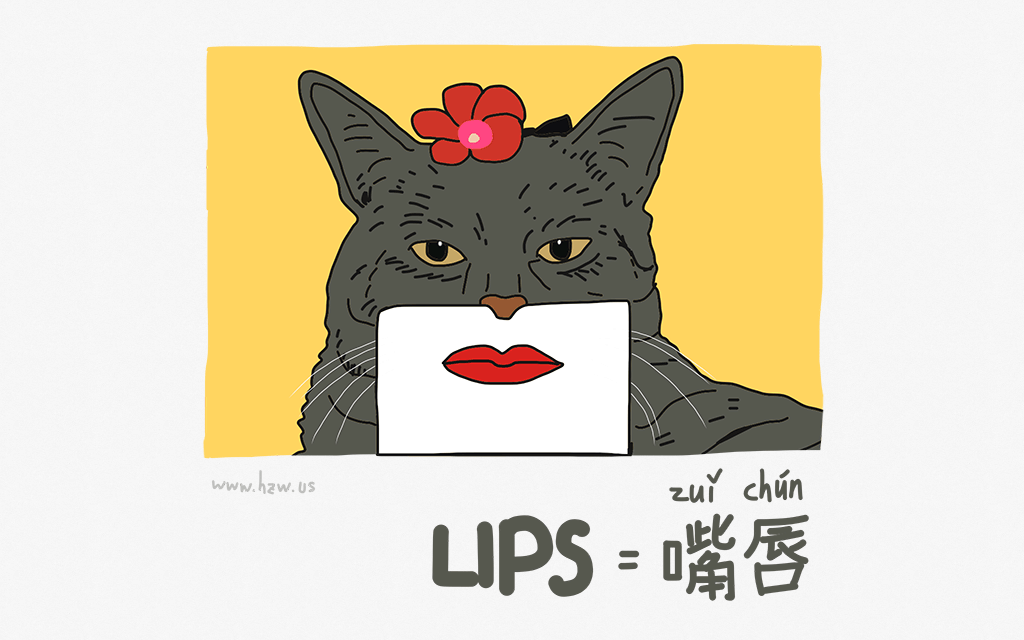
Lips = 嘴唇 [zuǐ chún]

Lips: 嘴唇 (zuǐ chún)

Lips = 嘴唇 [zuǐ chún]

A grumpy grey cat with a red flower on its head holds up a card with bright red lips. Now the cat has 嘴唇.

嘴唇 (zuǐ chún) means “lips.” 嘴 is mouth and 唇 is lip. Lipstick is 口红 (kǒuhóng), literally “mouth red.”

她的嘴唇很红。 — Tā de zuǐchún hěn hóng. — Her lips are very red.

我的嘴唇很干。 — Wǒ de zuǐchún hěn gān. — My lips are dry.

Image text versions

  1. Image 1 text version for "Lips". English: Lips. Chinese: 嘴唇. Pinyin: zuǐ chún. Audio keys: zui3, chun2. Categories: fun, animal, life. Tags: red, lips, cat, flower.

Lollipop = 棒棒糖 [Bàng bàng táng]

Lollipop: 棒棒糖 (Bàng bàng táng)

Lollipop = 棒棒糖 [Bàng bàng táng]

A toddler has fallen asleep standing up, face on the sofa, with the lollipop still in his hand. He never let go of the 棒棒糖.

棒棒糖 (bàng bàng táng) means “lollipop.” 棒 is a stick and 糖 is candy or sugar: stick-stick candy.

Count lollipops with 根 (gēn): 一根棒棒糖 (yì gēn bàngbàngtáng).

我想吃棒棒糖。 — Wǒ xiǎng chī bàngbàngtáng. — I want a lollipop.

他手里拿着一根棒棒糖。 — Tā shǒu li názhe yì gēn bàngbàngtáng. — He is holding a lollipop.

Image text versions

  1. Image 1 text version for "Lollipop". English: Lollipop. Chinese: 棒棒糖. Pinyin: Bàng bàng táng. Audio keys: bang4, tang2. Categories: fun, food, life. Tags: lollipop, kid, sleep, sofa.

Stay high = 居高不下 [jū gāo bù xià]

Stay high: 居高不下 (jū gāo bù xià)

Stay high = 居高不下 [jū gāo bù xià]

A cat sits on top of a utility pole and will not come down. Stay (居) high (高), not (不) down (下): 居高不下.

居高不下 (jū gāo bù xià) is a set phrase meaning “to remain high” or “to stay stubbornly high.” It is used for numbers that will not come down, such as prices, temperatures or unemployment. The cat on the pole is the literal picture.

In speech, 不 changes to a rising tone before a falling tone, so the phrase is pronounced jū gāo bú xià.

房价居高不下。 — Fángjià jū gāo bú xià. — Housing prices remain high.

气温居高不下。 — Qìwēn jū gāo bú xià. — Temperatures are staying high.

Image text versions

  1. Image 1 text version for "Stay high". English: Stay high. Chinese: 居高不下. Pinyin: jū gāo bù xià. Audio keys: ju1, gao1, bu4, xia4. Categories: fun, animal, life, sports. Tags: cat, sit, phone, poles, high, lonely.

Monster = 怪物 [guài wù]

Monster: 怪物 (guài wù)

Monster = 怪物 [guài wù]

The Loch Ness Monster turns out to be an elephant wading through the lake with a monster head on its trunk. The part above the water is the 怪物.

怪物 (guài wù) means “monster.” 怪 is strange and 物 is a thing or creature: a strange creature. The Loch Ness Monster is 尼斯湖水怪 (Nísī Hú shuǐguài), where 水怪 is a water monster.

我不怕怪物。 — Wǒ bú pà guàiwù. — I am not afraid of monsters.

湖里有怪物吗? — Hú li yǒu guàiwù ma? — Is there a monster in the lake?

Image text versions

  1. Image 1 text version for "Monster". English: Monster. Chinese: 怪物. Pinyin: guài wù. Audio keys: guai4, wu4. Categories: fun, animal, countries, culture. Tags: Loch, Ness, Monster, elephant.

Tennis = 网球 [wǎng qiú]

Tennis: 网球 (wǎng qiú)

Tennis = 网球 [wǎng qiú]

Meanwhile in Minnesota: two players on ice skates rally across a frozen rink, the net tied to a tree stump. Still 网球.

网球 (wǎngqiú) means “tennis,” and also a tennis ball. 网 is net and 球 is ball, so it is “net ball.”

To play tennis is 打网球 (dǎ wǎngqiú); ball games you hit with your hand or a racket take 打. Table tennis is 乒乓球 (pīngpāngqiú).

你会打网球吗? — Nǐ huì dǎ wǎngqiú ma? — Can you play tennis?

我们周末去打网球吧。 — Wǒmen zhōumò qù dǎ wǎngqiú ba. — Let’s play tennis this weekend.

Image text versions

  1. Image 1 text version for "Tennis". English: Tennis. Chinese: 网球. Pinyin: wǎng qiú. Audio keys: wang3, qiu2. Categories: fun, life, sports. Tags: skate, winter, snow, tennis, minnesota.

Smile = 微笑 [wēi xiào]

Smile: 微笑 (wēi xiào)

Smile = 微笑 [wēi xiào]

Grapes for hair, an orange for a nose, and a banana for the mouth. The plate is giving you a 微笑.

微笑 (wēi xiào) means “smile,” as a noun or a verb. 微 is slight and 笑 is to laugh or smile: a slight smile.

她对我微笑。 — Tā duì wǒ wēixiào. — She smiles at me.

请微笑! — Qǐng wēixiào! — Smile, please!

Image text versions

  1. Image 1 text version for "Smile". English: Smile. Chinese: 微笑. Pinyin: wēi xiào. Audio keys: wei1, xiao4. Categories: fun, food, life. Tags: smile, fruit, plate, banana, Raisins, orange, Grapes.

Hug = 拥抱 [yōng bào]

Hug: 拥抱 (yōng bào)

Hug = 拥抱 [yōng bào]

A red tomato and its pale, round best friend close their eyes and hold each other tight. That is a 拥抱.

拥抱 (yōng bào) means “to hug” or “a hug.” In casual speech people often just say 抱 (bào), as in 抱一下 (bào yíxià), “a quick hug.”

给我一个拥抱。 — Gěi wǒ yí ge yōngbào. — Give me a hug.

他们拥抱在一起。 — Tāmen yōngbào zài yìqǐ. — They are hugging each other.

Image text versions

  1. Image 1 text version for "Hug". English: Hug. Chinese: 拥抱. Pinyin: yōng bào. Audio keys: yong1, bao4. Categories: fun, food, life, sports. Tags: hug, egg, potato.

Drunk = 醉 [Zuì]

Drunk: 醉 (Zuì)

Drunk = 醉 [Zuì]

A phone with a shattered screen lies plugged into its charger, groaning, “I need to stop drinking.” It looks completely 醉.

醉 (zuì) means “drunk.” The left side, 酉, appears in many characters to do with alcohol, such as 酒 (jiǔ).

People usually say 喝醉了 (hē zuì le), literally “drank till drunk.”

他喝醉了。 — Tā hē zuì le. — He’s drunk.

我没醉! — Wǒ méi zuì! — I’m not drunk!

Image text versions

  1. Image 1 text version for "Drunk". English: Drunk. Chinese: 醉. Pinyin: Zuì. Audio keys: zui4. Categories: fun, life. Tags: drunk, iphone, broken, apple.

Mouse = 鼠标 [Shǔ biāo]

Mouse: 鼠标 (Shǔ biāo)

Mouse = 鼠标 [Shǔ biāo]

On an old computer desktop, the mouse pointer smashes through the edge of the screen, yelling “LET ME OUT.” That pointer is moved by a 鼠标.

鼠标 (shǔbiāo) means a computer “mouse.” 鼠 means mouse or rat, and 标 means marker. The animal is 老鼠 (lǎoshǔ).

To click is 点击 (diǎnjī), or simply 点 (diǎn).

我的鼠标坏了。 — Wǒ de shǔbiāo huài le. — My mouse is broken.

用鼠标点一下这里。 — Yòng shǔbiāo diǎn yíxià zhèlǐ. — Click here with the mouse.

Image text versions

  1. Image 1 text version for "Mouse". English: Mouse. Chinese: 鼠标. Pinyin: Shǔ biāo. Audio keys: shu3, biao1. Categories: fun, animal, tech. Tags: mouse, winxp, pointer, getout.

Headache = 头痛 [Tóu tòng]

Headache: 头痛 (Tóu tòng)

Headache = 头痛 [Tóu tòng]

A pale bulldog sits with its forehead pressed against a wooden post, eyes squeezed shut. That is the look of 头痛.

头痛 (tóutòng) means “headache” or “to have a headache.” 头 is head and 痛 means pain. In everyday speech 头疼 (tóuténg) means the same.

As in English, it can also describe something troublesome.

我有点儿头痛。 — Wǒ yǒudiǎnr tóutòng. — I have a bit of a headache.

这个问题真让人头痛。 — Zhège wèntí zhēn ràng rén tóutòng. — This problem is a real headache.

Image text versions

  1. Image 1 text version for "Headache". English: Headache. Chinese: 头痛. Pinyin: Tóu tòng. Audio keys: tou2, tong4. Categories: fun, animal, life. Tags: dog, headache, desk.

Kungfu = 功夫 [gōng fū]

Kungfu: 功夫 (gōng fū)

Kungfu = 功夫 [gōng fū]

A baby in a yellow onesie lies on a quilt with fists up and one leg kicking, ready for a fight. That is baby 功夫.

功夫 (gōngfu) means “kung fu,” Chinese martial arts; the English word comes from it. The 夫 is usually said light, even though the drawing marks it fū.

功夫 also means time and effort: 花功夫 (huā gōngfu), to put in effort. Chinese martial arts are also called 武术 (wǔshù).

他会功夫。 — Tā huì gōngfu. — He knows kung fu.

学好中文要花很多功夫。 — Xué hǎo Zhōngwén yào huā hěn duō gōngfu. — Learning Chinese well takes a lot of effort.

Image text versions

  1. Image 1 text version for "Kungfu". English: Kungfu. Chinese: 功夫. Pinyin: gōng fū. Audio keys: gong1, fu1. Categories: fun, clothes, culture, sports. Tags: kungfu, baby, kid, yellow.

Rabbit = 兔子 [tù zǐ]

Rabbit: 兔子 (tù zǐ)

Rabbit = 兔子 [tù zǐ]

A big pale dog wears pink bunny ears and holds a carrot in its mouth, a bunch of greens dangling beside it. It is trying very hard to be a 兔子.

兔子 (tùzi) means “rabbit” or “bunny.” The 子 is a neutral tone, even though the drawing marks it zǐ. Count rabbits with 只 (zhī): 一只兔子.

Without 子, 兔 appears in set words like 兔年 (tù nián), the Year of the Rabbit.

兔子爱吃胡萝卜。 — Tùzi ài chī húluóbo. — Rabbits love carrots.

这只狗想当兔子。 — Zhè zhī gǒu xiǎng dāng tùzi. — This dog wants to be a rabbit.

Image text versions

  1. Image 1 text version for "Rabbit". English: Rabbit. Chinese: 兔子. Pinyin: tù zǐ. Audio keys: tu4, zi3. Categories: fun, animal, clothes, food. Tags: rabbit, carrot, dog, pink.

Angry = 生气 [shēng qì]

Angry: 生气 (shēng qì)

Angry = 生气 [shēng qì]

A red chili pepper stands with its hands on its hips, eyes squeezed shut, blasting fire out of its mouth. It is very, very 生气.

生气 (shēngqì) means “angry” or “to get angry.” 生 means to produce, and 气 is air, breath or anger.

To be angry with someone, put them in the middle: 生我的气 (shēng wǒ de qì), angry with me.

别生气了。 — Bié shēngqì le. — Don’t be angry anymore.

他还在生我的气。 — Tā hái zài shēng wǒ de qì. — He is still angry with me.

Image text versions

  1. Image 1 text version for "Angry". English: Angry. Chinese: 生气. Pinyin: shēng qì. Audio keys: sheng1, qi4. Categories: fun, food. Tags: chili, angry, fire, jet.

Family = 家庭 [jiā tíng]

Family: 家庭 (jiā tíng)

Family = 家庭 [jiā tíng]

A big pink pig is a USB hub, and the piglets are USB sticks. Once every piglet is plugged in beside mom, they are a 家庭.

家庭 (jiātíng) means “family,” a household. 家 means home or family, and 庭 means courtyard. In everyday talk people often say 家人 (jiārén), family members, or just 家.

家庭 appears in many compounds, such as 家庭作业 (jiātíng zuòyè), homework.

他有一个幸福的家庭。 — Tā yǒu yí ge xìngfú de jiātíng. — He has a happy family.

我们家是个大家庭。 — Wǒmen jiā shì ge dà jiātíng. — We are a big family.

Image text versions

  1. Image 1 text version for "Family". English: Family. Chinese: 家庭. Pinyin: jiā tíng. Audio keys: jia1, ting2. Categories: fun, animal, culture, design, tech. Tags: family, pig, usb, cable.