Category: clothes (10)

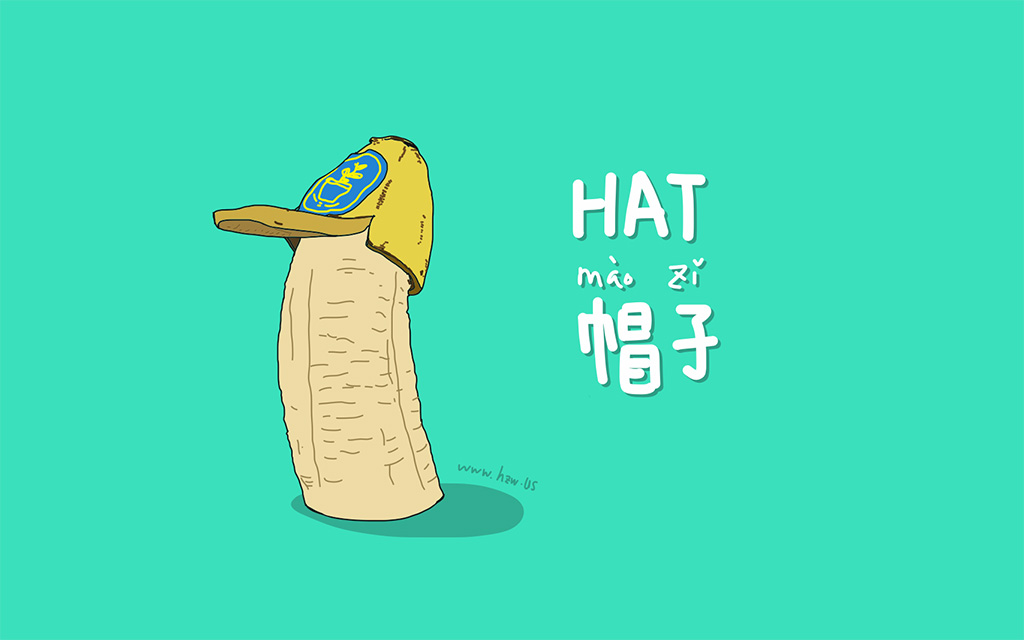
Hat = 帽子 [Mào zi]

Hat: 帽子 (Mào zi)

Hat = 帽子 [Mào zi]

A peeled banana wears its own peel as a baseball cap, sticker and all. That is one fresh 帽子.

帽子 (màozi) means “hat” or “cap.” The 子 is a neutral tone. Count hats with 顶 (dǐng): 一顶帽子 (yì dǐng màozi).

To wear a hat, use 戴 (dài), not 穿 (chuān). 穿 is for clothes you put your body into; 戴 is for things you put on, like hats, glasses and watches.

他戴着一顶帽子。 — Tā dàizhe yì dǐng màozi. — He is wearing a hat.

你的帽子很好看。 — Nǐ de màozi hěn hǎokàn. — Your hat looks nice.
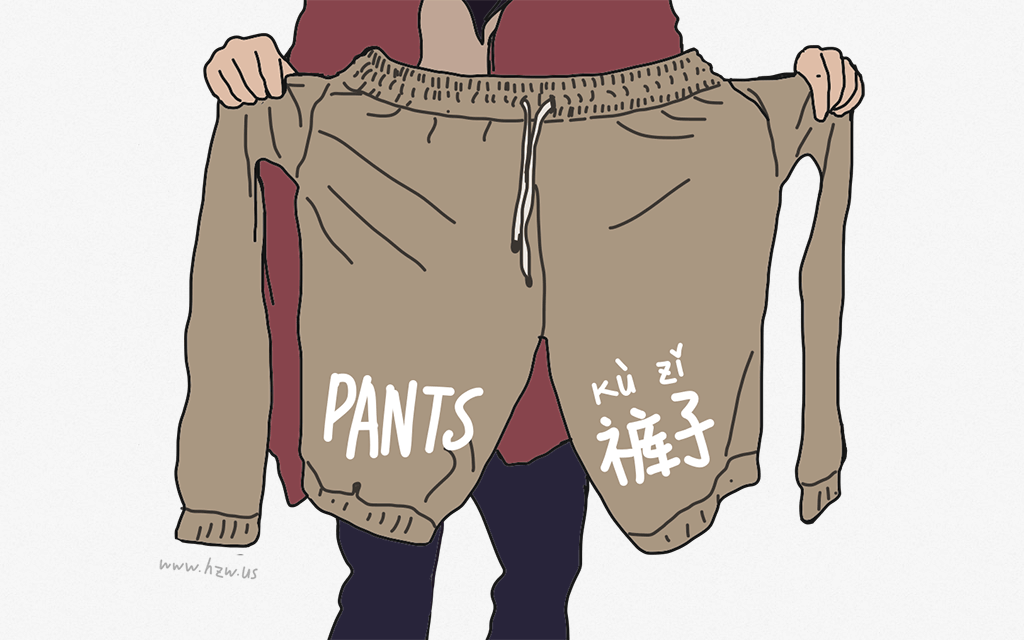
Image text versions

  1. Image 1 text version for "Hat". English: Hat. Chinese: 帽子. Pinyin: Mào zi. Audio keys: mao4, zi3. Categories: fun, clothes, food. Tags: hat, cute, banana.

Pants = 裤子 [Kùzi]

Pants: 裤子 (Kùzi)

Pants = 裤子 [Kùzi]

Someone holds up something that cannot decide what it is: it has a drawstring waist and two legs, but also sleeves with cuffs. Whatever went wrong here, the part with two legs is 裤子.

裤子 (kùzi) means “pants” or “trousers.” The 子 is a neutral tone, short and light, even though the drawing writes it with a tone mark.

Count pants with the measure word 条 (tiáo): 一条裤子 (yì tiáo kùzi), one pair of pants.

这条裤子太长了。 — Zhè tiáo kùzi tài cháng le. — These pants are too long.

我想买一条裤子。 — Wǒ xiǎng mǎi yì tiáo kùzi. — I want to buy a pair of pants.

Image text versions

  1. Image 1 text version for "Pants". English: Pants. Chinese: 裤子. Pinyin: Kùzi. Audio keys: ku4, zi3. Categories: fun, clothes, life. Tags: pants, clothes, mistake.

Follow the drawing archive

Get future illustrated words without hunting through the archive.

RSS feed

Kungfu = 功夫 [gōng fū]

Kungfu: 功夫 (gōng fū)

Kungfu = 功夫 [gōng fū]

A baby in a yellow onesie lies on a quilt with fists up and one leg kicking, ready for a fight. That is baby 功夫.

功夫 (gōngfu) means “kung fu,” Chinese martial arts; the English word comes from it. The 夫 is usually said light, even though the drawing marks it fū.

功夫 also means time and effort: 花功夫 (huā gōngfu), to put in effort. Chinese martial arts are also called 武术 (wǔshù).

他会功夫。 — Tā huì gōngfu. — He knows kung fu.

学好中文要花很多功夫。 — Xué hǎo Zhōngwén yào huā hěn duō gōngfu. — Learning Chinese well takes a lot of effort.

Image text versions

  1. Image 1 text version for "Kungfu". English: Kungfu. Chinese: 功夫. Pinyin: gōng fū. Audio keys: gong1, fu1. Categories: fun, clothes, culture, sports. Tags: kungfu, baby, kid, yellow.

Rabbit = 兔子 [tù zǐ]

Rabbit: 兔子 (tù zǐ)

Rabbit = 兔子 [tù zǐ]

A big pale dog wears pink bunny ears and holds a carrot in its mouth, a bunch of greens dangling beside it. It is trying very hard to be a 兔子.

兔子 (tùzi) means “rabbit” or “bunny.” The 子 is a neutral tone, even though the drawing marks it zǐ. Count rabbits with 只 (zhī): 一只兔子.

Without 子, 兔 appears in set words like 兔年 (tù nián), the Year of the Rabbit.

兔子爱吃胡萝卜。 — Tùzi ài chī húluóbo. — Rabbits love carrots.

这只狗想当兔子。 — Zhè zhī gǒu xiǎng dāng tùzi. — This dog wants to be a rabbit.

Image text versions

  1. Image 1 text version for "Rabbit". English: Rabbit. Chinese: 兔子. Pinyin: tù zǐ. Audio keys: tu4, zi3. Categories: fun, animal, clothes, food. Tags: rabbit, carrot, dog, pink.

Pajamas = 睡衣 [shuì yī]

Pajamas: 睡衣 (shuì yī)

Pajamas = 睡衣 [shuì yī]

A cream-colored cat with a dark tail sleeps on its back in a green zip-up hoodie, hood pulled up. Those are its 睡衣.

睡衣 (shuìyī) means “pajamas” or “nightclothes.” 睡 is to sleep and 衣 means clothes.

Count a matching set with 套 (tào): 一套睡衣. To put them on is 穿睡衣 (chuān shuìyī).

我一回家就换上睡衣。 — Wǒ yì huí jiā jiù huàn shàng shuìyī. — I change into my pajamas as soon as I get home.

他穿着睡衣去买早饭。 — Tā chuānzhe shuìyī qù mǎi zǎofàn. — He went to buy breakfast in his pajamas.

Image text versions

  1. Image 1 text version for "Pajamas". English: Pajamas. Chinese: 睡衣. Pinyin: shuì yī. Audio keys: shui4, yi1. Categories: animal, clothes, life. Tags: pajamas, green, cat, bed, sleep.

Chinese New Year = 春节 [Chūn jié]

Chinese New Year: 春节 (Chūn jié)

Chinese New Year = 春节 [Chūn jié]

A grinning kid in a red-and-gold jacket wears curly ram horns under his cap, because 2015 was the Year of the Ram. The holiday he is dressed up for is 春节.

春节 (Chūnjié) is the Spring Festival, the Chinese or Lunar New Year. 春 means spring and 节 means festival. It falls between January 21 and February 20.

Each year has one of twelve zodiac animals. 2015 was 羊年 (yáng nián); 羊 covers sheep, goats and rams, so in English it is called the Year of the Goat, the Sheep or the Ram.

春节快乐! — Chūnjié kuàilè! — Happy Spring Festival!

春节你回家吗? — Chūnjié nǐ huí jiā ma? — Are you going home for the Spring Festival?

Image text versions

  1. Image 1 text version for "Chinese New Year". English: Chinese New Year. Chinese: 春节. Pinyin: Chūn jié. Audio keys: chun1, jie2. Categories: clothes, countries, culture, life. Tags: cny, ram, chinese, holiday, Chūnjié.