Category: culture (57)

Chinese Valentine’s day = 七夕 [qī xī]

Chinese Valentine’s day: 七夕 (qī xī)

Chinese Valentine’s day = 七夕 [qī xī]

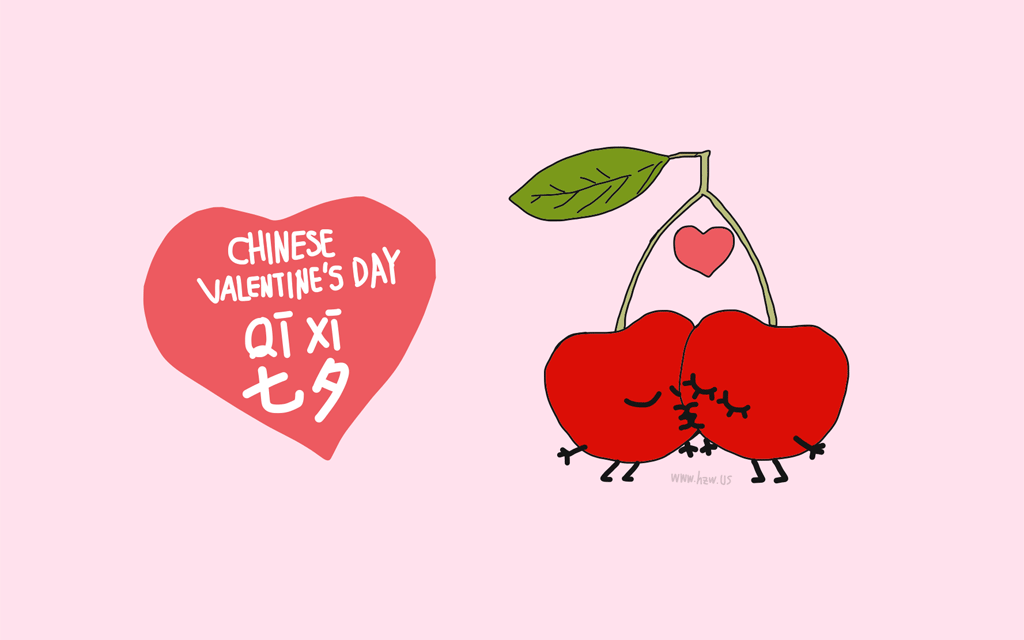
Two cherries on one stem lean in for a kiss. 七夕 is the day for couples.

七夕 (qī xī) is the Qixi Festival, often called Chinese Valentine’s Day. 七 is seven and 夕 is evening: it falls on the evening of the seventh day of the seventh lunar month.

The festival comes from the story of the cowherd and the weaver girl, 牛郎织女 (Niúláng Zhīnǚ), two lovers who can meet only once a year, on this night.

七夕快乐! — Qīxī kuàilè! — Happy Qixi!

今年七夕是哪一天? — Jīnnián Qīxī shì nǎ yì tiān? — What day is Qixi this year?
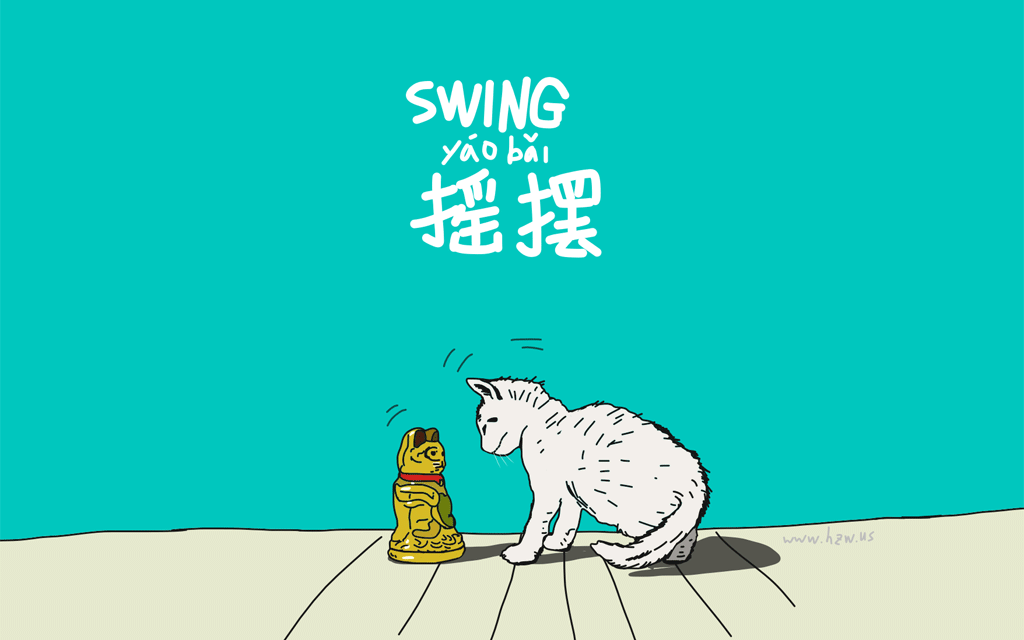
Image text versions

  1. Image 1 text version for "Chinese Valentine’s day". English: Chinese Valentine’s day. Chinese: 七夕. Pinyin: qī xī. Audio keys: qi1, xi1. Categories: countries, culture, food, life. Tags: cherry, kiss, qixi.

Swing = 摇摆 [Yáo bǎi]

Swing: 摇摆 (Yáo bǎi)

Swing = 摇摆 [Yáo bǎi]

A white cat tilts its head at a golden lucky cat whose paw swings back and forth, and starts to sway along. Back and forth: 摇摆.

摇摆 (yáo bǎi) means “to sway” or “to swing from side to side.” It can also mean to waver, as when someone cannot make up their mind.

It is a verb. A playground swing is a different word: 秋千 (qiūqiān).

树枝在风中摇摆。 — Shùzhī zài fēng zhōng yáobǎi. — The branches sway in the wind.

他的态度摇摆不定。 — Tā de tàidu yáobǎi bú dìng. — His attitude keeps wavering.

Image text versions

  1. Image 1 text version for "Swing". English: Swing. Chinese: 摇摆. Pinyin: Yáo bǎi. Audio keys: yao2, bai3. Categories: fun, animal, culture, life. Tags: swing, lucky, cat.

Broke / Bankrupt = 破产 [Pò chǎn]

Broke / Bankrupt: 破产 (Pò chǎn)

Broke / Bankrupt = 破产 [Pò chǎn]

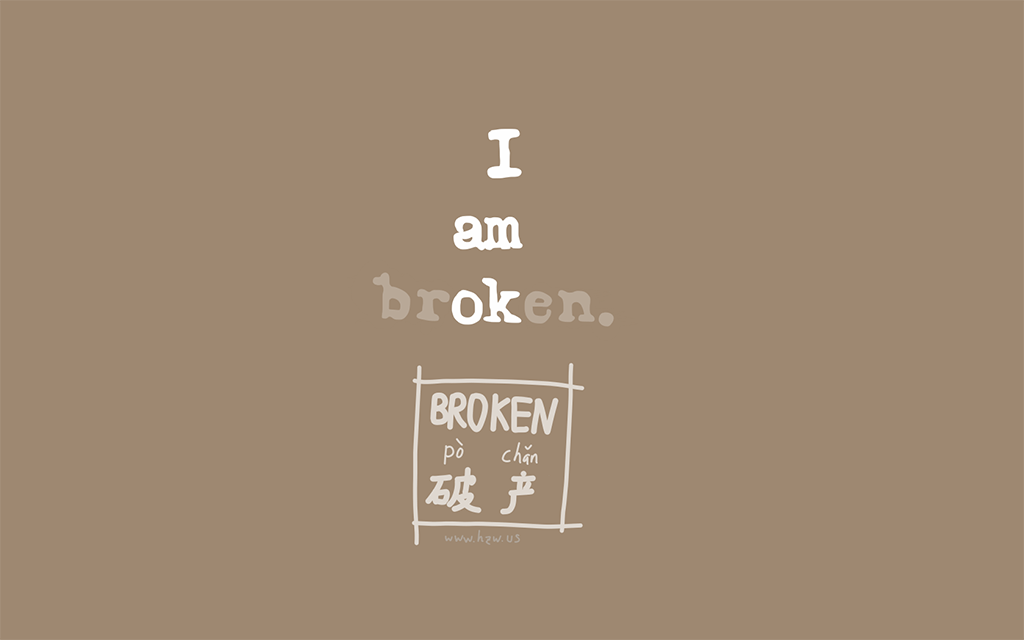
The poster says “I am broken,” but the bright letters in the middle spell “ok.” Out of money and still fine: that is being 破产.

破产 (pò chǎn) means “to go bankrupt” or, more casually, “to be broke.” 破 is to break and 产 is property, so it is about money, not about things that are damaged.

For something that is broken and no longer works, say 坏了 (huài le) instead.

公司破产了。 — Gōngsī pòchǎn le. — The company went bankrupt.

我快破产了。 — Wǒ kuài pòchǎn le. — I am about to go broke.

Image text versions

  1. Image 1 text version for "Broke / Bankrupt". English: Broke / Bankrupt. Chinese: 破产. Pinyin: Pò chǎn. Audio keys: po4, chan3. Categories: countries, culture, life. Tags: broken, ok.

Follow the drawing archive

Get future illustrated words without hunting through the archive.

RSS feed

Monster = 怪物 [guài wù]

Monster: 怪物 (guài wù)

Monster = 怪物 [guài wù]

The Loch Ness Monster turns out to be an elephant wading through the lake with a monster head on its trunk. The part above the water is the 怪物.

怪物 (guài wù) means “monster.” 怪 is strange and 物 is a thing or creature: a strange creature. The Loch Ness Monster is 尼斯湖水怪 (Nísī Hú shuǐguài), where 水怪 is a water monster.

我不怕怪物。 — Wǒ bú pà guàiwù. — I am not afraid of monsters.

湖里有怪物吗? — Hú li yǒu guàiwù ma? — Is there a monster in the lake?

Image text versions

  1. Image 1 text version for "Monster". English: Monster. Chinese: 怪物. Pinyin: guài wù. Audio keys: guai4, wu4. Categories: fun, animal, countries, culture. Tags: Loch, Ness, Monster, elephant.

Yes = 好的 [hǎo dē]

Yes: 好的 (hǎo dē)

Yes = 好的 [hǎo dē]

One guy asks how to ruin your life in one week; his friend says, “Say yes to everything,” which in Chinese means a week of 好的.

好的 (hǎo de) means “OK,” “sure” or “all right.” It is how you agree to a request or a plan. The 的 is a neutral tone, even though the drawing marks it dē.

Chinese does not use one all-purpose word for “yes.” To answer a yes-or-no question, you usually repeat the verb: 你去吗?去。 (Nǐ qù ma? Qù.) “Are you going?” “Yes.” 好的 agrees to do something; 是的 (shì de) confirms that something is true.

我们明天见面,好吗?好的。 — Wǒmen míngtiān jiànmiàn, hǎo ma? Hǎo de. — Let’s meet tomorrow, OK? OK.

好的,我马上来。 — Hǎo de, wǒ mǎshàng lái. — Sure, I’ll be right there.

Image text versions

  1. Image 1 text version for "Yes". English: Yes. Chinese: 好的. Pinyin: hǎo dē. Audio keys: hao3, de1. Categories: culture, life. Tags: life, yes, ruin, dialog.

Kungfu = 功夫 [gōng fū]

Kungfu: 功夫 (gōng fū)

Kungfu = 功夫 [gōng fū]

A baby in a yellow onesie lies on a quilt with fists up and one leg kicking, ready for a fight. That is baby 功夫.

功夫 (gōngfu) means “kung fu,” Chinese martial arts; the English word comes from it. The 夫 is usually said light, even though the drawing marks it fū.

功夫 also means time and effort: 花功夫 (huā gōngfu), to put in effort. Chinese martial arts are also called 武术 (wǔshù).

他会功夫。 — Tā huì gōngfu. — He knows kung fu.

学好中文要花很多功夫。 — Xué hǎo Zhōngwén yào huā hěn duō gōngfu. — Learning Chinese well takes a lot of effort.

Image text versions

  1. Image 1 text version for "Kungfu". English: Kungfu. Chinese: 功夫. Pinyin: gōng fū. Audio keys: gong1, fu1. Categories: fun, clothes, culture, sports. Tags: kungfu, baby, kid, yellow.

Family = 家庭 [jiā tíng]

Family: 家庭 (jiā tíng)

Family = 家庭 [jiā tíng]

A big pink pig is a USB hub, and the piglets are USB sticks. Once every piglet is plugged in beside mom, they are a 家庭.

家庭 (jiātíng) means “family,” a household. 家 means home or family, and 庭 means courtyard. In everyday talk people often say 家人 (jiārén), family members, or just 家.

家庭 appears in many compounds, such as 家庭作业 (jiātíng zuòyè), homework.

他有一个幸福的家庭。 — Tā yǒu yí ge xìngfú de jiātíng. — He has a happy family.

我们家是个大家庭。 — Wǒmen jiā shì ge dà jiātíng. — We are a big family.

Image text versions

  1. Image 1 text version for "Family". English: Family. Chinese: 家庭. Pinyin: jiā tíng. Audio keys: jia1, ting2. Categories: fun, animal, culture, design, tech. Tags: family, pig, usb, cable.

Watch = 手表 [Shǒu biǎo]

Watch: 手表 (Shǒu biǎo)

Watch = 手表 [Shǒu biǎo]

A watch strapped on inside a sliced apple: a very literal Apple Watch. The watch on your wrist is a 手表.

手表 (shǒu biǎo) means “wristwatch.” 手 is hand and 表 is a watch or meter. Count watches with 块 (kuài): 一块手表 (yí kuài shǒubiǎo).

Two third tones in a row change the first one to a rising tone, so 手表 is pronounced shóu biǎo. That is the spelling in the drawing.

我的手表坏了。 — Wǒ de shǒubiǎo huài le. — My watch is broken.

这块手表很贵。 — Zhè kuài shǒubiǎo hěn guì. — This watch is expensive.

Image text versions

  1. Image 1 text version for "Watch". English: Watch. Chinese: 手表. Pinyin: Shǒu biǎo. Audio keys: shou3, biao3. Categories: fun, culture, design, life, tech. Tags: apple, watch, fun, lol, hand.

Office = 办公室 [Bàn gōng shì]

Office: 办公室 (Bàn gōng shì)

Office = 办公室 [Bàn gōng shì]

A desk with two monitors and a potted plant stands outdoors, plugged into the building by a long cable. “The whole world is your office,” and an office is an 办公室.

办公室 (bàn gōng shì) means “office.” 办公 (bàn gōng) is to do office work, and 室 (shì) is a room.

她在办公室。 — Tā zài bàngōngshì. — She is in the office.

我的办公室很小。 — Wǒ de bàngōngshì hěn xiǎo. — My office is small.

Image text versions

  1. Image 1 text version for "Office". English: Office. Chinese: 办公室. Pinyin: Bàn gōng shì. Audio keys: ban4, gong1, shi4. Categories: fun, culture, life. Tags: office, outside, work, building, road.

Math = 数学 [shù xué]

Math: 数学 (shù xué)

Math = 数学 [shù xué]

Two hands hold up a clock whose numbers are all math problems: √4 for two, 3! for six, 16/2 for eight. Telling the time takes 数学.

数学 (shùxué) means “mathematics.” 数 means number and 学 means study.

As a verb, 数 is read shǔ and means to count. A math class is 数学课 (shùxué kè).

我的数学不太好。 — Wǒ de shùxué bú tài hǎo. — I’m not very good at math.

我们明天有数学考试。 — Wǒmen míngtiān yǒu shùxué kǎoshì. — We have a math test tomorrow.

Image text versions

  1. Image 1 text version for "Math". English: Math. Chinese: 数学. Pinyin: shù xué. Audio keys: shu4, xue2. Categories: culture, design, life, tech. Tags: math, shuxue, clock.

Lock = 锁 [Suǒ]

Lock: 锁 (Suǒ)

Lock = 锁 [Suǒ]

A hand holds a smartphone, and a chain runs from the phone to a cuff around the wrist. The two are locked together: 锁.

锁 (suǒ) means “lock,” and also “to lock.” The left side, 钅, is the metal radical.

To lock the door is 锁门 (suǒ mén). A key is 钥匙 (yàoshi), and a phone’s lock screen is 锁屏 (suǒpíng).

出门别忘了锁门。 — Chūmén bié wàng le suǒ mén. — Don’t forget to lock the door when you go out.

我的手机锁屏了。 — Wǒ de shǒujī suǒpíng le. — My phone screen is locked.

Image text versions

  1. Image 1 text version for "Lock". English: Lock. Chinese: 锁. Pinyin: Suǒ. Audio keys: suo3. Categories: fun, culture, life, tech. Tags: iphone, Lock, hand, screen.

Chinese New Year = 春节 [Chūn jié]

Chinese New Year: 春节 (Chūn jié)

Chinese New Year = 春节 [Chūn jié]

A grinning kid in a red-and-gold jacket wears curly ram horns under his cap, because 2015 was the Year of the Ram. The holiday he is dressed up for is 春节.

春节 (Chūnjié) is the Spring Festival, the Chinese or Lunar New Year. 春 means spring and 节 means festival. It falls between January 21 and February 20.

Each year has one of twelve zodiac animals. 2015 was 羊年 (yáng nián); 羊 covers sheep, goats and rams, so in English it is called the Year of the Goat, the Sheep or the Ram.

春节快乐! — Chūnjié kuàilè! — Happy Spring Festival!

春节你回家吗? — Chūnjié nǐ huí jiā ma? — Are you going home for the Spring Festival?

Image text versions

  1. Image 1 text version for "Chinese New Year". English: Chinese New Year. Chinese: 春节. Pinyin: Chūn jié. Audio keys: chun1, jie2. Categories: clothes, countries, culture, life. Tags: cny, ram, chinese, holiday, Chūnjié.

Chair = 椅子 [yǐ zi]

Chair: 椅子 (yǐ zi)

Chair = 椅子 [yǐ zi]

This rocking chair has three seats side by side: a chair for generations. A man reads to a child on each side seat and one on his lap, all in one 椅子.

椅子 (yǐzi) means “chair.” The 子 is a neutral tone. The 木 on the left means wood.

Count chairs with 把 (bǎ), the measure word for things you can grab: 一把椅子. A rocking chair is 摇椅 (yáoyǐ).

请坐这把椅子。 — Qǐng zuò zhè bǎ yǐzi. — Please sit in this chair.

房间里有四把椅子。 — Fángjiān lǐ yǒu sì bǎ yǐzi. — There are four chairs in the room.

Image text versions

  1. Image 1 text version for "Chair". English: Chair. Chinese: 椅子. Pinyin: yǐ zi. Audio keys: yi3, zi1. Categories: culture, design, life. Tags: chair, grandpa, children, reading.

Valentine's Day = 情人节 [qíng rén jié]

Valentine's Day: 情人节 (qíng rén jié)

Valentine's Day = 情人节 [qíng rén jié]

Two cats snuggle inside a sneaker, listening to music on headphones, with a red heart floating between the music notes. It is 情人节.

情人节 (Qíngrénjié) is Valentine’s Day. 情人 means sweetheart or lover, and 节 means festival.

China also has its own Valentine’s Day, 七夕 (Qīxī), on the seventh day of the seventh lunar month.

情人节快乐! — Qíngrénjié kuàilè! — Happy Valentine’s Day!

情人节你有什么计划? — Qíngrénjié nǐ yǒu shénme jìhuà? — What are your plans for Valentine’s Day?

Image text versions

  1. Image 1 text version for "Valentine's Day". English: Valentine's Day. Chinese: 情人节. Pinyin: qíng rén jié. Audio keys: qing2, ren2, jie2. Categories: animal, culture, life, music. Tags: cat, music, happy, shoe.

Homework = 作业 [zuò yè]

Homework: 作业 (zuò yè)

Homework = 作业 [zuò yè]

On a traffic island in a busy street, with cars rushing past, a kid crouches over his book: “doing homework at street.” That is 作业.

作业 (zuòyè) means “homework” or “assignment.” 作 means to do and 业 means work or a task.

To do homework is 做作业 (zuò zuòyè) or 写作业 (xiě zuòyè). The full word for homework is 家庭作业 (jiātíng zuòyè).

我还没做完作业。 — Wǒ hái méi zuò wán zuòyè. — I haven’t finished my homework yet.

今天老师没留作业。 — Jīntiān lǎoshī méi liú zuòyè. — The teacher didn’t give any homework today.

Image text versions

  1. Image 1 text version for "Homework". English: Homework. Chinese: 作业. Pinyin: zuò yè. Audio keys: zuo4, ye4. Categories: countries, culture, life. Tags: street, pupil, homework.

Head = 头 [tóu]

Head: 头 (tóu)

Head = 头 [tóu]

An ostrich has buried its whole head in the ground, leaving only a body, two legs and a neck going into the dirt. The hidden part is its 头.

头 (tóu) means “head.” It is also in 头发 (tóufa), hair, literally “head hair.”

头 is the measure word for some big animals: 一头牛 (yì tóu niú), one cow. A headache is 头疼 (tóu téng) or 头痛 (tóu tòng).

我头疼。 — Wǒ tóu téng. — I have a headache.

他摇了摇头。 — Tā yáo le yáo tóu. — He shook his head.

Image text versions

  1. Image 1 text version for "Head". English: Head. Chinese: 头. Pinyin: tóu. Audio keys: tou2. Categories: countries, culture, fun. Tags: ostrich, head.

Home = 家 [jiā]

Home: 家 (jiā)

Home = 家 [jiā]

A long trail of sand drifts through the air and pours back into an hourglass. For sand, the hourglass is home, sweet home: 家.

家 (jiā) means “home,” “house” or “family.” The top part, 宀, is a roof, and the part under it, 豕, is an old character for pig.

To go home is 回家 (huí jiā). 我家 (wǒ jiā) can mean “my home” or “my family.”

我要回家了。 — Wǒ yào huí jiā le. — I’m going home now.

欢迎来我家! — Huānyíng lái wǒ jiā! — Welcome to my home!

Image text versions

  1. Image 1 text version for "Home". English: Home. Chinese: 家. Pinyin: jiā. Audio keys: jia1. Categories: countries, culture, life. Tags: hourglass, home, sand.

Popcorn = 爆米花 [bào mǐ huā]

Popcorn: 爆米花 (bào mǐ huā)

Popcorn = 爆米花 [bào mǐ huā]

Two guys sit side by side watching a movie, both stuffing their faces with popcorn. Movie night means 爆米花.

爆米花 (bàomǐhuā) means “popcorn.” 爆 means to burst or pop, 米 is rice or grain, and 花 is flower: “popped grain flowers.”

A bucket of popcorn is 一桶爆米花 (yì tǒng bàomǐhuā).

看电影的时候,我喜欢吃爆米花。 — Kàn diànyǐng de shíhou, wǒ xǐhuan chī bàomǐhuā. — I like eating popcorn at the movies.

我们买一大桶爆米花吧。 — Wǒmen mǎi yí dà tǒng bàomǐhuā ba. — Let’s get a big bucket of popcorn.

Image text versions

  1. Image 1 text version for "Popcorn". English: Popcorn. Chinese: 爆米花. Pinyin: bào mǐ huā. Audio keys: bao4, mi3, hua1. Categories: culture, food, fun. Tags: popcorn, movie, fat.

Gift = 礼物 [lǐ wù]

Gift: 礼物 (lǐ wù)

Gift = 礼物 [lǐ wù]

A clock with a bow on top sits next to a man with a big bump on his head, because a clock is a traditional no-no as a present in China. Pick a different 礼物.

礼物 (lǐwù) means “gift” or “present.” 礼 means courtesy or ritual, and 物 means thing.

A gift is counted with 份 (fèn): 一份礼物. Clocks are traditionally avoided as gifts, because 送钟 (sòng zhōng), “give a clock,” sounds the same as 送终 (sòngzhōng), to attend someone at the end of life.

这是送给你的礼物。 — Zhè shì sòng gěi nǐ de lǐwù. — This is a present for you.

谢谢你的礼物! — Xièxie nǐ de lǐwù! — Thank you for the gift!

Image text versions

  1. Image 1 text version for "Gift". English: Gift. Chinese: 礼物. Pinyin: lǐ wù. Audio keys: li3, wu4. Categories: countries, culture, life. Tags: gift, clock, chinese.

Clock = 钟 [zhōng]

Clock: 钟 (zhōng)

Clock = 钟 [zhōng]

A sketch of a Las Vegas casino comes with a speech bubble claiming you won’t find a single 钟 inside.

钟 (zhōng) means “clock,” the kind on a wall or a tower, and also “bell.” A wristwatch is 手表 (shǒubiǎo).

钟 also shows up in time words: 三点钟 (sān diǎnzhōng), three o’clock; 十分钟 (shí fēnzhōng), ten minutes.

墙上有一个钟。 — Qiáng shang yǒu yí ge zhōng. — There is a clock on the wall.

我等了十分钟。 — Wǒ děng le shí fēnzhōng. — I waited ten minutes.

Image text versions

  1. Image 1 text version for "Clock". English: Clock. Chinese: 钟. Pinyin: zhōng. Audio keys: zhong1. Categories: countries, culture, life. Tags: las_vegas, casino.

Dog = 狗 [gǒu]

Dog: 狗 (gǒu)

Dog = 狗 [gǒu]

A man walks his dog on a long leash, but five balloons hold the dog up in the air like a kite. Still a 狗.

狗 (gǒu) means “dog.” A puppy is 小狗 (xiǎo gǒu). Count dogs with 只 (zhī) or 条 (tiáo): 一只狗, one dog.

To walk a dog is 遛狗 (liù gǒu).

他每天晚上遛狗。 — Tā měitiān wǎnshang liù gǒu. — He walks the dog every evening.

你喜欢狗还是猫? — Nǐ xǐhuan gǒu háishi māo? — Do you like dogs or cats?

Image text versions

  1. Image 1 text version for "Dog". English: Dog. Chinese: 狗. Pinyin: gǒu. Audio keys: gou3. Categories: culture, fun, life. Tags: woman, fashion, flying.

Thank You = 谢谢 [xiè xie]

Thank You: 谢谢 (xiè xie)

Thank You = 谢谢 [xiè xie]

A red roly-poly bear has been knocked over thousands of times and always pops back up. When a hand finally tucks it into bed, it says: 谢谢.

谢谢 (xièxie) means “thank you.” It is one character said twice, and the second 谢 is light and short. To thank a person, add them after it: 谢谢你 (xièxie nǐ).

The usual reply is 不客气 (bú kèqi), “you’re welcome,” or 不用谢 (bú yòng xiè), “no need to thank me.” The wobbly toy itself is a 不倒翁 (bùdǎowēng), literally “old man who never falls.”

谢谢你的帮助。 — Xièxie nǐ de bāngzhù. — Thank you for your help.

谢谢!不客气。 — Xièxie! Bú kèqi. — Thanks! You’re welcome.

Image text versions

  1. Image 1 text version for "Thank You". English: Thank You. Chinese: 谢谢. Pinyin: xiè xie. Audio keys: xie4, xie4. Categories: culture, fun, life. Tags: Roly-poly, toy, tumbler.

Elevator = 电梯 [diàn tī]

Elevator: 电梯 (diàn tī)

Elevator = 电梯 [diàn tī]

A caveman sees an older woman step into an elevator and a young woman step out, and decides: “I should put my wife into this machine!” That machine is a 电梯.

电梯 (diàntī) means “elevator” or “lift.” 电 means electricity and 梯 means ladder or stairs, so it is “electric stairs.” An escalator is 自动扶梯 (zìdòng fútī).

To take the elevator is 坐电梯 (zuò diàntī).

我们坐电梯上去吧。 — Wǒmen zuò diàntī shàngqu ba. — Let’s take the elevator up.

电梯坏了。 — Diàntī huài le. — The elevator is broken.

Image text versions

  1. Image 1 text version for "Elevator". English: Elevator. Chinese: 电梯. Pinyin: diàn tī. Audio keys: dian4, ti1. Categories: culture, life, tech. Tags: primitive, machine, change.