Category: life (127)

Chinese Valentine’s day = 七夕 [qī xī]

Chinese Valentine’s day: 七夕 (qī xī)

Chinese Valentine’s day = 七夕 [qī xī]

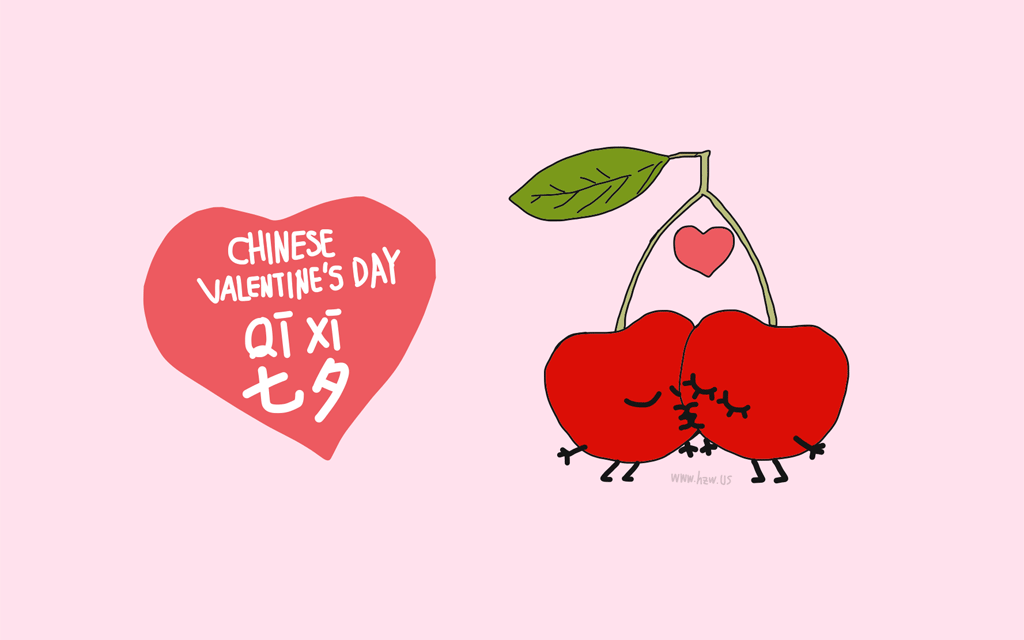
Two cherries on one stem lean in for a kiss. 七夕 is the day for couples.

七夕 (qī xī) is the Qixi Festival, often called Chinese Valentine’s Day. 七 is seven and 夕 is evening: it falls on the evening of the seventh day of the seventh lunar month.

The festival comes from the story of the cowherd and the weaver girl, 牛郎织女 (Niúláng Zhīnǚ), two lovers who can meet only once a year, on this night.

七夕快乐! — Qīxī kuàilè! — Happy Qixi!

今年七夕是哪一天? — Jīnnián Qīxī shì nǎ yì tiān? — What day is Qixi this year?
Image text versions

  1. Image 1 text version for "Chinese Valentine’s day". English: Chinese Valentine’s day. Chinese: 七夕. Pinyin: qī xī. Audio keys: qi1, xi1. Categories: countries, culture, food, life. Tags: cherry, kiss, qixi.

Swing = 摇摆 [Yáo bǎi]

Swing: 摇摆 (Yáo bǎi)

Swing = 摇摆 [Yáo bǎi]

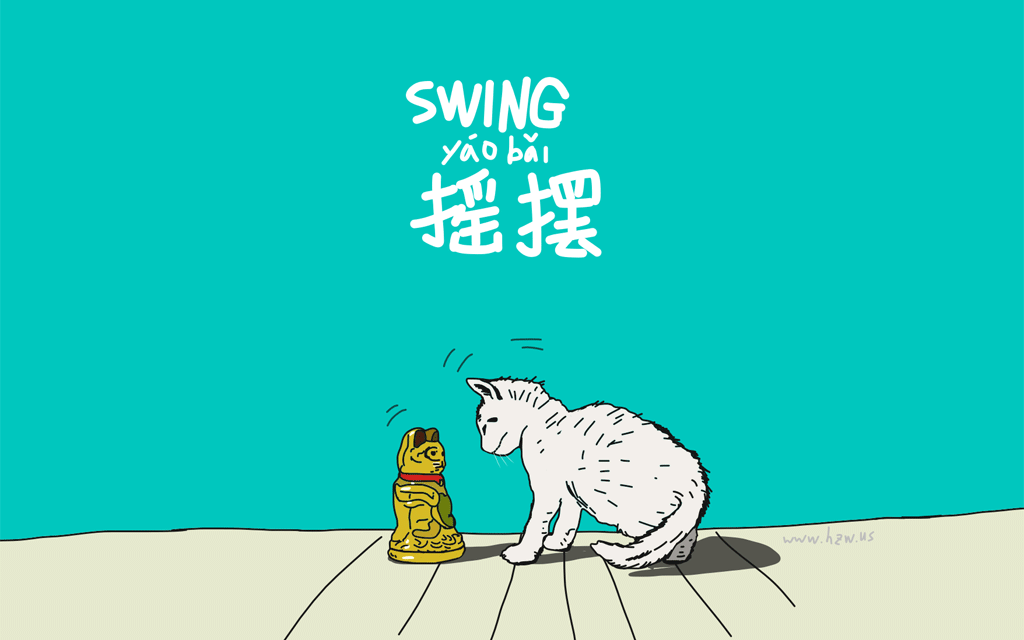
A white cat tilts its head at a golden lucky cat whose paw swings back and forth, and starts to sway along. Back and forth: 摇摆.

摇摆 (yáo bǎi) means “to sway” or “to swing from side to side.” It can also mean to waver, as when someone cannot make up their mind.

It is a verb. A playground swing is a different word: 秋千 (qiūqiān).

树枝在风中摇摆。 — Shùzhī zài fēng zhōng yáobǎi. — The branches sway in the wind.

他的态度摇摆不定。 — Tā de tàidu yáobǎi bú dìng. — His attitude keeps wavering.

Image text versions

  1. Image 1 text version for "Swing". English: Swing. Chinese: 摇摆. Pinyin: Yáo bǎi. Audio keys: yao2, bai3. Categories: fun, animal, culture, life. Tags: swing, lucky, cat.

Follow the drawing archive

Get future illustrated words without hunting through the archive.

RSS feed

Lying = 躺 [Tǎng]

Lying: 躺 (Tǎng)

Lying = 躺 [Tǎng]

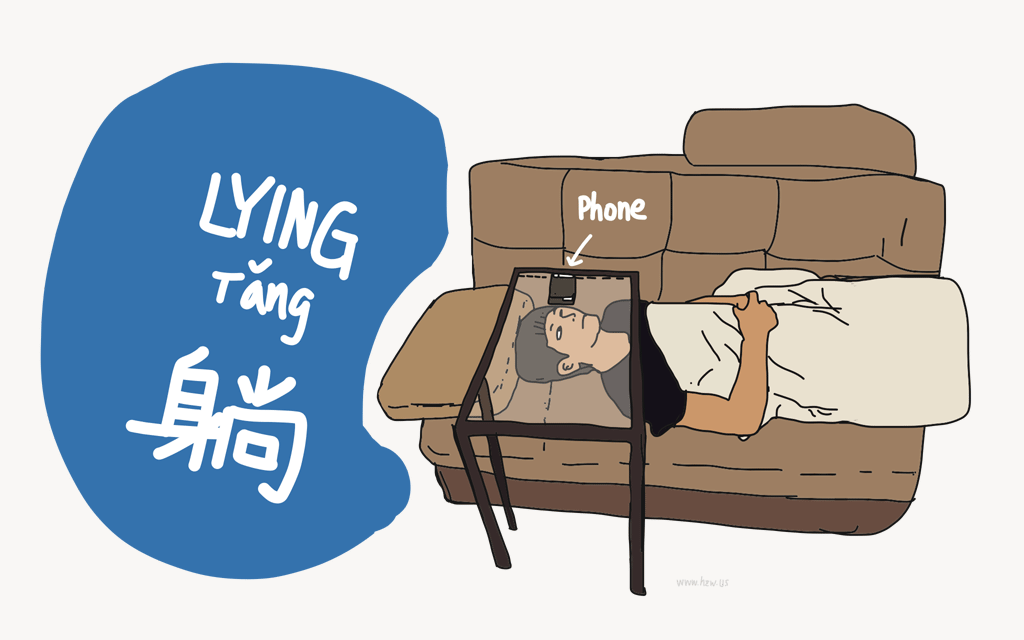
Someone is lying flat on the sofa with their head under a glass table, watching the phone that rests on the glass above their face. That flat-out position is 躺.

躺 (tǎng) means to lie, as in lying on your back or your side. It is about body position and has nothing to do with telling a lie. 躺下 (tǎng xià) means to lie down.

我想躺一会儿。 — Wǒ xiǎng tǎng yíhuìr. — I want to lie down for a while.

他躺在沙发上。 — Tā tǎng zài shāfā shang. — He is lying on the sofa.

Image text versions

  1. Image 1 text version for "Lying". English: Lying. Chinese: 躺. Pinyin: Tǎng. Audio keys: tang3. Categories: fun, life. Tags: phone, watch, sofa.

Pants = 裤子 [Kùzi]

Pants: 裤子 (Kùzi)

Pants = 裤子 [Kùzi]

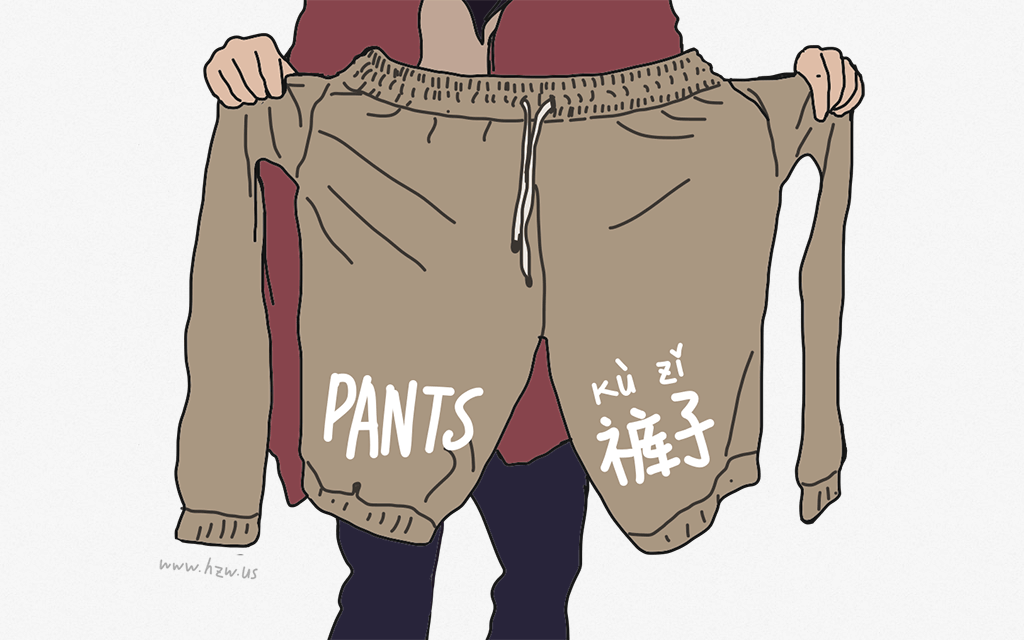
Someone holds up something that cannot decide what it is: it has a drawstring waist and two legs, but also sleeves with cuffs. Whatever went wrong here, the part with two legs is 裤子.

裤子 (kùzi) means “pants” or “trousers.” The 子 is a neutral tone, short and light, even though the drawing writes it with a tone mark.

Count pants with the measure word 条 (tiáo): 一条裤子 (yì tiáo kùzi), one pair of pants.

这条裤子太长了。 — Zhè tiáo kùzi tài cháng le. — These pants are too long.

我想买一条裤子。 — Wǒ xiǎng mǎi yì tiáo kùzi. — I want to buy a pair of pants.

Image text versions

  1. Image 1 text version for "Pants". English: Pants. Chinese: 裤子. Pinyin: Kùzi. Audio keys: ku4, zi3. Categories: fun, clothes, life. Tags: pants, clothes, mistake.

Cry = 哭 [Kū]

Cry: 哭 (Kū)

Cry = 哭 [Kū]

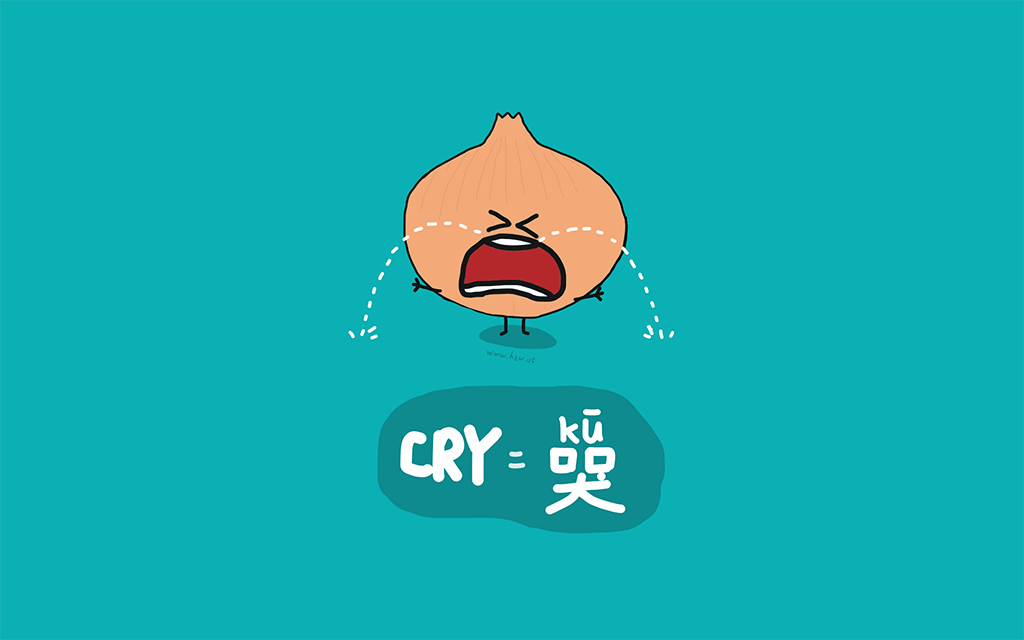
Onions usually make people cry, but this one is bawling itself, mouth wide open, tears pouring down both sides. That is 哭.

哭 (kū) means “to cry.” The two 口 on top can look like two crying eyes. The opposite is 笑 (xiào), to laugh.

To cry hard is 大哭 (dà kū).

别哭了。 — Bié kū le. — Stop crying.

切洋葱的时候,我总是哭。 — Qiē yángcōng de shíhou, wǒ zǒngshì kū. — I always cry when I cut onions.

Image text versions

  1. Image 1 text version for "Cry". English: Cry. Chinese: 哭. Pinyin: Kū. Audio keys: ku1. Categories: fun, food, life. Tags: cry, Onion.

Broke / Bankrupt = 破产 [Pò chǎn]

Broke / Bankrupt: 破产 (Pò chǎn)

Broke / Bankrupt = 破产 [Pò chǎn]

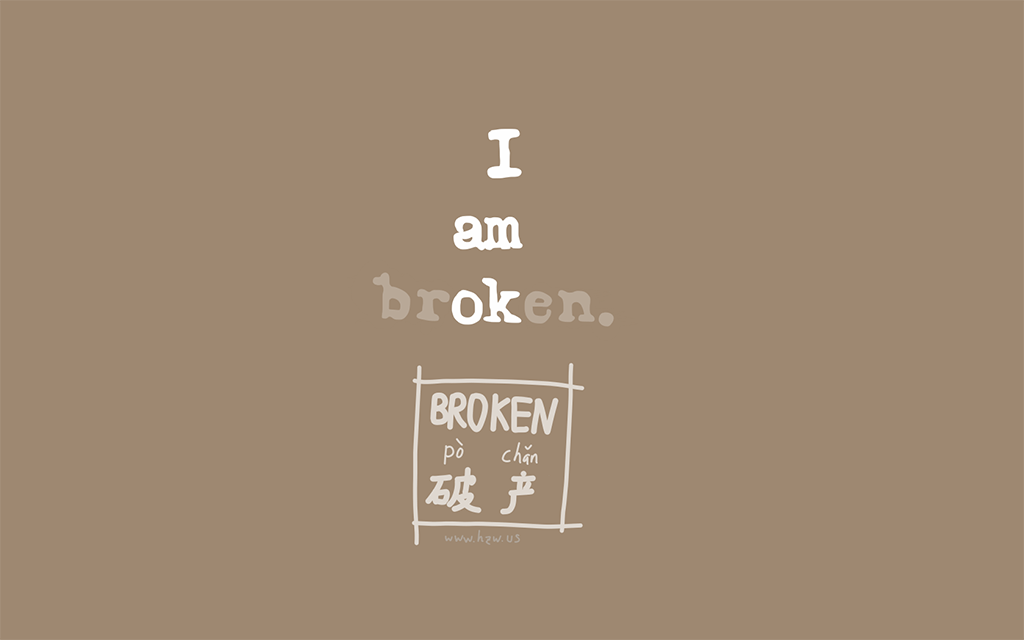
The poster says “I am broken,” but the bright letters in the middle spell “ok.” Out of money and still fine: that is being 破产.

破产 (pò chǎn) means “to go bankrupt” or, more casually, “to be broke.” 破 is to break and 产 is property, so it is about money, not about things that are damaged.

For something that is broken and no longer works, say 坏了 (huài le) instead.

公司破产了。 — Gōngsī pòchǎn le. — The company went bankrupt.

我快破产了。 — Wǒ kuài pòchǎn le. — I am about to go broke.

Image text versions

  1. Image 1 text version for "Broke / Bankrupt". English: Broke / Bankrupt. Chinese: 破产. Pinyin: Pò chǎn. Audio keys: po4, chan3. Categories: countries, culture, life. Tags: broken, ok.

Lazy = 偷懒 [Tōu lǎn]

Lazy: 偷懒 (Tōu lǎn)

Lazy = 偷懒 [Tōu lǎn]

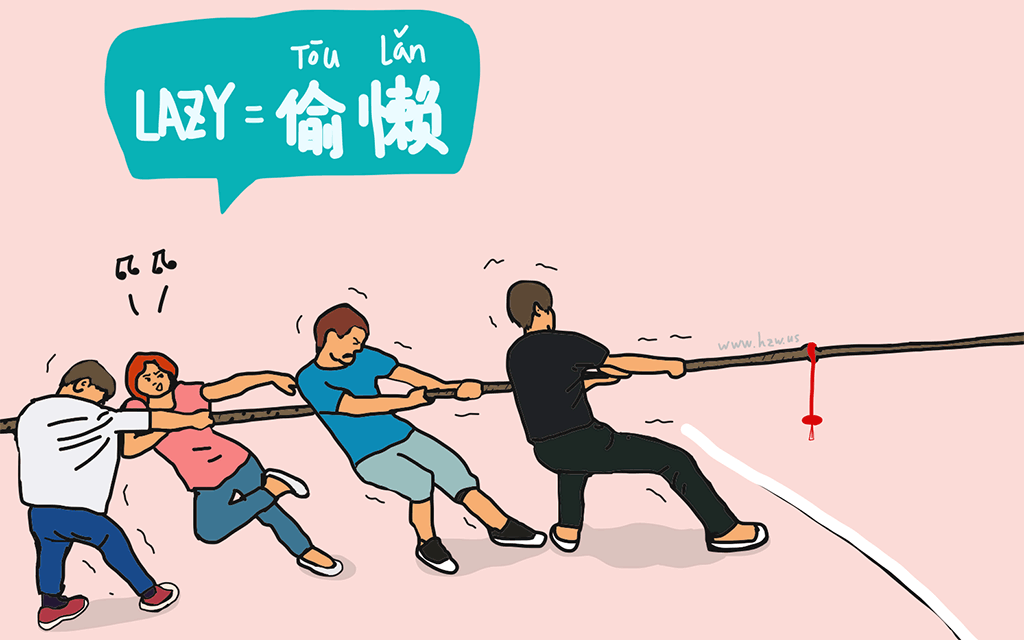
Everyone is straining on the rope except the one humming a tune with her eyes closed. She is 偷懒: slacking off while the others do the work.

偷懒 (tōu lǎn) means to slack off: to be lazy about a job you are supposed to be doing. Literally, 偷 is “on the sly” and 懒 is “lazy.” 懒 (lǎn) on its own describes a lazy person; 偷懒 describes the act.

别偷懒! — Bié tōulǎn! — Don’t slack off!

他又在偷懒。 — Tā yòu zài tōulǎn. — He is slacking off again.

Image text versions

  1. Image 1 text version for "Lazy". English: Lazy. Chinese: 偷懒. Pinyin: Tōu lǎn. Audio keys: tou1, lan3. Categories: fun, life, sports. Tags: Lazy, Tug_of_War, pose, contest.

Whale = 鲸鱼 [Jīng yú]

Whale: 鲸鱼 (Jīng yú)

Whale = 鲸鱼 [Jīng yú]

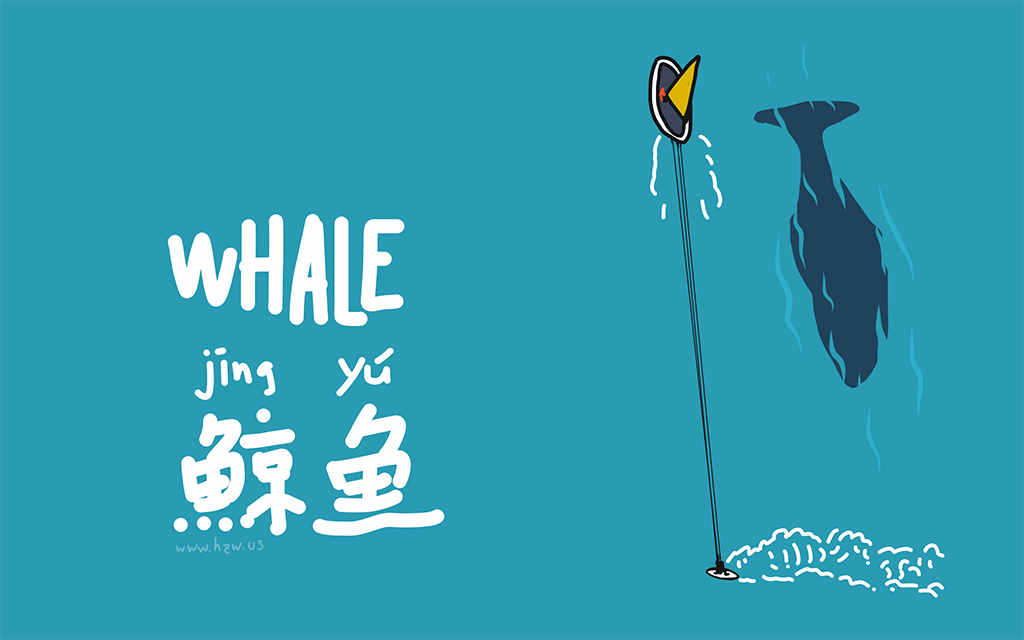
Seen from above, a huge dark shape glides just under the surface beside a tiny sail. That shadow, far bigger than the boat, is a 鲸鱼.

鲸鱼 (jīng yú) means “whale.” 鲸 is the character for whale, and 鱼 means fish. A whale is not a fish, but the everyday word keeps 鱼 anyway.

Count whales with the measure word 头 (tóu): 一头鲸鱼 (yì tóu jīngyú), one whale.

鲸鱼不是鱼。 — Jīngyú bú shì yú. — A whale is not a fish.

我们看到了一头鲸鱼。 — Wǒmen kàndào le yì tóu jīngyú. — We saw a whale.

Image text versions

  1. Image 1 text version for "Whale". English: Whale. Chinese: 鲸鱼. Pinyin: Jīng yú. Audio keys: jing1, yu2. Categories: fun, animal, life, sports. Tags: whale #surf, boat, dangerous, sea.

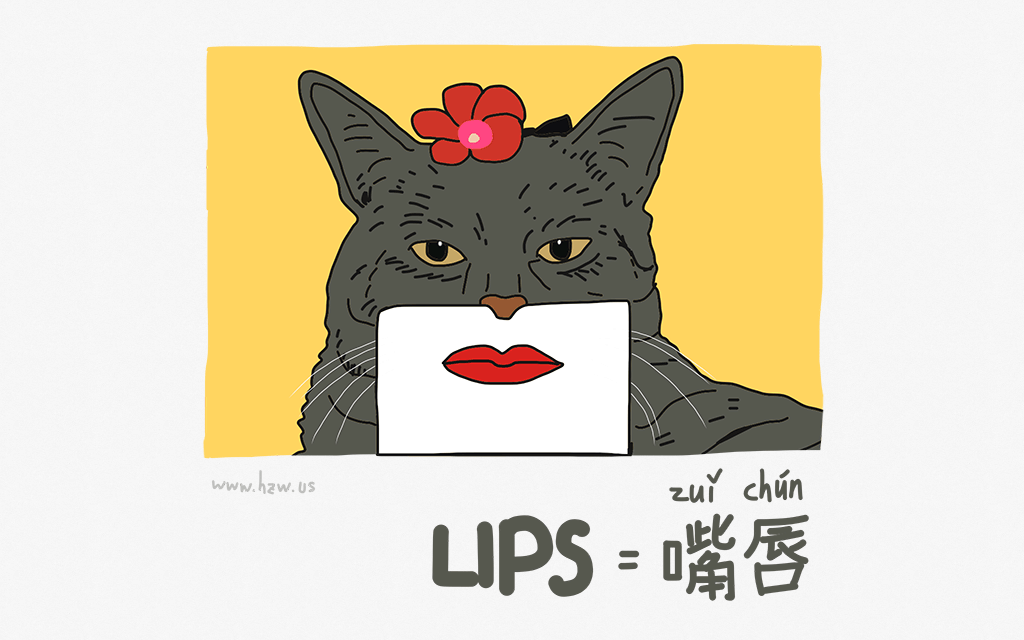
Lips = 嘴唇 [zuǐ chún]

Lips: 嘴唇 (zuǐ chún)

Lips = 嘴唇 [zuǐ chún]

A grumpy grey cat with a red flower on its head holds up a card with bright red lips. Now the cat has 嘴唇.

嘴唇 (zuǐ chún) means “lips.” 嘴 is mouth and 唇 is lip. Lipstick is 口红 (kǒuhóng), literally “mouth red.”

她的嘴唇很红。 — Tā de zuǐchún hěn hóng. — Her lips are very red.

我的嘴唇很干。 — Wǒ de zuǐchún hěn gān. — My lips are dry.

Image text versions

  1. Image 1 text version for "Lips". English: Lips. Chinese: 嘴唇. Pinyin: zuǐ chún. Audio keys: zui3, chun2. Categories: fun, animal, life. Tags: red, lips, cat, flower.

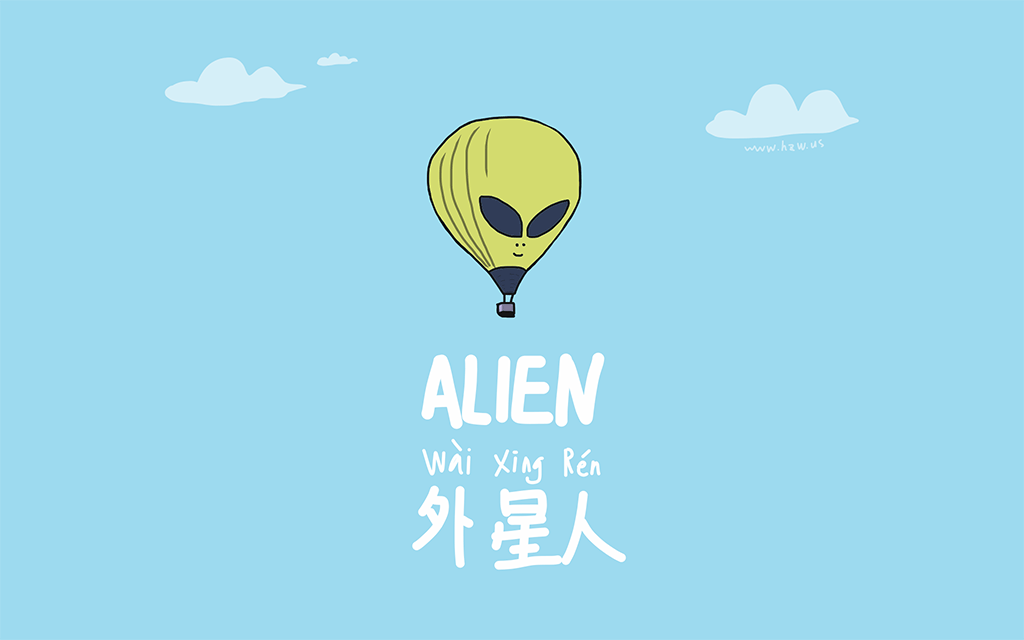
Alien = 外星人 [wài xīng rén]

Alien: 外星人 (wài xīng rén)

Alien = 外星人 [wài xīng rén]

A hot-air balloon with two big dark eyes drifts across the sky. It is a 外星人, arriving the slow way.

外星人 (wài xīng rén) means “alien” or “extraterrestrial.” 外 is outside, 星 is star, and 人 is person: a person from an outside star.

你相信有外星人吗? — Nǐ xiāngxìn yǒu wàixīngrén ma? — Do you believe aliens exist?

他说他见过外星人。 — Tā shuō tā jiànguo wàixīngrén. — He says he has seen an alien.

Image text versions

  1. Image 1 text version for "Alien". English: Alien. Chinese: 外星人. Pinyin: wài xīng rén. Audio keys: wai4, xing1, ren2. Categories: life, movie, sports, tech. Tags: Alien, hotair, Balloon.

Dedication = 敬业 [Jìng yè]

Dedication: 敬业 (Jìng yè)

Dedication = 敬业 [Jìng yè]

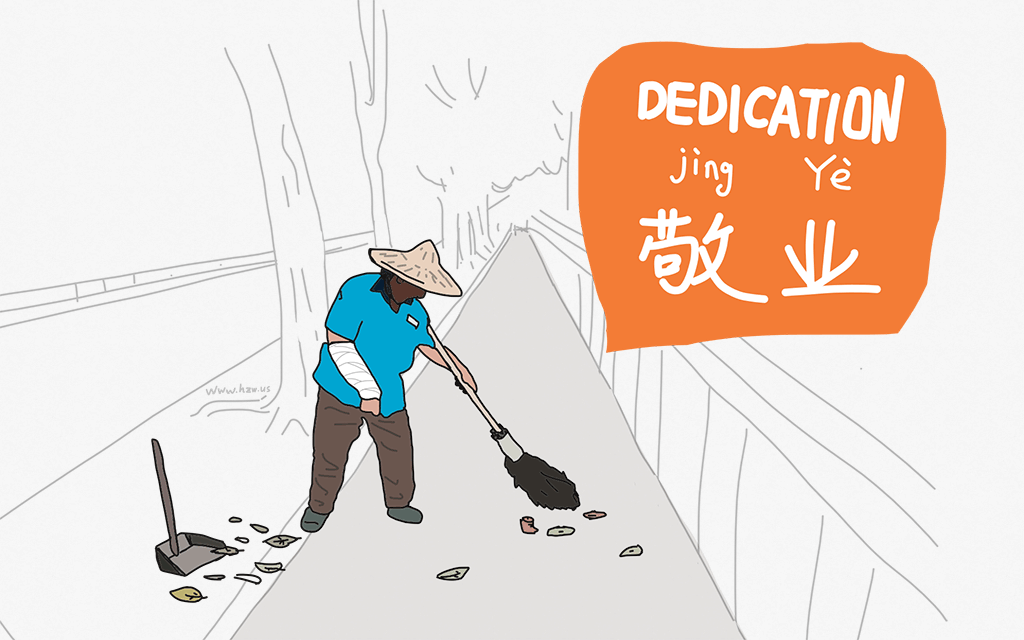
One arm is wrapped in a cast, and the street sweeper is still out sweeping leaves. That is 敬业.

敬业 (jìng yè) means being dedicated to your work. 敬 is to respect and 业 is one’s work or profession: to respect your job.

It is used like an adjective, usually after 很. The noun phrase 敬业精神 (jìngyè jīngshén) means professional dedication.

他很敬业。 — Tā hěn jìngyè. — He is very dedicated to his work.

她的敬业精神让人佩服。 — Tā de jìngyè jīngshén ràng rén pèifú. — Her dedication is admirable.

Image text versions

  1. Image 1 text version for "Dedication". English: Dedication. Chinese: 敬业. Pinyin: Jìng yè. Audio keys: jing4, ye4. Categories: countries, life, sports. Tags: dedication, sanitationman, injured.

Lollipop = 棒棒糖 [Bàng bàng táng]

Lollipop: 棒棒糖 (Bàng bàng táng)

Lollipop = 棒棒糖 [Bàng bàng táng]

A toddler has fallen asleep standing up, face on the sofa, with the lollipop still in his hand. He never let go of the 棒棒糖.

棒棒糖 (bàng bàng táng) means “lollipop.” 棒 is a stick and 糖 is candy or sugar: stick-stick candy.

Count lollipops with 根 (gēn): 一根棒棒糖 (yì gēn bàngbàngtáng).

我想吃棒棒糖。 — Wǒ xiǎng chī bàngbàngtáng. — I want a lollipop.

他手里拿着一根棒棒糖。 — Tā shǒu li názhe yì gēn bàngbàngtáng. — He is holding a lollipop.

Image text versions

  1. Image 1 text version for "Lollipop". English: Lollipop. Chinese: 棒棒糖. Pinyin: Bàng bàng táng. Audio keys: bang4, tang2. Categories: fun, food, life. Tags: lollipop, kid, sleep, sofa.

Stay high = 居高不下 [jū gāo bù xià]

Stay high: 居高不下 (jū gāo bù xià)

Stay high = 居高不下 [jū gāo bù xià]

A cat sits on top of a utility pole and will not come down. Stay (居) high (高), not (不) down (下): 居高不下.

居高不下 (jū gāo bù xià) is a set phrase meaning “to remain high” or “to stay stubbornly high.” It is used for numbers that will not come down, such as prices, temperatures or unemployment. The cat on the pole is the literal picture.

In speech, 不 changes to a rising tone before a falling tone, so the phrase is pronounced jū gāo bú xià.

房价居高不下。 — Fángjià jū gāo bú xià. — Housing prices remain high.

气温居高不下。 — Qìwēn jū gāo bú xià. — Temperatures are staying high.

Image text versions

  1. Image 1 text version for "Stay high". English: Stay high. Chinese: 居高不下. Pinyin: jū gāo bù xià. Audio keys: ju1, gao1, bu4, xia4. Categories: fun, animal, life, sports. Tags: cat, sit, phone, poles, high, lonely.

Butterfly = 蝴蝶 [Hú dié]

Butterfly: 蝴蝶 (Hú dié)

Butterfly = 蝴蝶 [Hú dié]

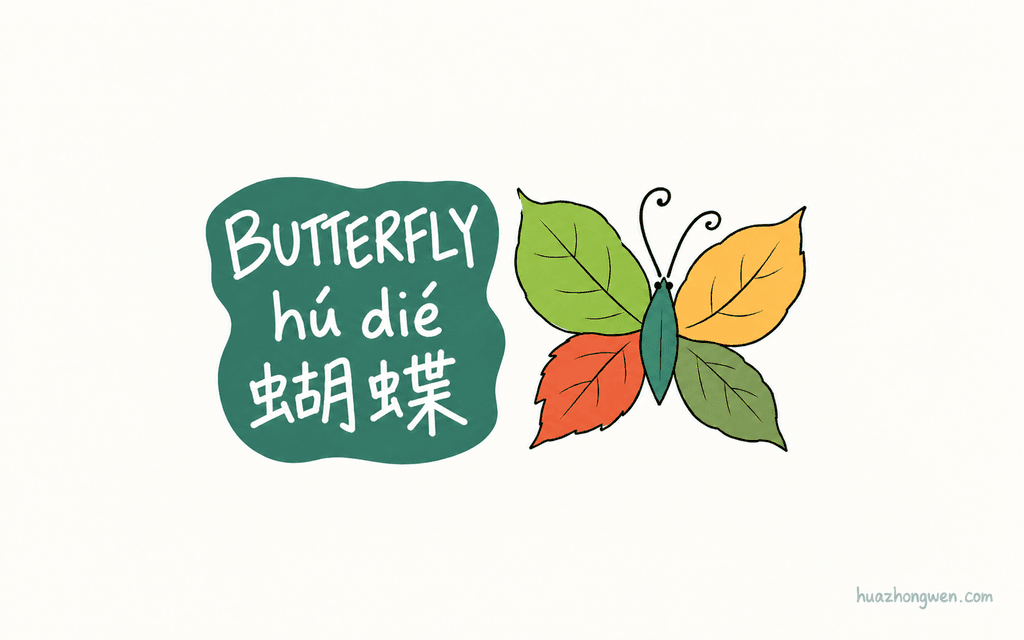
Two yellow leaves and two red ones make the wings, with a green leaf for the body. Leaves that look ready to fly: 蝴蝶.

蝴蝶 (hú dié) means “butterfly.” The two characters work together as one word. Count butterflies with the measure word 只 (zhī): 一只蝴蝶 (yì zhī húdié), one butterfly.

这只蝴蝶很漂亮。 — Zhè zhī húdié hěn piàoliang. — This butterfly is beautiful.

Image text versions

  1. Image 1 text version for "Butterfly". English: Butterfly. Chinese: 蝴蝶. Pinyin: Hú dié. Audio keys: hu2, die2. Categories: animal, design, life. Tags: butterfly, leaf, green.

Tennis = 网球 [wǎng qiú]

Tennis: 网球 (wǎng qiú)

Tennis = 网球 [wǎng qiú]

Meanwhile in Minnesota: two players on ice skates rally across a frozen rink, the net tied to a tree stump. Still 网球.

网球 (wǎngqiú) means “tennis,” and also a tennis ball. 网 is net and 球 is ball, so it is “net ball.”

To play tennis is 打网球 (dǎ wǎngqiú); ball games you hit with your hand or a racket take 打. Table tennis is 乒乓球 (pīngpāngqiú).

你会打网球吗? — Nǐ huì dǎ wǎngqiú ma? — Can you play tennis?

我们周末去打网球吧。 — Wǒmen zhōumò qù dǎ wǎngqiú ba. — Let’s play tennis this weekend.

Image text versions

  1. Image 1 text version for "Tennis". English: Tennis. Chinese: 网球. Pinyin: wǎng qiú. Audio keys: wang3, qiu2. Categories: fun, life, sports. Tags: skate, winter, snow, tennis, minnesota.

Smile = 微笑 [wēi xiào]

Smile: 微笑 (wēi xiào)

Smile = 微笑 [wēi xiào]

Grapes for hair, an orange for a nose, and a banana for the mouth. The plate is giving you a 微笑.

微笑 (wēi xiào) means “smile,” as a noun or a verb. 微 is slight and 笑 is to laugh or smile: a slight smile.

她对我微笑。 — Tā duì wǒ wēixiào. — She smiles at me.

请微笑! — Qǐng wēixiào! — Smile, please!

Image text versions

  1. Image 1 text version for "Smile". English: Smile. Chinese: 微笑. Pinyin: wēi xiào. Audio keys: wei1, xiao4. Categories: fun, food, life. Tags: smile, fruit, plate, banana, Raisins, orange, Grapes.

Hug = 拥抱 [yōng bào]

Hug: 拥抱 (yōng bào)

Hug = 拥抱 [yōng bào]

A red tomato and its pale, round best friend close their eyes and hold each other tight. That is a 拥抱.

拥抱 (yōng bào) means “to hug” or “a hug.” In casual speech people often just say 抱 (bào), as in 抱一下 (bào yíxià), “a quick hug.”

给我一个拥抱。 — Gěi wǒ yí ge yōngbào. — Give me a hug.

他们拥抱在一起。 — Tāmen yōngbào zài yìqǐ. — They are hugging each other.

Image text versions

  1. Image 1 text version for "Hug". English: Hug. Chinese: 拥抱. Pinyin: yōng bào. Audio keys: yong1, bao4. Categories: fun, food, life, sports. Tags: hug, egg, potato.

Drunk = 醉 [Zuì]

Drunk: 醉 (Zuì)

Drunk = 醉 [Zuì]

A phone with a shattered screen lies plugged into its charger, groaning, “I need to stop drinking.” It looks completely 醉.

醉 (zuì) means “drunk.” The left side, 酉, appears in many characters to do with alcohol, such as 酒 (jiǔ).

People usually say 喝醉了 (hē zuì le), literally “drank till drunk.”

他喝醉了。 — Tā hē zuì le. — He’s drunk.

我没醉! — Wǒ méi zuì! — I’m not drunk!

Image text versions

  1. Image 1 text version for "Drunk". English: Drunk. Chinese: 醉. Pinyin: Zuì. Audio keys: zui4. Categories: fun, life. Tags: drunk, iphone, broken, apple.

Scissors = 剪刀 [jiǎn dāo]

Scissors: 剪刀 (jiǎn dāo)

Scissors = 剪刀 [jiǎn dāo]

A hand cuts a pizza with a pair of scissors whose lower blade is a flat spatula, lifting each slice as it cuts. Those are 剪刀.

剪刀 (jiǎndāo) means “scissors.” 剪 means to cut with scissors, and 刀 is knife or blade.

Count scissors with 把 (bǎ): 一把剪刀. To cut something with scissors is just 剪, as in 剪头发 (jiǎn tóufa), to cut hair. In the second example below, 快 means sharp, not fast.

请把剪刀递给我。 — Qǐng bǎ jiǎndāo dì gěi wǒ. — Please pass me the scissors.

这把剪刀很快。 — Zhè bǎ jiǎndāo hěn kuài. — These scissors are very sharp.

Image text versions

  1. Image 1 text version for "Scissors". English: Scissors. Chinese: 剪刀. Pinyin: jiǎn dāo. Audio keys: jian3, dao1. Categories: design, food, life, tech. Tags: scissors, pizza, funny.

Yes = 好的 [hǎo dē]

Yes: 好的 (hǎo dē)

Yes = 好的 [hǎo dē]

One guy asks how to ruin your life in one week; his friend says, “Say yes to everything,” which in Chinese means a week of 好的.

好的 (hǎo de) means “OK,” “sure” or “all right.” It is how you agree to a request or a plan. The 的 is a neutral tone, even though the drawing marks it dē.

Chinese does not use one all-purpose word for “yes.” To answer a yes-or-no question, you usually repeat the verb: 你去吗?去。 (Nǐ qù ma? Qù.) “Are you going?” “Yes.” 好的 agrees to do something; 是的 (shì de) confirms that something is true.

我们明天见面,好吗?好的。 — Wǒmen míngtiān jiànmiàn, hǎo ma? Hǎo de. — Let’s meet tomorrow, OK? OK.

好的,我马上来。 — Hǎo de, wǒ mǎshàng lái. — Sure, I’ll be right there.

Image text versions

  1. Image 1 text version for "Yes". English: Yes. Chinese: 好的. Pinyin: hǎo dē. Audio keys: hao3, de1. Categories: culture, life. Tags: life, yes, ruin, dialog.

Headache = 头痛 [Tóu tòng]

Headache: 头痛 (Tóu tòng)

Headache = 头痛 [Tóu tòng]

A pale bulldog sits with its forehead pressed against a wooden post, eyes squeezed shut. That is the look of 头痛.

头痛 (tóutòng) means “headache” or “to have a headache.” 头 is head and 痛 means pain. In everyday speech 头疼 (tóuténg) means the same.

As in English, it can also describe something troublesome.

我有点儿头痛。 — Wǒ yǒudiǎnr tóutòng. — I have a bit of a headache.

这个问题真让人头痛。 — Zhège wèntí zhēn ràng rén tóutòng. — This problem is a real headache.

Image text versions

  1. Image 1 text version for "Headache". English: Headache. Chinese: 头痛. Pinyin: Tóu tòng. Audio keys: tou2, tong4. Categories: fun, animal, life. Tags: dog, headache, desk.

Sofa = 沙发 [shā fā]

Sofa: 沙发 (shā fā)

Sofa = 沙发 [shā fā]

A big grey beast has a padded sofa built right into its side: a living 沙发.

沙发 (shāfā) means “sofa.” It is a sound loan from English; 沙 (sand) and 发 (send out) don’t mean anything together.

Count sofas with 张 (zhāng) or 个 (gè): 一张沙发.

他坐在沙发上看电视。 — Tā zuò zài shāfā shang kàn diànshì. — He is sitting on the sofa watching TV.

这个沙发太软了。 — Zhège shāfā tài ruǎn le. — This sofa is too soft.

Image text versions

  1. Image 1 text version for "Sofa". English: Sofa. Chinese: 沙发. Pinyin: shā fā. Audio keys: sha1, fa1. Categories: animal, life. Tags: rhino, sofa, sit, black.

Pajamas = 睡衣 [shuì yī]

Pajamas: 睡衣 (shuì yī)

Pajamas = 睡衣 [shuì yī]

A cream-colored cat with a dark tail sleeps on its back in a green zip-up hoodie, hood pulled up. Those are its 睡衣.

睡衣 (shuìyī) means “pajamas” or “nightclothes.” 睡 is to sleep and 衣 means clothes.

Count a matching set with 套 (tào): 一套睡衣. To put them on is 穿睡衣 (chuān shuìyī).

我一回家就换上睡衣。 — Wǒ yì huí jiā jiù huàn shàng shuìyī. — I change into my pajamas as soon as I get home.

他穿着睡衣去买早饭。 — Tā chuānzhe shuìyī qù mǎi zǎofàn. — He went to buy breakfast in his pajamas.

Image text versions

  1. Image 1 text version for "Pajamas". English: Pajamas. Chinese: 睡衣. Pinyin: shuì yī. Audio keys: shui4, yi1. Categories: animal, clothes, life. Tags: pajamas, green, cat, bed, sleep.

Walk = 走路 [zǒu lù]

Walk: 走路 (zǒu lù)

Walk = 走路 [zǒu lù]

Owls usually fly, but this one is out for a stroll, taking big, careful steps along the ground. That is 走路.

走路 (zǒulù) means “to walk,” to go on foot. 走 means to walk or go, and 路 is road.

On its own, 走 also means “to leave”: 我走了 (wǒ zǒu le), I’m off. To go somewhere on foot, say 走路去 (zǒulù qù).

我每天走路上学。 — Wǒ měitiān zǒulù shàngxué. — I walk to school every day.

从这儿走路要十分钟。 — Cóng zhèr zǒulù yào shí fēnzhōng. — It’s a ten-minute walk from here.

Image text versions

  1. Image 1 text version for "Walk". English: Walk. Chinese: 走路. Pinyin: zǒu lù. Audio keys: zou3, lu4. Categories: animal, life, sports. Tags: walk, bird, cat owl.