Category: tech (31)

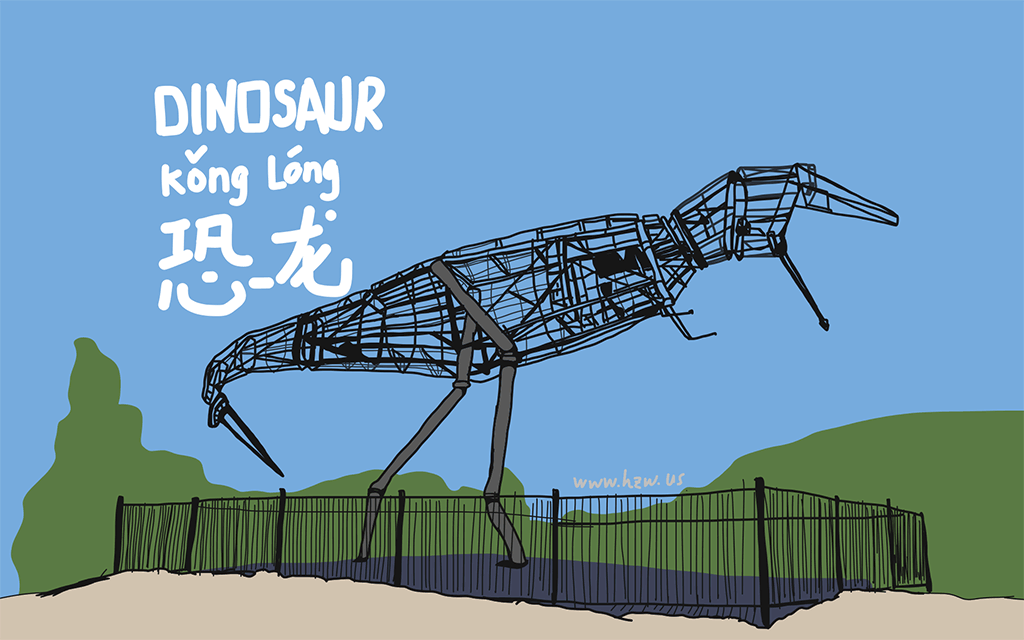
Dinosaur = 恐龙 [kǒng lóng]

Dinosaur: 恐龙 (kǒng lóng)

Dinosaur = 恐龙 [kǒng lóng]

A dinosaur built from steel bars stands behind a fence, as tall as a building. Even made of metal, it is a 恐龙.

恐龙 (kǒng lóng) means “dinosaur.” 恐 is fear and 龙 is dragon: a fearsome dragon. Count dinosaurs with 只 (zhī): 一只恐龙 (yì zhī kǒnglóng).

孩子们喜欢恐龙。 — Háizimen xǐhuan kǒnglóng. — Kids love dinosaurs.

恐龙已经灭绝了。 — Kǒnglóng yǐjīng mièjué le. — Dinosaurs are extinct.
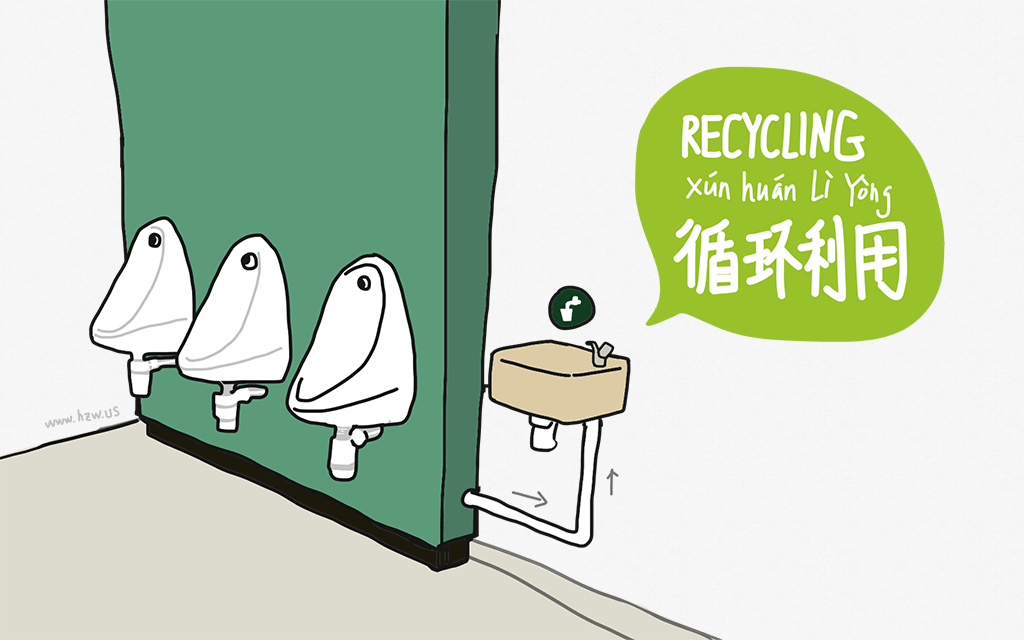
Image text versions

  1. Image 1 text version for "Dinosaur". English: Dinosaur. Chinese: 恐龙. Pinyin: kǒng lóng. Audio keys: kong3, long2. Categories: animal, countries, tech. Tags: dinosaur, steel.

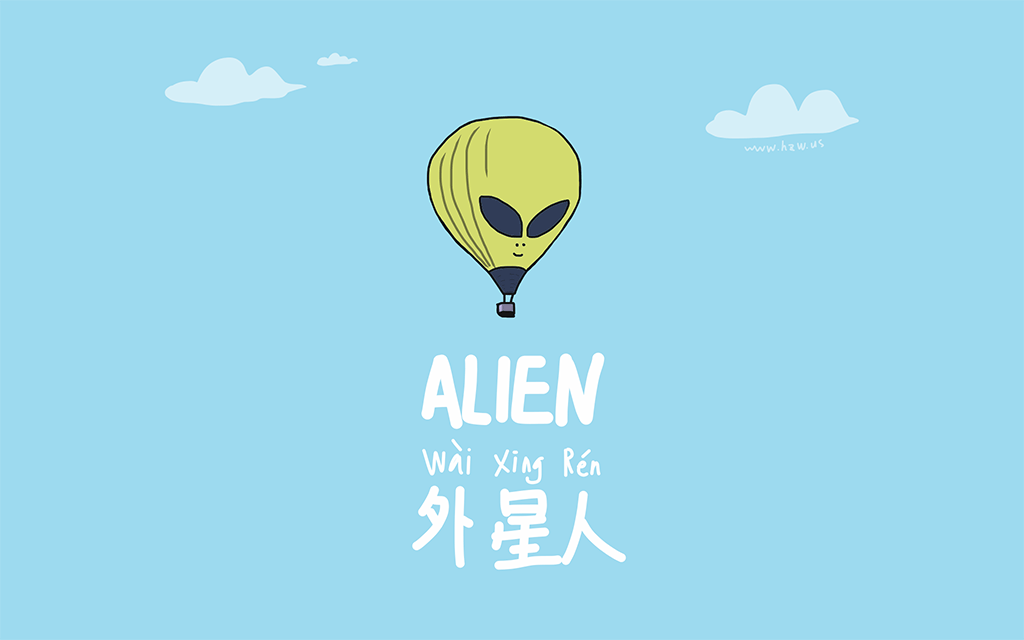
Alien = 外星人 [wài xīng rén]

Alien: 外星人 (wài xīng rén)

Alien = 外星人 [wài xīng rén]

A hot-air balloon with two big dark eyes drifts across the sky. It is a 外星人, arriving the slow way.

外星人 (wài xīng rén) means “alien” or “extraterrestrial.” 外 is outside, 星 is star, and 人 is person: a person from an outside star.

你相信有外星人吗? — Nǐ xiāngxìn yǒu wàixīngrén ma? — Do you believe aliens exist?

他说他见过外星人。 — Tā shuō tā jiànguo wàixīngrén. — He says he has seen an alien.

Image text versions

  1. Image 1 text version for "Alien". English: Alien. Chinese: 外星人. Pinyin: wài xīng rén. Audio keys: wai4, xing1, ren2. Categories: life, movie, sports, tech. Tags: Alien, hotair, Balloon.

Follow the drawing archive

Get future illustrated words without hunting through the archive.

RSS feed

Scissors = 剪刀 [jiǎn dāo]

Scissors: 剪刀 (jiǎn dāo)

Scissors = 剪刀 [jiǎn dāo]

A hand cuts a pizza with a pair of scissors whose lower blade is a flat spatula, lifting each slice as it cuts. Those are 剪刀.

剪刀 (jiǎndāo) means “scissors.” 剪 means to cut with scissors, and 刀 is knife or blade.

Count scissors with 把 (bǎ): 一把剪刀. To cut something with scissors is just 剪, as in 剪头发 (jiǎn tóufa), to cut hair. In the second example below, 快 means sharp, not fast.

请把剪刀递给我。 — Qǐng bǎ jiǎndāo dì gěi wǒ. — Please pass me the scissors.

这把剪刀很快。 — Zhè bǎ jiǎndāo hěn kuài. — These scissors are very sharp.

Image text versions

  1. Image 1 text version for "Scissors". English: Scissors. Chinese: 剪刀. Pinyin: jiǎn dāo. Audio keys: jian3, dao1. Categories: design, food, life, tech. Tags: scissors, pizza, funny.

Mouse = 鼠标 [Shǔ biāo]

Mouse: 鼠标 (Shǔ biāo)

Mouse = 鼠标 [Shǔ biāo]

On an old computer desktop, the mouse pointer smashes through the edge of the screen, yelling “LET ME OUT.” That pointer is moved by a 鼠标.

鼠标 (shǔbiāo) means a computer “mouse.” 鼠 means mouse or rat, and 标 means marker. The animal is 老鼠 (lǎoshǔ).

To click is 点击 (diǎnjī), or simply 点 (diǎn).

我的鼠标坏了。 — Wǒ de shǔbiāo huài le. — My mouse is broken.

用鼠标点一下这里。 — Yòng shǔbiāo diǎn yíxià zhèlǐ. — Click here with the mouse.

Image text versions

  1. Image 1 text version for "Mouse". English: Mouse. Chinese: 鼠标. Pinyin: Shǔ biāo. Audio keys: shu3, biao1. Categories: fun, animal, tech. Tags: mouse, winxp, pointer, getout.

Family = 家庭 [jiā tíng]

Family: 家庭 (jiā tíng)

Family = 家庭 [jiā tíng]

A big pink pig is a USB hub, and the piglets are USB sticks. Once every piglet is plugged in beside mom, they are a 家庭.

家庭 (jiātíng) means “family,” a household. 家 means home or family, and 庭 means courtyard. In everyday talk people often say 家人 (jiārén), family members, or just 家.

家庭 appears in many compounds, such as 家庭作业 (jiātíng zuòyè), homework.

他有一个幸福的家庭。 — Tā yǒu yí ge xìngfú de jiātíng. — He has a happy family.

我们家是个大家庭。 — Wǒmen jiā shì ge dà jiātíng. — We are a big family.

Image text versions

  1. Image 1 text version for "Family". English: Family. Chinese: 家庭. Pinyin: jiā tíng. Audio keys: jia1, ting2. Categories: fun, animal, culture, design, tech. Tags: family, pig, usb, cable.

Watch = 手表 [Shǒu biǎo]

Watch: 手表 (Shǒu biǎo)

Watch = 手表 [Shǒu biǎo]

A watch strapped on inside a sliced apple: a very literal Apple Watch. The watch on your wrist is a 手表.

手表 (shǒu biǎo) means “wristwatch.” 手 is hand and 表 is a watch or meter. Count watches with 块 (kuài): 一块手表 (yí kuài shǒubiǎo).

Two third tones in a row change the first one to a rising tone, so 手表 is pronounced shóu biǎo. That is the spelling in the drawing.

我的手表坏了。 — Wǒ de shǒubiǎo huài le. — My watch is broken.

这块手表很贵。 — Zhè kuài shǒubiǎo hěn guì. — This watch is expensive.

Image text versions

  1. Image 1 text version for "Watch". English: Watch. Chinese: 手表. Pinyin: Shǒu biǎo. Audio keys: shou3, biao3. Categories: fun, culture, design, life, tech. Tags: apple, watch, fun, lol, hand.

Bathroom = 卫生间 [wèi shēng jiān]

Bathroom: 卫生间 (wèi shēng jiān)

Bathroom = 卫生间 [wèi shēng jiān]

The urinal is too high, so two kids work as a team: one gets down on his hands and knees, and the other stands on his back to reach. This is the 卫生间.

卫生间 (wèishēngjiān) means “bathroom” or “restroom.” 卫生 means hygiene and 间 means room.

You will also hear 洗手间 (xǐshǒujiān), “hand-washing room,” the polite word, and 厕所 (cèsuǒ), the plain word for toilet. Signs say 男 for men and 女 for women.

请问,卫生间在哪儿? — Qǐngwèn, wèishēngjiān zài nǎr? — Excuse me, where is the bathroom?

卫生间在二楼。 — Wèishēngjiān zài èr lóu. — The bathroom is on the second floor.

Image text versions

  1. Image 1 text version for "Bathroom". English: Bathroom. Chinese: 卫生间. Pinyin: wèi shēng jiān. Audio keys: wei4, sheng1, jian1. Categories: fun, life, sports, tech. Tags: bathroom, toliet, teamwork, kid.

Math = 数学 [shù xué]

Math: 数学 (shù xué)

Math = 数学 [shù xué]

Two hands hold up a clock whose numbers are all math problems: √4 for two, 3! for six, 16/2 for eight. Telling the time takes 数学.

数学 (shùxué) means “mathematics.” 数 means number and 学 means study.

As a verb, 数 is read shǔ and means to count. A math class is 数学课 (shùxué kè).

我的数学不太好。 — Wǒ de shùxué bú tài hǎo. — I’m not very good at math.

我们明天有数学考试。 — Wǒmen míngtiān yǒu shùxué kǎoshì. — We have a math test tomorrow.

Image text versions

  1. Image 1 text version for "Math". English: Math. Chinese: 数学. Pinyin: shù xué. Audio keys: shu4, xue2. Categories: culture, design, life, tech. Tags: math, shuxue, clock.

Lock = 锁 [Suǒ]

Lock: 锁 (Suǒ)

Lock = 锁 [Suǒ]

A hand holds a smartphone, and a chain runs from the phone to a cuff around the wrist. The two are locked together: 锁.

锁 (suǒ) means “lock,” and also “to lock.” The left side, 钅, is the metal radical.

To lock the door is 锁门 (suǒ mén). A key is 钥匙 (yàoshi), and a phone’s lock screen is 锁屏 (suǒpíng).

出门别忘了锁门。 — Chūmén bié wàng le suǒ mén. — Don’t forget to lock the door when you go out.

我的手机锁屏了。 — Wǒ de shǒujī suǒpíng le. — My phone screen is locked.

Image text versions

  1. Image 1 text version for "Lock". English: Lock. Chinese: 锁. Pinyin: Suǒ. Audio keys: suo3. Categories: fun, culture, life, tech. Tags: iphone, Lock, hand, screen.

Elevator = 电梯 [diàn tī]

Elevator: 电梯 (diàn tī)

Elevator = 电梯 [diàn tī]

A caveman sees an older woman step into an elevator and a young woman step out, and decides: “I should put my wife into this machine!” That machine is a 电梯.

电梯 (diàntī) means “elevator” or “lift.” 电 means electricity and 梯 means ladder or stairs, so it is “electric stairs.” An escalator is 自动扶梯 (zìdòng fútī).

To take the elevator is 坐电梯 (zuò diàntī).

我们坐电梯上去吧。 — Wǒmen zuò diàntī shàngqu ba. — Let’s take the elevator up.

电梯坏了。 — Diàntī huài le. — The elevator is broken.

Image text versions

  1. Image 1 text version for "Elevator". English: Elevator. Chinese: 电梯. Pinyin: diàn tī. Audio keys: dian4, ti1. Categories: culture, life, tech. Tags: primitive, machine, change.

Apple = 苹果 [píng guǒ]

Apple: 苹果 (píng guǒ)

Apple = 苹果 [píng guǒ]

Newton is reading under an apple tree when an iPhone, not the fruit, drops on his head. Either way, it is a 苹果.

苹果 (píngguǒ) means “apple.” 果 means fruit. The company Apple is also 苹果, and an iPhone is often called a 苹果手机 (píngguǒ shǒujī), an Apple phone.

Count apples with 个 (gè): 一个苹果 (yí ge píngguǒ).

我每天吃一个苹果。 — Wǒ měitiān chī yí ge píngguǒ. — I eat an apple every day.

他用的是苹果手机。 — Tā yòng de shì píngguǒ shǒujī. — He uses an iPhone.

Image text versions

  1. Image 1 text version for "Apple". English: Apple. Chinese: 苹果. Pinyin: píng guǒ. Audio keys: ping2guo3. Categories: culture, tech, food. Tags: isaac-newton, iphone, tree, food.

Biscuit = 饼干 [bǐng gān]

Biscuit: 饼干 (bǐng gān)

Biscuit = 饼干 [bǐng gān]

Two ways to dunk a biscuit in tea: four seconds later, one has crumbled to bits, and the note says the other tastes better. Either way, it is a 饼干.

饼干 (bǐnggān) means “biscuit,” “cookie” or “cracker.” 饼 is a flat cake and 干 means dry, so it is a “dry cake.”

A packet of biscuits is 一包饼干 (yì bāo bǐnggān); one biscuit is 一块饼干 (yí kuài bǐnggān).

我喜欢把饼干泡在茶里。 — Wǒ xǐhuan bǎ bǐnggān pào zài chá lǐ. — I like dunking biscuits in tea.

你要吃块饼干吗? — Nǐ yào chī kuài bǐnggān ma? — Would you like a biscuit?

Image text versions

  1. Image 1 text version for "Biscuit". English: Biscuit. Chinese: 饼干. Pinyin: bǐng gān. Audio keys: bing3, gan1. Categories: food, life, tech. Tags: science, tea, taste, english.

Beer = 啤酒 [pí jiǔ]

Beer: 啤酒 (pí jiǔ)

Beer = 啤酒 [pí jiǔ]

This page sketches six ways people open a beer bottle, from chopsticks and a bottle opener to a window frame. The drink inside is 啤酒.

啤酒 (píjiǔ) means “beer.” 啤 was made to sound like the start of “beer,” and 酒 is the general word for alcoholic drinks.

A bottle of beer is 一瓶啤酒 (yì píng píjiǔ); a glass is 一杯啤酒 (yì bēi píjiǔ). When people toast, they say 干杯 (gānbēi), literally “dry the glass.”

来两瓶啤酒。 — Lái liǎng píng píjiǔ. — Two bottles of beer, please.

干杯! — Gānbēi! — Cheers!

Image text versions

  1. Image 1 text version for "Beer". English: Beer. Chinese: 啤酒. Pinyin: pí jiǔ. Audio keys: pi2jiu3. Categories: tech, life, food. Tags: beer, methods, bottle_opening.

Bing = 病 [bìng]

Bing: 病 (bìng)

Image text versions

  1. Image 1 text version for "Bing". English: Bing. Chinese: 病. Pinyin: bìng. Audio keys: bing4. Categories: culture, fun, tech. Tags: bing, microsoft, egypt.

Bing = 病 [bìng]

Door = 门 [mén]

Door: 门 (mén)

Door = 门 [mén]

Doraemon stands beside his famous door, the one that can take you to any place, any time. Magic or not, it is still a 门.

门 (mén) means “door” or “gate.” The traditional form, 門, still looks like a pair of swinging doors; 门 is the simplified version.

To open the door is 开门 (kāi mén); to close it is 关门 (guān mén). 关门 is also what a shop does at closing time.

请关门。 — Qǐng guān mén. — Please close the door.

商店九点关门。 — Shāngdiàn jiǔ diǎn guān mén. — The shop closes at nine.

Image text versions

  1. Image 1 text version for "Door". English: Door. Chinese: 门. Pinyin: mén. Audio keys: men2. Categories: fun, life, tech. Tags: free_door, doraemon, trad_chinese.