


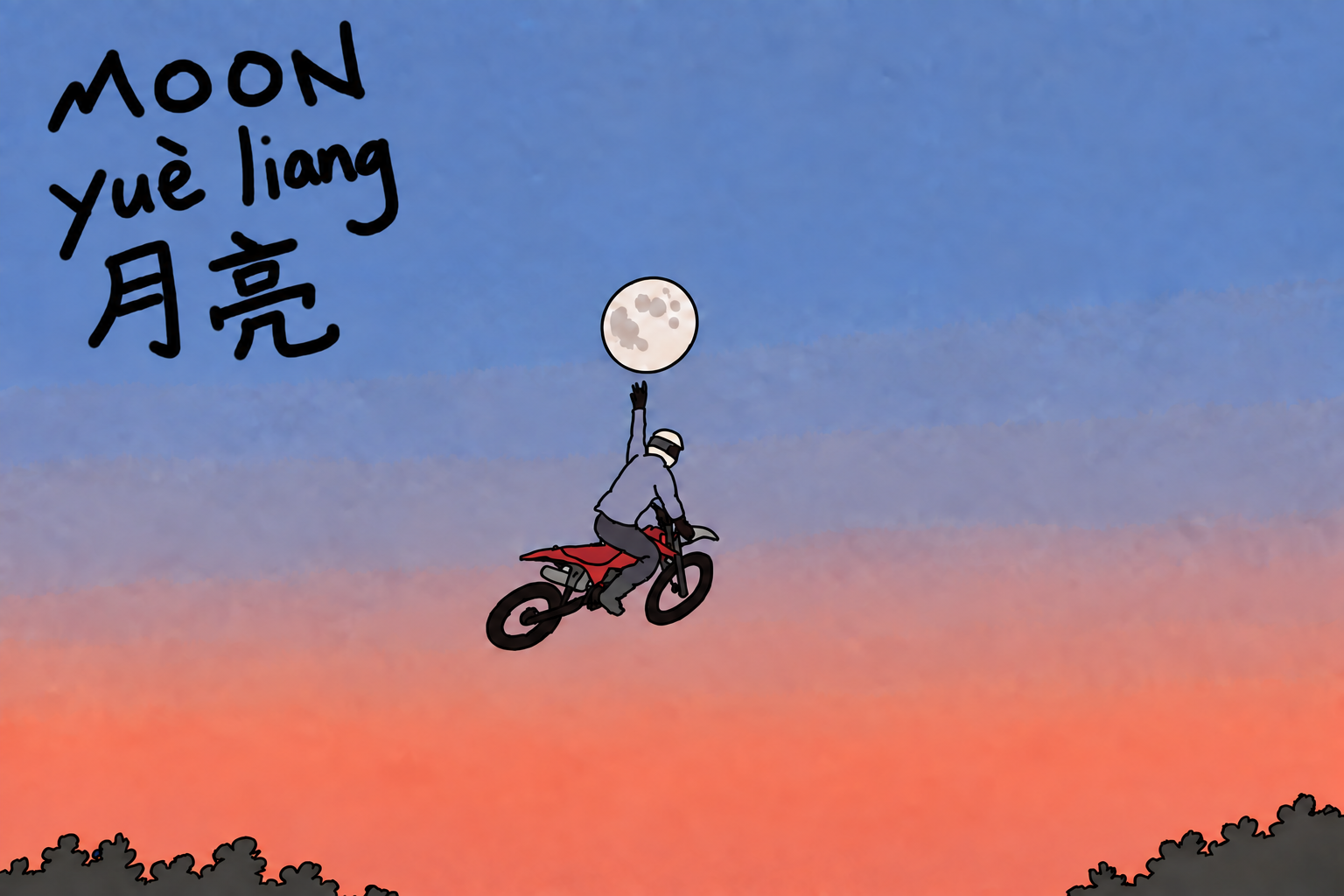
The rider reaches toward the moon, which sits right above the raised hand. That lucky alignment helps you remember 月亮 (yuè liang).
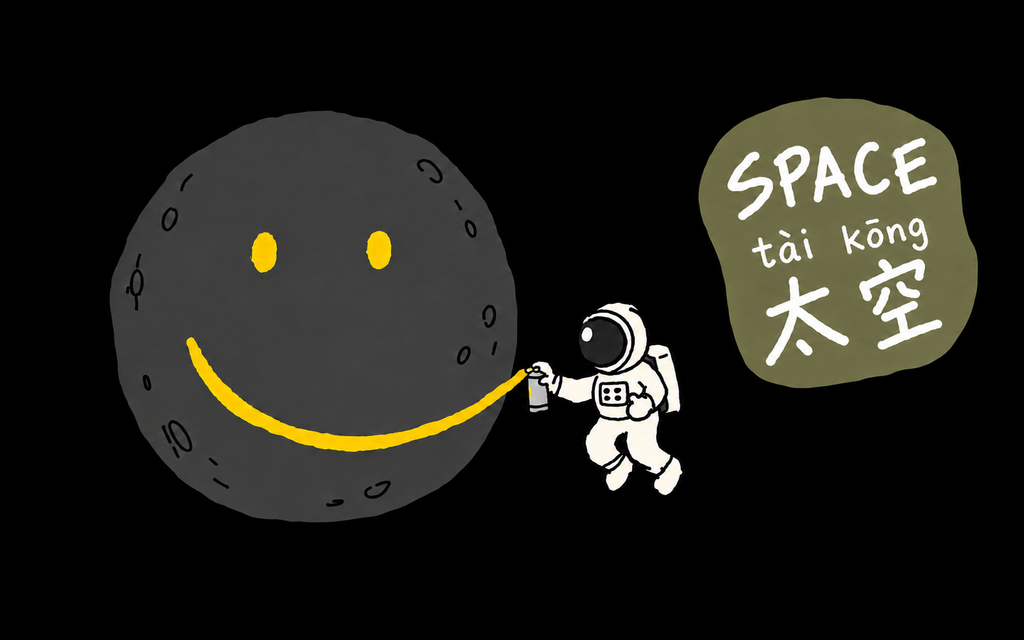
An astronaut floats beside the moon with a can of yellow spray paint and gives it a big smiley face. All that wide, empty dark around them is 太空.
太空 (tài kōng) means “outer space,” the space beyond Earth’s air. 空 means “empty” or “sky,” and 太 adds the sense of “great, extreme,” so you can read it as “the great emptiness.”
For space in the sense of room or a gap, Chinese uses other words, such as 空间 (kōngjiān).
他想去太空。 — Tā xiǎng qù tàikōng. — He wants to go to space.
宇航员在太空里工作。 — Yǔhángyuán zài tàikōng lǐ gōngzuò. — Astronauts work in space.
Get future illustrated words without hunting through the archive.
