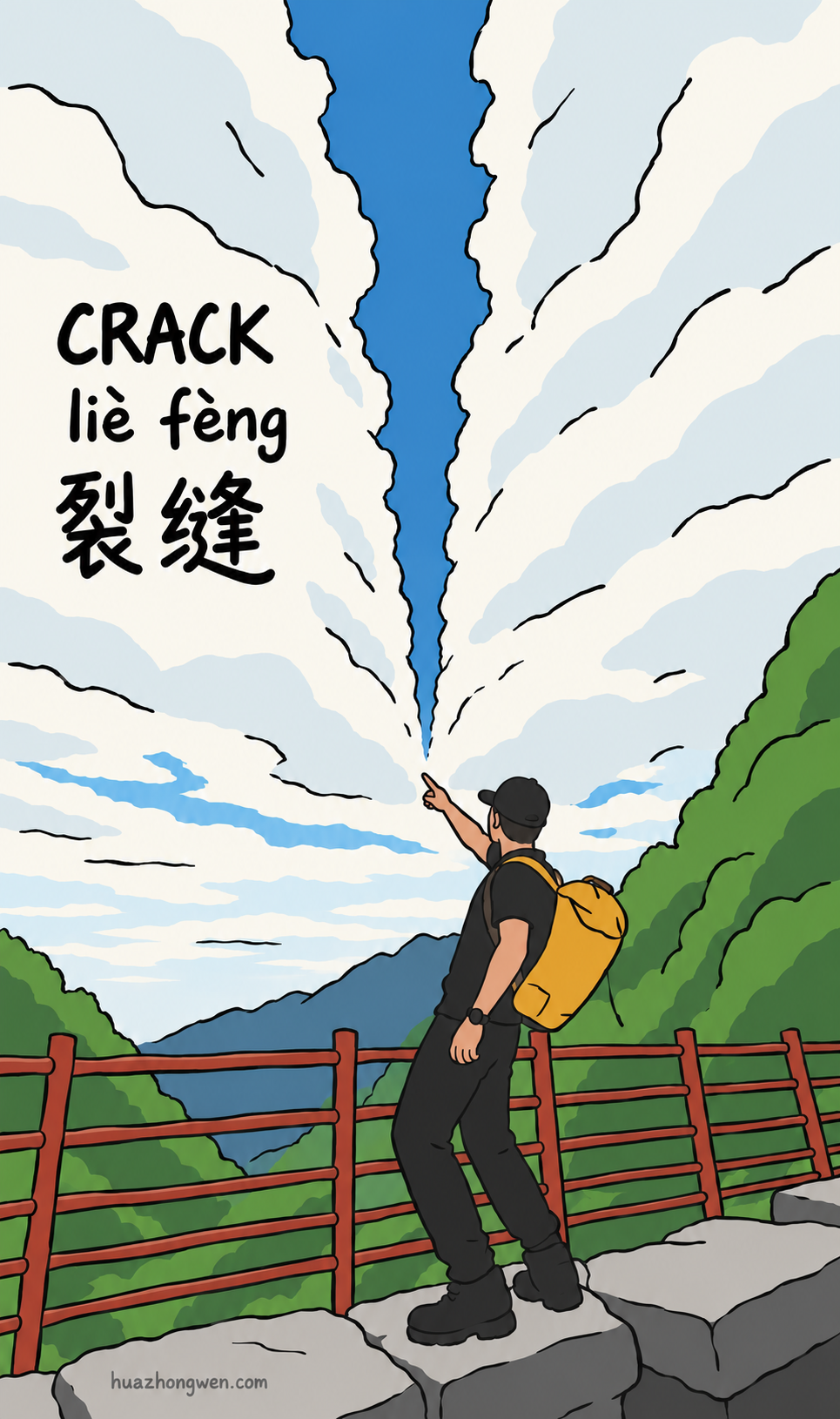
CRACK = 裂缝 [liè fèng]
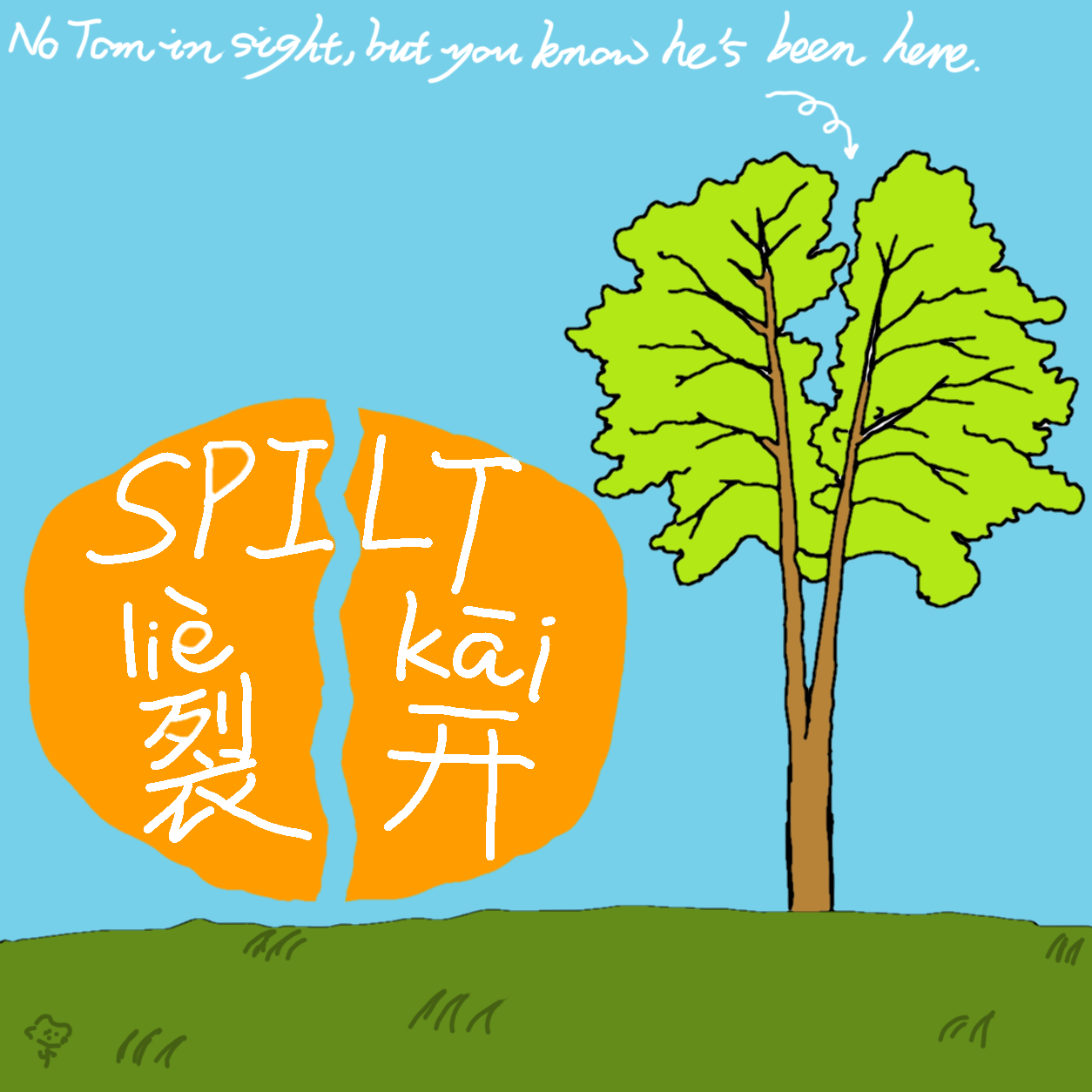
The hiker points at the crack-like opening between the clouds.
Imagine the blue opening between the clouds as a crack running through the sky. The hiker points right at it. 裂缝 (liè fèng) means a crack or fissure.
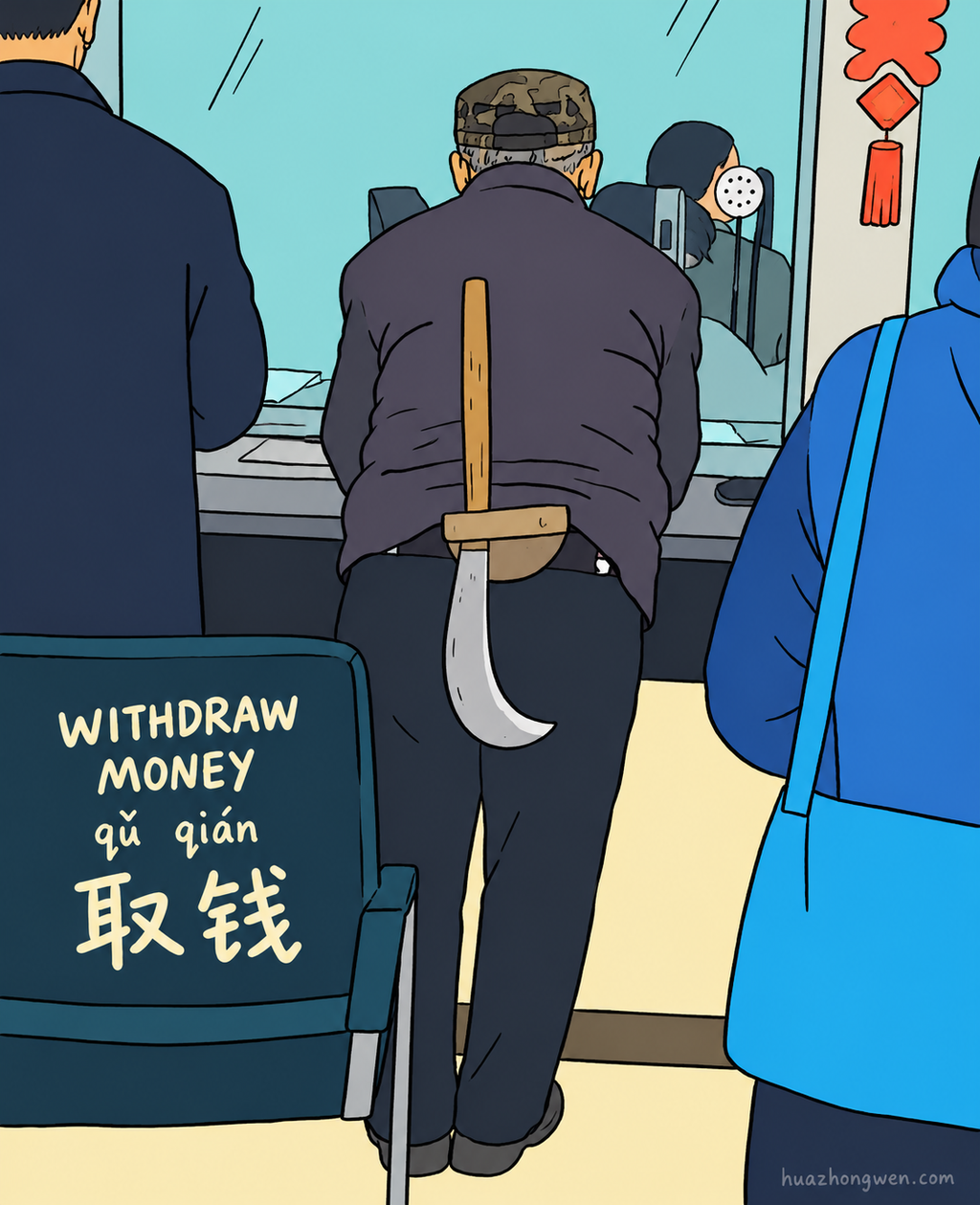
In this drawing, a customer visits a bank counter with a wood-chopping knife tucked into the back of his waistband. To him it is an everyday working tool; at a bank, its unexpected appearance makes the scene startling. That contrast helps you remember 取钱 (qǔ qián): to withdraw money.
Get future illustrated words without hunting through the archive.
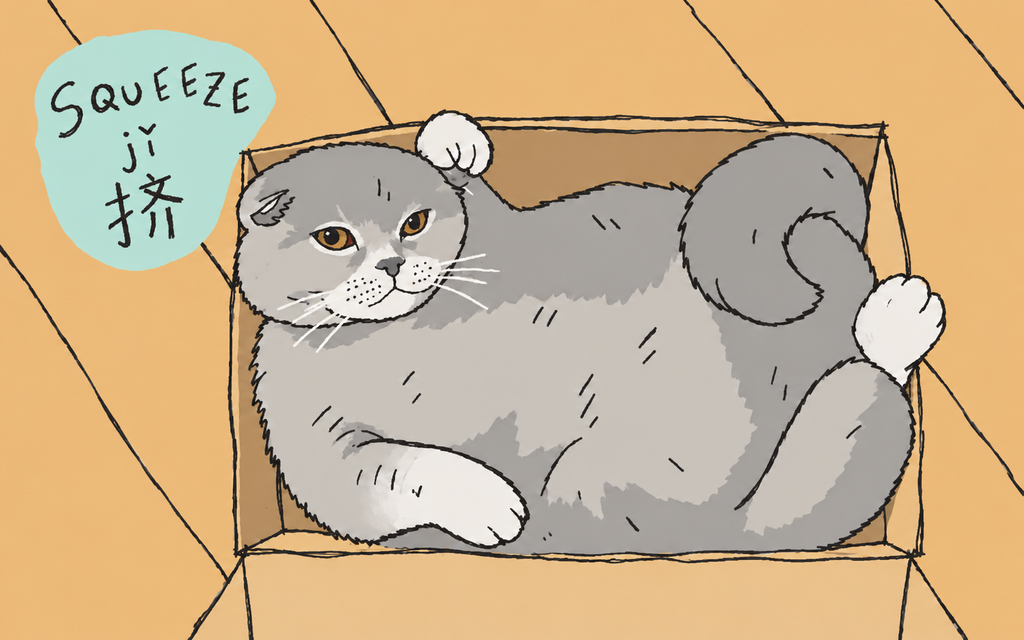
挤 (jǐ) means to squeeze into a tight space. This grey cat fills its cardboard box, with one paw hanging over the edge. The snug fit helps you remember 挤.
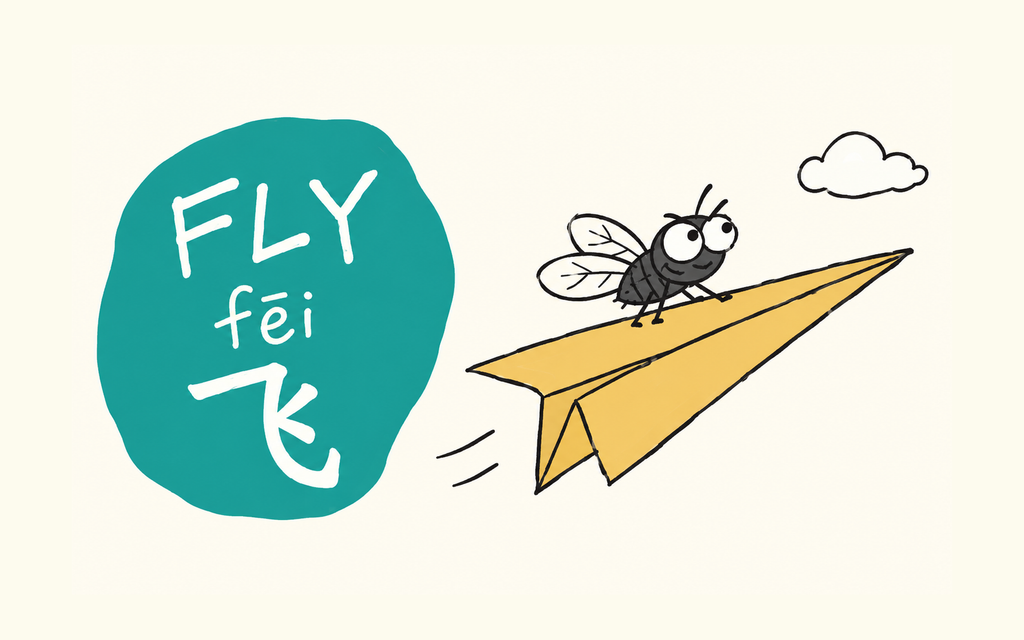
飞 (fēi) means to fly through the air. Imagine a little fly riding a paper airplane past a cloud—now FLY and 飞 are easy to remember.
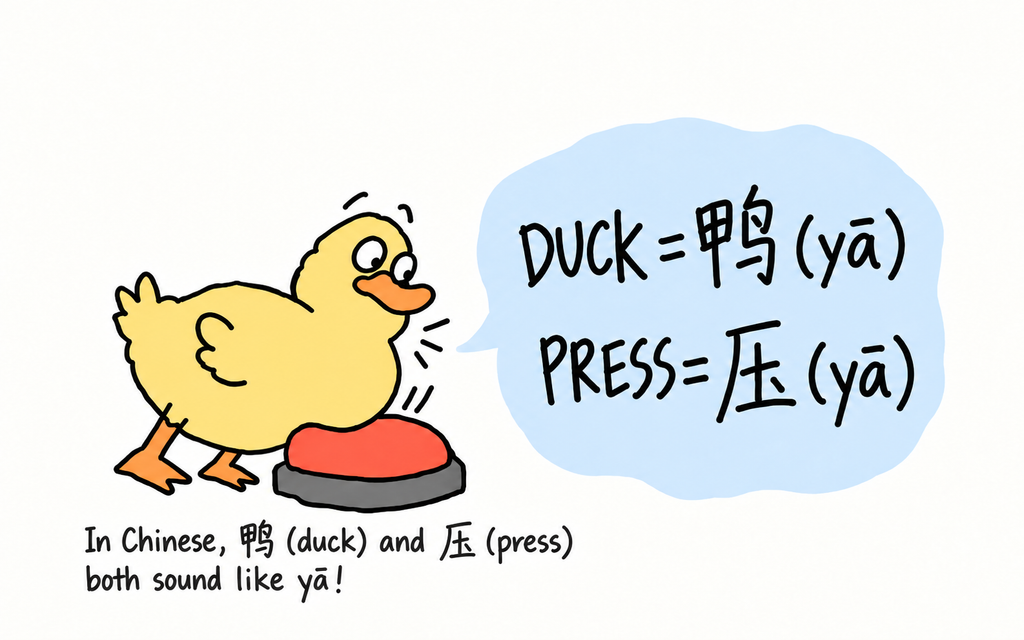
A duck (鸭, yā) leans on a big button to press it. In Chinese, 鸭 (duck) and 压 (press) both sound like yā, so the duck helps you remember 压 (yā).
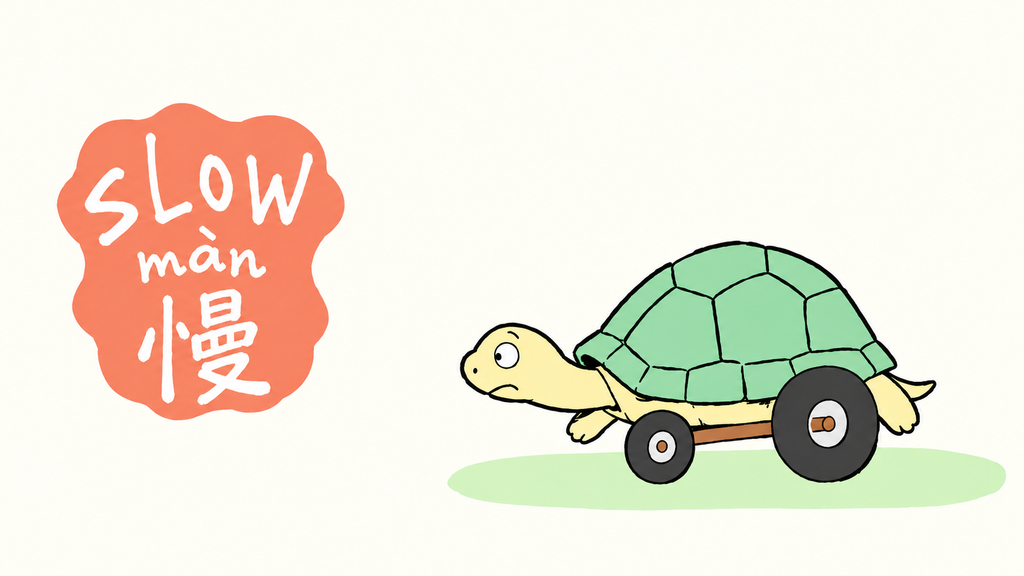
A turtle has two wheels but is still visibly slow; the absurd mismatch makes 慢 memorable.
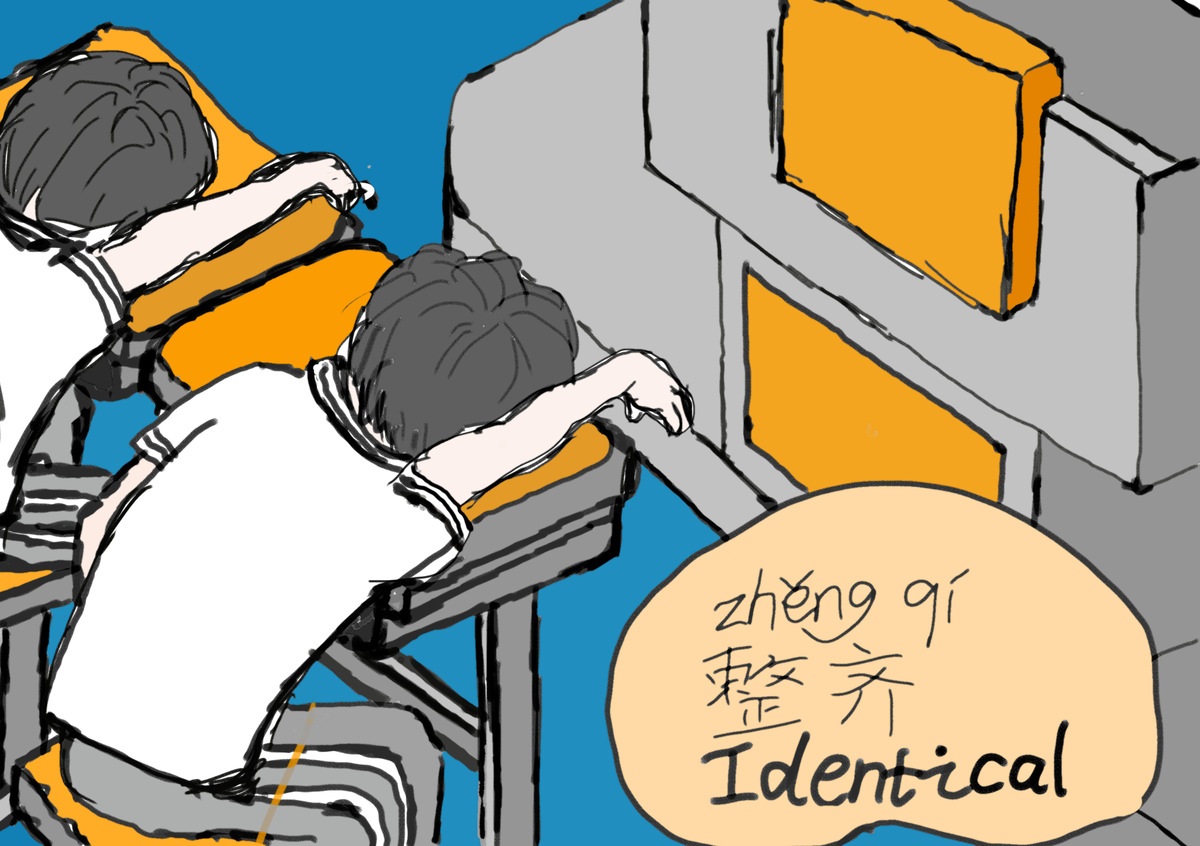
Same uniform, same desk, same pose. Even their napping is 整齐: neat and uniform.
整齐 (zhěng qí) means neat, tidy or uniform: things lined up evenly, or people doing the same thing in the same way. The drawing says “Identical,” which is close to the idea but not the usual translation. For “identical,” say 一模一样 (yì mú yí yàng).
房间很整齐。 — Fángjiān hěn zhěngqí. — The room is neat.
他们的动作很整齐。 — Tāmen de dòngzuò hěn zhěngqí. — Their movements are perfectly in sync.
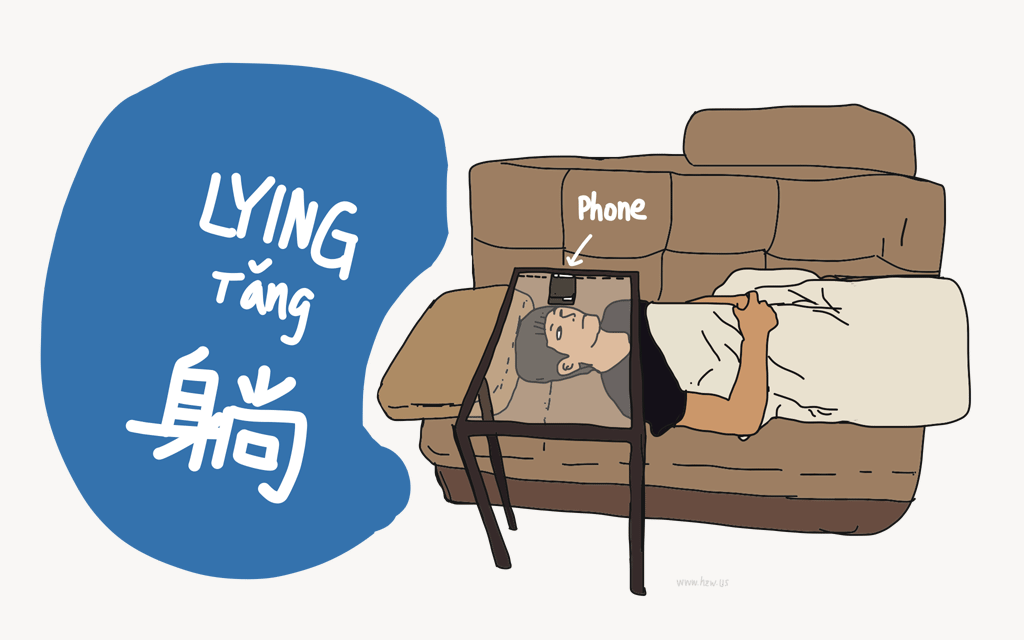
Someone is lying flat on the sofa with their head under a glass table, watching the phone that rests on the glass above their face. That flat-out position is 躺.
躺 (tǎng) means to lie, as in lying on your back or your side. It is about body position and has nothing to do with telling a lie. 躺下 (tǎng xià) means to lie down.
我想躺一会儿。 — Wǒ xiǎng tǎng yíhuìr. — I want to lie down for a while.
他躺在沙发上。 — Tā tǎng zài shāfā shang. — He is lying on the sofa.
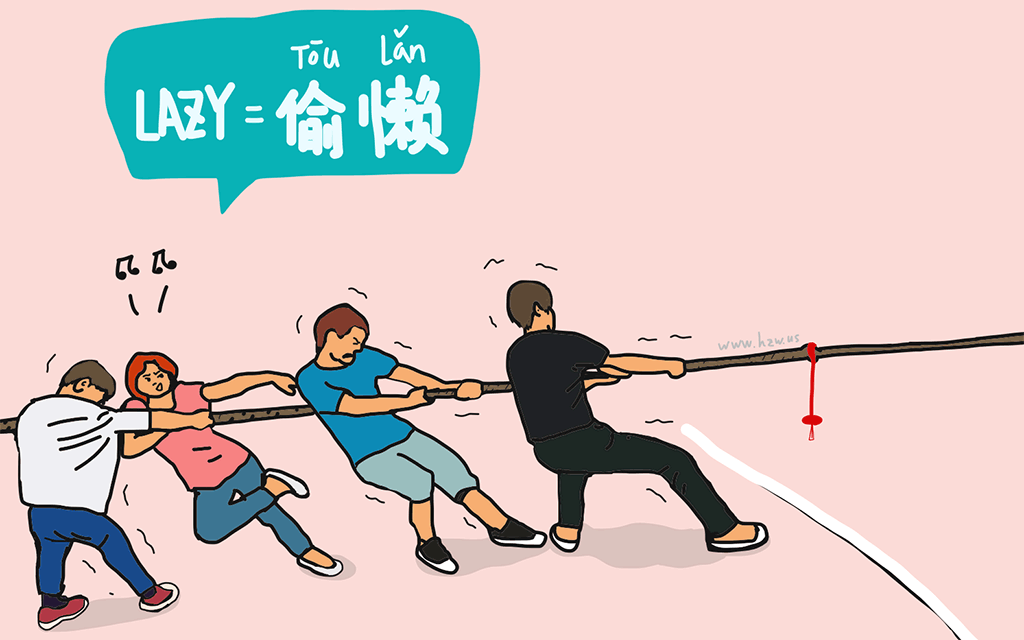
Everyone is straining on the rope except the one humming a tune with her eyes closed. She is 偷懒: slacking off while the others do the work.
偷懒 (tōu lǎn) means to slack off: to be lazy about a job you are supposed to be doing. Literally, 偷 is “on the sly” and 懒 is “lazy.” 懒 (lǎn) on its own describes a lazy person; 偷懒 describes the act.
别偷懒! — Bié tōulǎn! — Don’t slack off!
他又在偷懒。 — Tā yòu zài tōulǎn. — He is slacking off again.